
This post contains affiliate links. We may earn a small commission when you buy through our links — at no extra cost to you.
Most sunrise alarm clocks promise a gentle dawn, but the real test is whether the light is strong enough to reach your actual wake threshold. In practice, a 4.3-star rating can still mean the alarm silently fails or the display glows all night.
The useful differences come down to light intensity, dimming range, alarm reliability, and whether you need extra sounds or Bluetooth. A model that suits a light sleeper in a dark room may leave a heavy sleeper in a bright bedroom groggy.
This guide focuses on matching the right sunrise clock to the right sleeper, so you know which specs justify the price and where budget models genuinely hold their own.


Best for Feature-Rich Budget
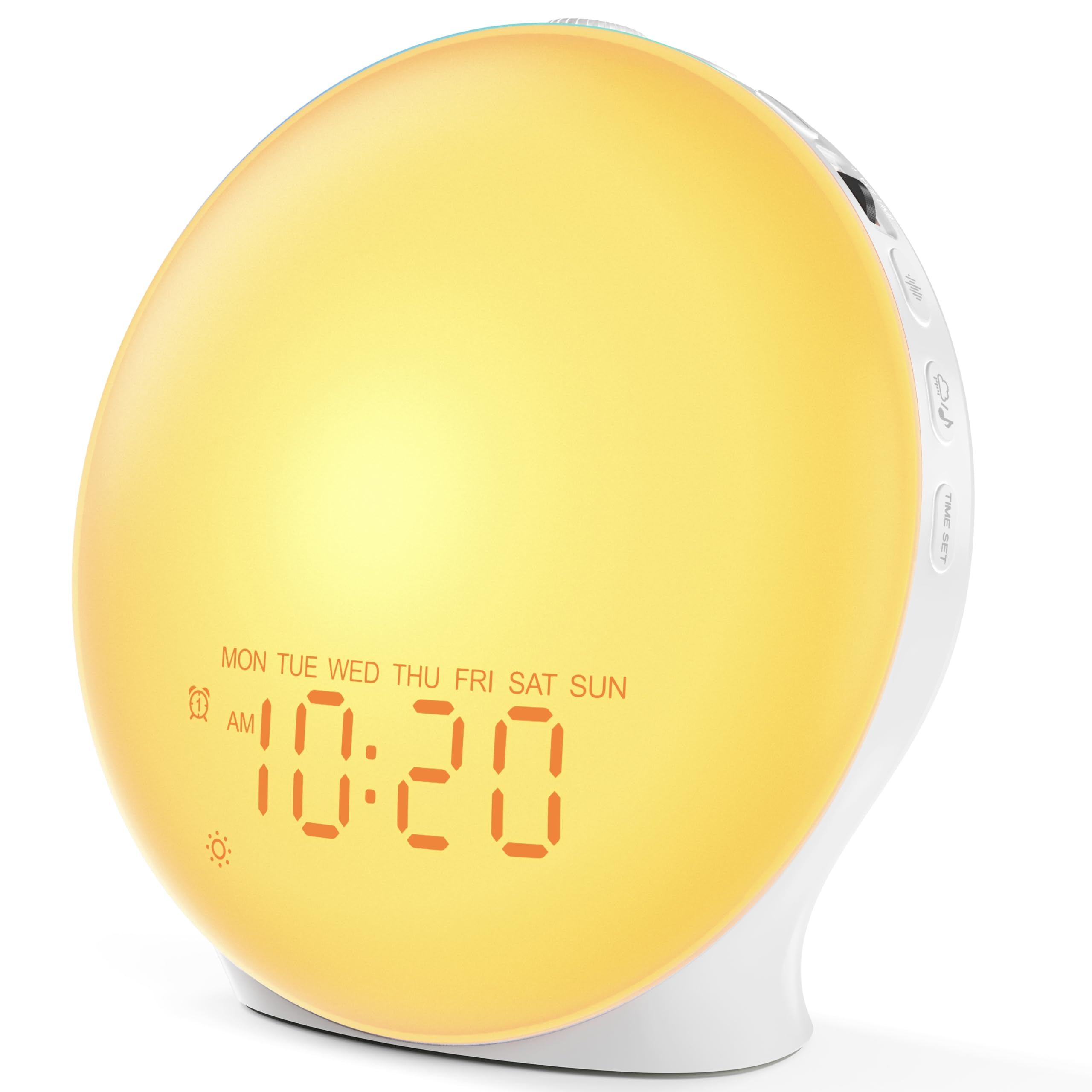
JALL Full-Screen Wake-Up
Key Features
- Sunrise Duration: 10-60 minutes
- Sound Library: 25 sounds + FM
- Display Control: Dimmable
- Light Intensity: Full-screen glow
- Extras: Bluetooth, dual alarms
- Price: Budget
The full-screen sunrise ramp builds light across the entire face over 10 to 60 minutes, then fades in an alarm backed by 25 sounds or FM radio. The 5W Bluetooth speaker adds bedside audio without extra gear, and dual alarms let two sleep schedules share one clock.
The expected outcome is a calmer morning: the light ramp replaces a jarring alarm, and the same unit can wind down the room at night with sleep sounds or music. Sunrise, white noise, FM, and Bluetooth all pull from the same compact box, so this reads as a single nightstand upgrade rather than a stack of gadgets.
Quality control can vary between units; button or power issues may appear over time, and the menu takes patience when setting alarms. Very deep sleepers may need a brighter light or a second alarm. For first-time sunrise alarm buyers and families who want a sound machine, dual alarms, and Bluetooth in one budget-friendly box, this is the value benchmark in the category. It is a general bedroom tool, not a clinically validated light therapy device.
Pros
- Sunrise simulation fills the whole screen, so the room brightens gradually rather than snapping on.
- Sound machine duties are covered with 25 natural sounds, white noise, and FM radio.
- Dual alarms, Bluetooth speaker, and 17 color modes arrive at a budget-friendly price.
Cons
- The design is function-first; it won’t win over buyers looking for a minimalist nightstand statement.
- Max brightness can be insufficient for very deep sleepers, so a backup alarm may be wise.
For a first sunrise alarm or a family nightstand hub, this is the budget pick that doesn’t force you to choose between dawn light, sound, and Bluetooth.
Best for Clinical Trust
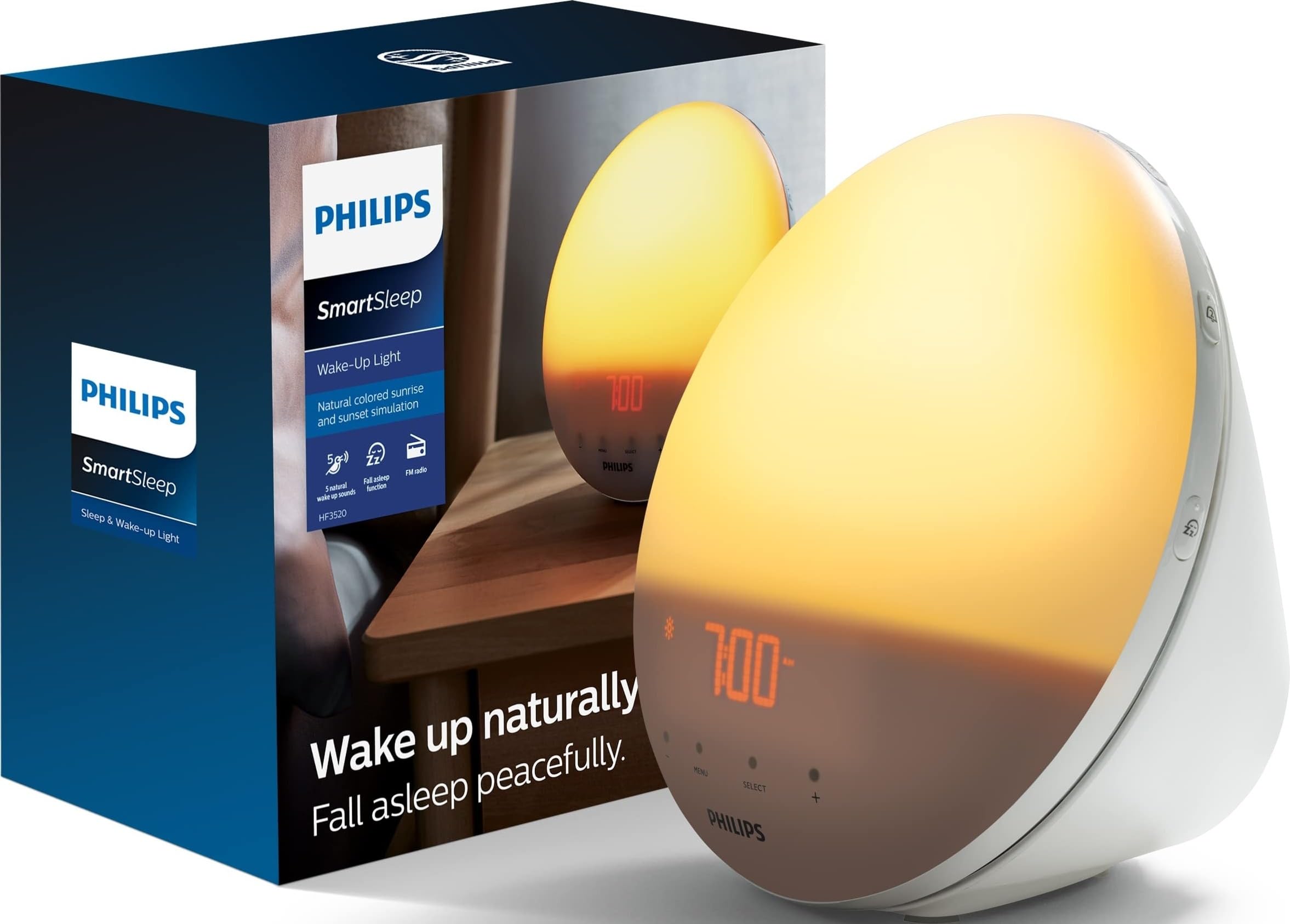
Philips SmartSleep HF3520
Key Features
- Sunrise Duration: Gradual
- Sound Library: 5 sounds + FM
- Display Control: Auto-dimming
- Light Intensity: 20 levels
- Extras: Sunset, tap snooze
- Price: Mid-Range
Philips brings clinical credibility to the sunrise-alarm category, and the HF3520’s light engine earns it: the dawn ramp is smooth, diffusion is even, and the 20 brightness levels make this a real reading lamp. Sunset simulation works as a gradual wind-down rather than a gimmick, giving the bedside unit a purpose beyond waking.
This mid-range clock suits buyers who prioritize light quality and clinical positioning over a long feature list. The button layout and menu take patience, long-term durability can vary between units, and the sound selection is short. Those boundaries are acceptable if you want a refined dawn light with reading-lamp utility rather than a gadget-packed alarm.
Pros
- Smooth sunrise ramp with even, polished light diffusion.
- 20 brightness levels give it genuine bedside reading-lamp utility.
- Brightness range suits both dark bedrooms and active use.
Cons
- Mid-range price buys polish over a long feature list, so budget-focused buyers will feel the gap.
- No Bluetooth or white-noise streaming options for bedside audio.
This is the pick when light quality and clinical positioning matter more than a long spec sheet.
Best for Smart Routines
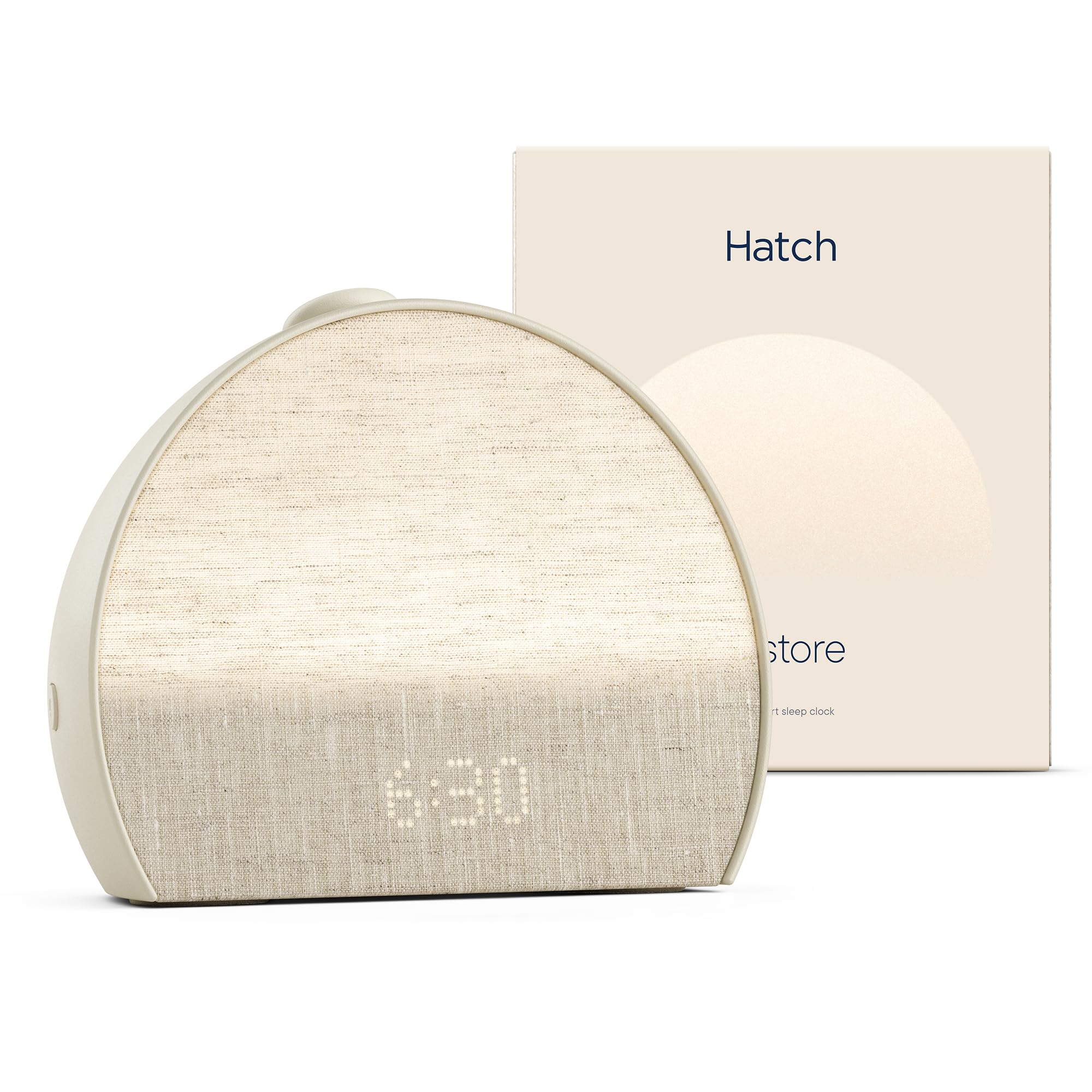
Hatch Restore 3
Key Features
- Sunrise Duration: App-customizable
- Sound Library: 80+ sounds
- Display Control: Screen-free
- Light Intensity: Adjustable
- Extras: Routines, subscription
- Price: Premium
The Restore 3 wraps a screen-free clock face around 80+ sleep sounds and app-built sunrise and wind-down routines, so the bedside object stays calm and minimal. It is the most polished connected option in this set, with light and audio pairings that can be shaped around your own schedule.
The right buyer is a smart-home sleeper who is comfortable with a premium-priced, app-connected sleep system and enjoys shaping routines in the Hatch app. Occasional app or hardware connection hiccups can interrupt routine flow, so this is not a set-and-forget clock. If you want a one-time purchase without app dependency, the mid-range sound-machine-first pick in this roundup is the better fit.
Pros
- Sunrise and wind-down routines make it easier to fall asleep and wake on a consistent schedule.
- Screen-free, minimal design keeps the nightstand visually quiet and fits a modern bedroom.
- The 80+ sound library covers sleep sounds, meditations, and lullabies with plenty of variety.
Cons
- The Hatch+ subscription paywall keeps part of the sound and meditation library behind an ongoing fee after the trial.
For buyers already building sleep routines through an app, the Restore 3 is a considered splurge. A standalone sunrise alarm with physical controls is the more practical route for everyone else.
Best for Sound + Bluetooth
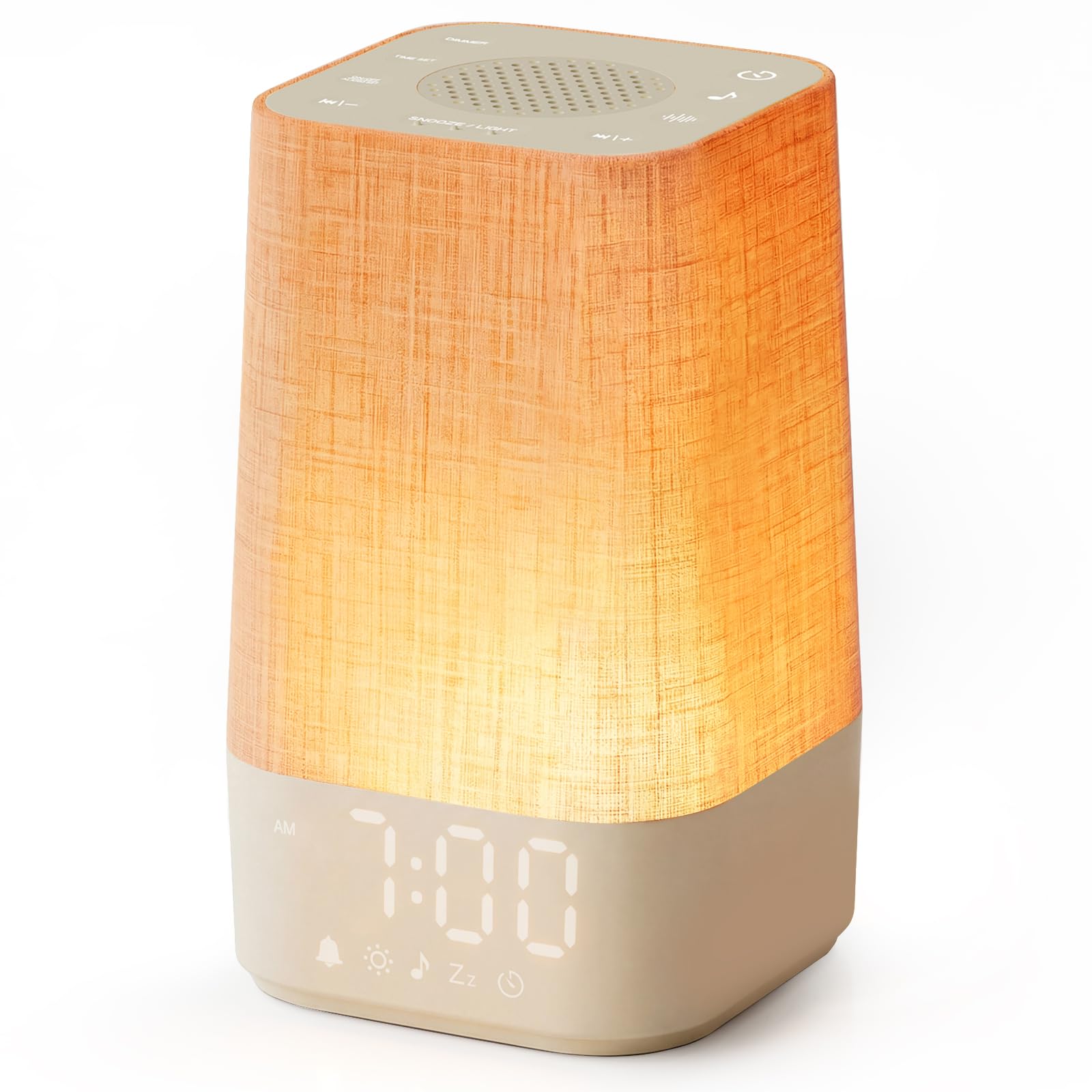
Odokee Sunrise Alarm Clock
Key Features
- Sunrise Duration: 5-60 minutes
- Sound Library: 25 sounds
- Display Control: 0-100% dimmable
- Light Intensity: Adjustable
- Extras: Bluetooth, 12 colors
- Price: Mid-Range
The Odokee is the sound-machine-first option in this roundup: a 5-watt Bluetooth speaker, 25 sleep sounds, a 5-60 minute sunrise ramp, and a display that dims to off. Physical buttons keep setup and daily operation app-free, which suits first-time upgraders from phone alarms. It sidesteps the subscription routines found on premium smart models.
This is for buyers who want Bluetooth streaming and a sleep-sound machine in one bedside unit, with manual controls instead of an app. The built-in alarm tones are more generic than the sleep sounds, so treat the audio side as the main feature and not a clinical light therapy device.
Pros
- Bluetooth speaker covers both streaming and sleep sounds from one bedside unit.
- Physical buttons make setup and daily use easy without an app.
- Mid-range pricing undercuts premium smart models while keeping sunrise and display controls.
Cons
- Built-in alarm tones are more generic than the sleep-sound library.
For a mid-range price, this pairs a capable Bluetooth speaker with a sunrise ramp and manual controls. Skip it if you need app-driven automation or clinical light intensity.
Best for Light Sleepers
Wkzay Sunrise Alarm Clock
Key Features
- Sunrise Duration: 10-60 minutes
- Sound Library: 30 sounds
- Display Control: 5-level dimmer
- Light Intensity: 13 levels
- Extras: Sleep timer
- Price: Budget
The Wkzay packs 30 sounds, a 10-60 minute sunrise, 13 light levels, and 32 volume levels into a compact bedside unit with no Bluetooth or app required. The 5-level display dimmer keeps a dark bedroom dark, and the sound library covers white noise plus nature sounds with clear output for this price tier. The controls are simple, so adjusting the ramp or alarm sound takes seconds.
This suits light sleepers who want a gentle, customizable wake-up and a small footprint. Buyers expecting a full room of dawn light should note that the lamp is diffused rather than room-filling; large bedrooms are better served by a full-screen sunrise option.
Pros
- Clear sound across 30 built-in sounds, from white noise to nature tracks.
- Gentle wake-up with a 10-60 minute sunrise and 13 light levels.
- Simple controls make setup and daily adjustments quick.
Cons
- The sunrise glow stays near the lamp rather than filling a large bedroom.
For light sleepers who want a no-app, small-footprint bedside clock with deep sound and light tuning, this is the budget pick.
Best for Dark-Room Sleepers
JALL Sunrise Alarm K6
Key Features
- Sunrise Duration: 10-60 minutes
- Sound Library: 25 sounds
- Display Control: Complete off
- Light Intensity: Adjustable
- Extras: Bluetooth, 17 colors
- Price: Budget
The JALL K6 keeps the bedside footprint small while doing the two things that matter here: it can turn the LED display fully off and it fills the room with calm sound from 25 built-in tones or your own Bluetooth audio. The sunrise ramp runs from 10 to 60 minutes, and the anti-glare finish spreads light evenly without a harsh hotspot. Sound quality is strong for this price tier, with a clean white-noise setting rather than a thin hiss.
Anyone who wants a dark bedroom will appreciate the display-off option, and physical buttons keep setup app-free. It has one alarm rather than dual alarms and no FM radio, so it suits solo sleepers who want simple controls.
Pros
- Calm sound options cover white noise and nature tones at a budget price.
- Gradual sunrise ramp makes mornings smoother without harsh light.
- Display can be dimmed or turned off completely for a dark bedroom.
Cons
- The smaller light panel provides a focused glow rather than full-room coverage, so large bedrooms may prefer the full-screen JALL.
For light-sensitive sleepers who want a completely dark room and a calm wake-up, the K6 is the budget-friendly pick that skips the extras you don’t need.
Best for Decorative Gift
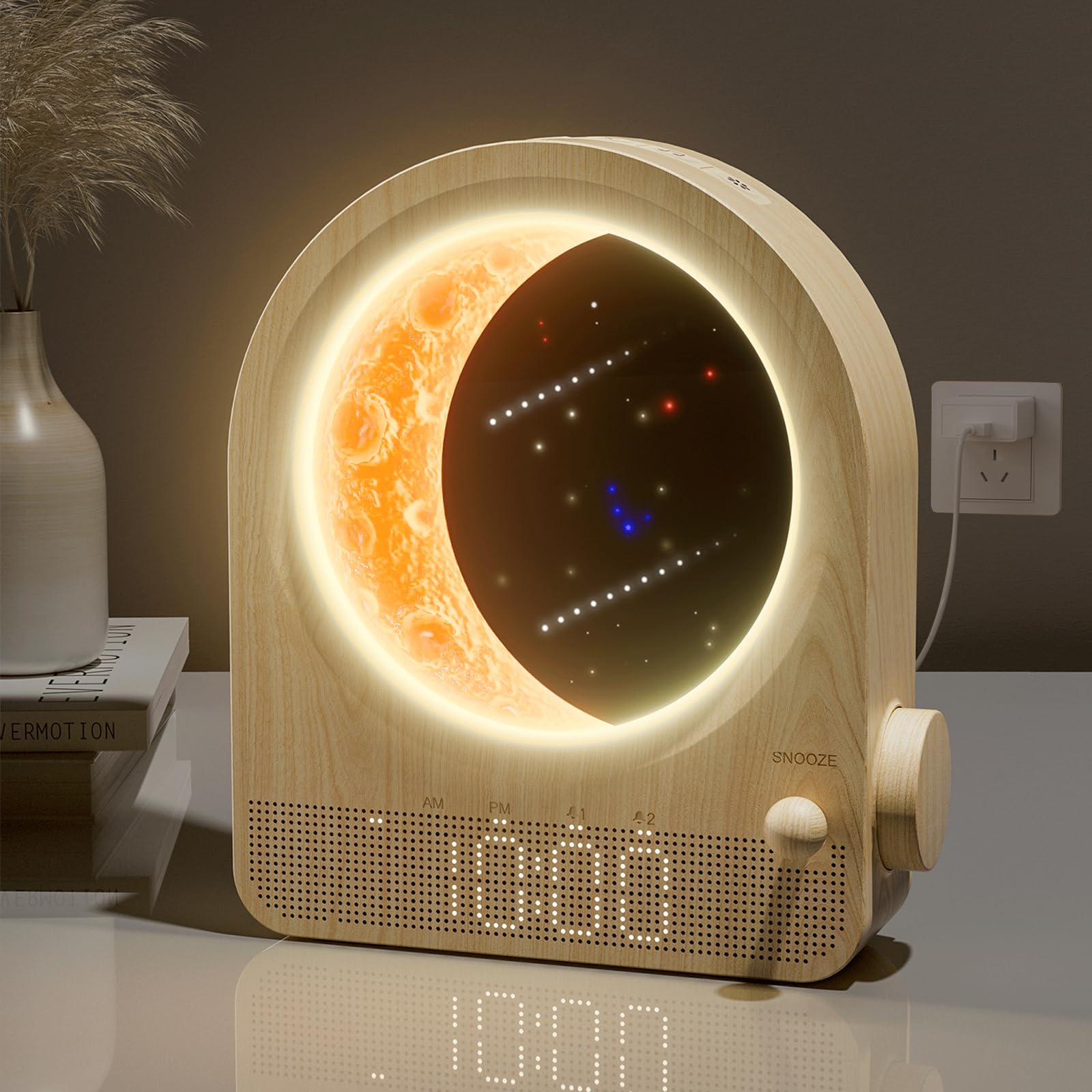
blonbar Moon Sunrise Clock
Key Features
- Sunrise Duration: Gradual
- Sound Library: 10 sounds
- Display Control: Stepless dimming
- Light Intensity: Ambient
- Extras: Dual alarms, moon design
- Price: Budget
The 3D moon shell with meteor light effects makes this the most visually striking sunrise clock in the lineup. It pairs dual alarms, a 10-minute snooze, and ten nature sounds with a stepless-dimmable moon and a 3-level touch lamp, so the bedside presence is as much decor as wake-up helper.
This is an ambient-glow alarm rather than a clinical-grade light therapy device, which makes it a better fit for gift givers and for teens or young adults who want a visual wow factor in the bedroom. The moon styling and light display carry the appeal; the dual-alarm and sound set keeps the clock side functional.
Pros
- The 3D moon and meteor effects turn the bedside table into a visual focal point.
- Sunrise and nightlight modes create a calm, low-glare ambiance that feels soothing before sleep.
- The ten nature sounds are pleasant and varied enough for daily wake-ups.
Cons
- Sunrise brightness stays modest rather than room-filling, so deep sleepers may need a stronger wake-up light.
The moon-lamp design makes this a memorable gift, and the dual alarms plus nature sounds carry the practical side. It fills the aesthetic bedside role at a fair budget price.
Best for Backup Battery
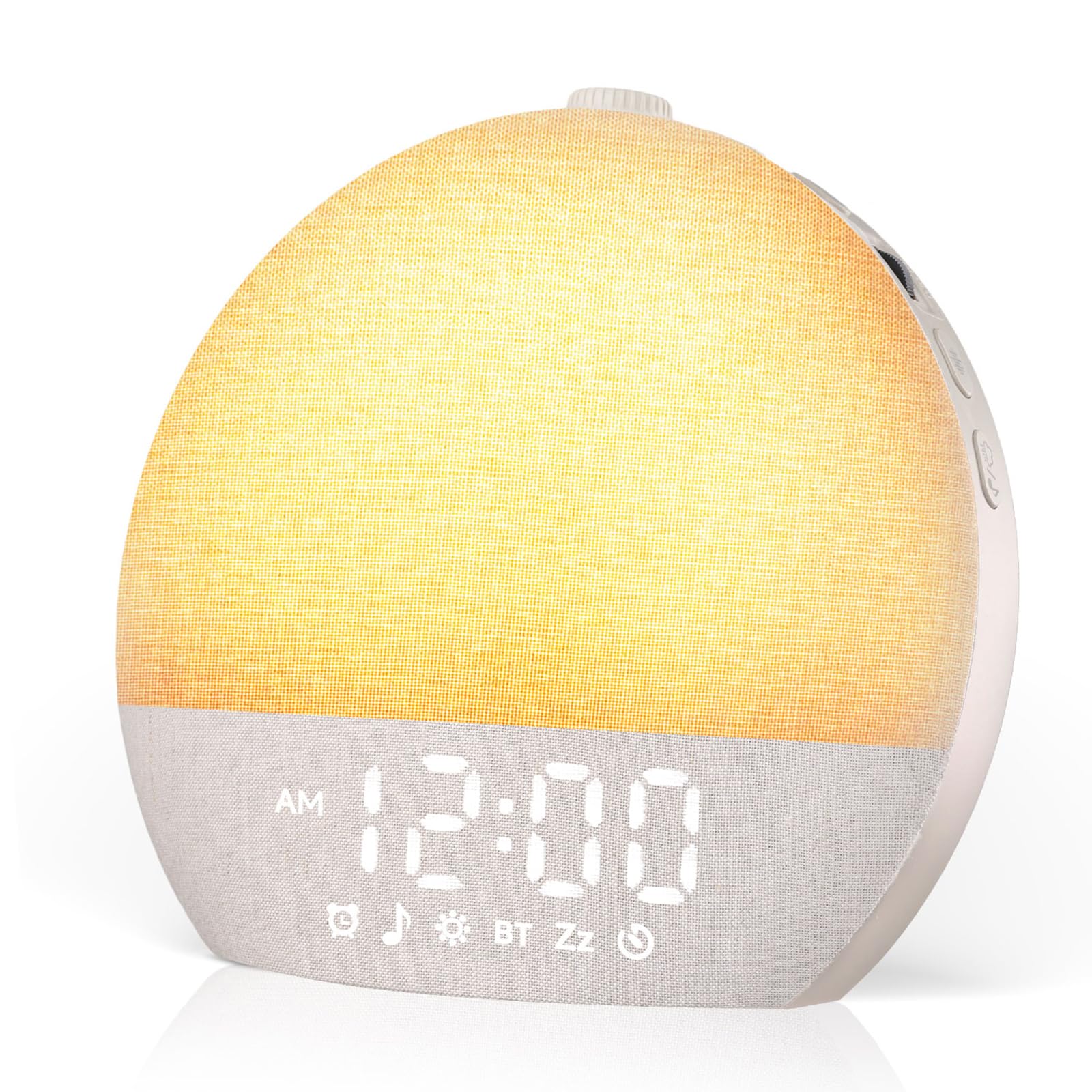
Geuuap Sunrise Alarm Clock
Key Features
- Sunrise Duration: 10-60 minutes
- Sound Library: 30 sounds
- Display Control: Dimmable
- Light Intensity: 20 brightness levels
- Extras: Bluetooth, backup battery
- Price: Budget
With Bluetooth, 30 sleep sounds, and built-in backup battery memory, the Geuuap suits budget-minded travelers and parents looking for a child-safe sunrise clock. The price-to-feature balance is strong for a compact bedroom unit. Alarm or speaker output can be intermittent, so it stays below the top tiers.
Pros
- Gentle light-first wake-up supports gradual morning starts.
- Sound features cover white noise and alarm needs in one compact unit.
Cons
- Plastic shell reads more functional than premium, so it won’t suit a polished nightstand.
A reasonable budget choice when portability, child-safe construction, and battery backup drive the decision.
Best for Nightstand Declutter
WILIT Bedside Lamp Clock

Key Features
- Sunrise Duration: 10 minutes
- Display Control: Adjustable
- Light Intensity: 3 levels
- Extras: Qi charging, touch lamp
- Price: Budget
Three basic nightstand jobs — wireless charging, touch lighting, and an alarm clock — fit into one compact unit. The touch lamp is responsive and the three brightness levels cover low-light reading without blasting the room. As a dedicated sunrise alarm, it falls short: the wake-up light is modest, and the charging pad or clock controls may become less responsive over time.
Pros
- Compact 3-in-1 design consolidates wireless charging, a touch lamp, and an alarm clock into one nightstand unit.
- Touch-sensitive lamp responds to a tap, so you don’t have to fumble for a switch in the dark.
Cons
- The charging pad can be temperamental, and the clock light or touch sensor may become unresponsive over time.
Best as a secondary bedroom lamp or gift for someone who wants one compact nightstand unit, as long as the primary alarm is handled elsewhere.
Best for Gift-Ready Moon
RETEYUNG Moon Alarm Clock

Key Features
- Sunrise Duration: Gradual
- Sound Library: 10 sounds
- Light Intensity: Ambient
- Extras: Dual alarms, USB-C
- Price: Budget
This moon lamp pairs a glowing lunar design with 10 color effects, dual alarms, 15 ringtones, and 10 nature sounds at a budget price. Sunrise brightness is modest, and quality control can vary between units, so it works as an ambient bedside light with alarm functions rather than a strong dawn simulator.
Pros
- Eye-catching moon design with warm glow makes it a pleasant bedside piece for a teen or dorm room.
- Fifteen ringtones and ten nature sounds give plenty of wake-up and wind-down options.
Cons
- For heavy sleepers, this is better as a backup alarm than the primary wake-up.
For teen and dorm-room gift buyers, this is a budget-friendly moon lamp that brings dual alarms and pleasant sounds to the bedside.
How to Choose
The right sunrise alarm clock is less about brand and more about how its light intensity, dimming range, and alarm reliability match your sleep environment and wake threshold.
Sunrise Duration
A longer sunrise ramp gives your body more time to shift from deep sleep to morning light. A 10-minute simulation is essentially a wake-up nudge, while a 30- or 60-minute ramp better mimics real dawn.
Shorter ramps are fine for light sleepers who just need a signal. Heavy sleepers benefit from a longer, brighter ramp paired with an audible alarm, because the light needs to gradually raise arousal rather than rely on a single jolt.
Sound Library
The sound library matters more than most buyers expect, because the alarm tone is what you hear if the light alone doesn’t wake you. Models with 25-30 sounds offer white noise, nature loops, and multiple alarm tones, so you can separate your sleep sound from your wake sound.
A small library like five sounds plus FM radio can still work, but you are more likely to grow tired of the options. If you plan to use the device for both sleep and waking, confirm that the alarm sound is independent from the sleep sound and not just a generic beep.
Display Control
Clock displays are a top complaint in this category because many are still too bright at night even on their lowest setting. A fully dimmable display or a display-off mode matters most for light-sensitive sleepers.
Some models only dim to a minimum glow, which can be distracting in a completely dark room. If you need total blackout, look for specific ‘display off’ or ‘blackout’ capability rather than assuming a dimmer will go dark enough.
Light Intensity
Light intensity is the core difference between a decorative alarm and a functional sunrise clock. Some budget models produce a soft glow that is pleasant but not strong enough to signal your brain to wake, especially if you sleep deeply or face away from the light.
A high maximum brightness matters less than how evenly the light diffuses across your field of vision. Full-screen panels tend to spread light better than small circular lamps, which is why they are more effective for heavy sleepers.
Extras
Extras like Bluetooth speakers, FM radio, dual alarms, and built-in sound machines often decide which model ends up on a nightstand. Bluetooth is useful for streaming background audio, but dedicated music speakers still sound better.
Dual alarms are practical for couples on different schedules. App-controlled routines add flexibility but may come with subscription fees and connectivity quirks, so decide whether you want a bedside tool that works forever or a smart device that depends on software support.
FAQ
Why does my sunrise alarm clock sometimes not go off?
Alarm failures are often caused by confusing menu logic, display dimming settings that override the alarm, or quality control issues in budget units. If you rely on a sunrise clock as your only alarm, choose a model with clear physical buttons and a strong track record for alarm sound reliability. Keep a backup phone alarm for the first few weeks until you trust it.
Can I turn off the clock display completely on a sunrise alarm clock?
Yes, but only on models that specifically advertise a display-off or full blackout feature. Many clocks only dim to a minimum glow, which can still bother light-sensitive sleepers. The JALL K6, for example, has a fully dimmable display that can be turned completely off, while the larger JALL model offers a dimmer but not total blackout.
Is a sunrise alarm clock enough to wake a heavy sleeper?
For most heavy sleepers, light alone is not enough. Look for a model with a 30-60 minute sunrise ramp, a high maximum brightness, and a loud audible alarm. Budget models with ambient glow are better suited to light sleepers or as a secondary wake signal.
Do I need a subscription to use a Hatch Restore 3?
No, the Hatch Restore 3 works without a subscription, but many routines, meditations, and premium sounds are locked behind the Hatch+ trial and ongoing subscription. If you want a full-featured device without recurring costs, a no-app model like the Odokee offers a similar combination of sounds and sunrise light at a lower price.