
This post contains affiliate links. We may earn a small commission when you buy through our links — at no extra cost to you.
Many bedside clocks called ‘smart’ are just digital alarms with a dim glow. The ones that actually change how you wake up need a real light panel, an adjustable sunrise ramp, and a sound library that fits how you sleep. The practical split is between a no-subscription machine that nails the basics and an app-driven sleep system that adds routines at a recurring cost.
Sunrise quality is the part you cannot judge from a spec sheet: some lights stay too dim for heavy sleepers, while others ramp so quickly they defeat the purpose. Sound matters too, because a clock you do not trust to wake you will get returned. Dimmable displays and bedside extras shape the daily experience more than any voice assistant. The right pick balances these trade-offs for your bedroom, not for a marketing category.


Best for No-App Sunrise
Odokee Sunrise Alarm
Key Features
- Sunrise Ramp & Light: 5-60 min ramp
- Sound Library & Timer: 25 sounds, sleep timer
- App Control & Cost: No app required
- Dimmable Display: 0-100% dimmable display
- Bedside Extras: Bluetooth speaker
- Price: $$
The Odokee combines a customizable 5-60 minute sunrise, 25 sleep sounds, and a 5W Bluetooth speaker in one bedside unit. The sunrise ramp can stretch to a full hour for a gradual transition or shorten to 5 minutes for a quicker start, and three wake modes — light plus sound, sound only, or light only — cover different morning styles. The 0-100% dimmable display and 12-color night light give light-sensitive sleepers control over everything from a bright waking glow to a faint overnight marker.
The sound side stays flexible. White, pink, brown, and blue noise sit alongside 7 alarm tones, and the speaker handles sleep loops and phone-streamed audio with enough clarity for nightstand listening. Labeled physical buttons manage volume, alarm, light, and Bluetooth pairing directly on the device, so setup doesn’t require a phone or account. A sleep timer fades the sound after a set interval, and the core features are all on the device.
This one is for sleep-sound enthusiasts who also want a Bluetooth speaker, light-sensitive sleepers who need a fully dimmable display, and anyone who prefers physical buttons over an app. The tradeoff is that the Odokee has no Wi-Fi, app, or voice control; schedules cannot be managed from a phone, and smart-home routines are off the table. Bedside buyers who accept that boundary get immediate controls and a consistent light-and-sound routine.
Pros
- Sunrise simulation offers a gentle, gradual light ramp that makes waking up less abrupt.
- 25-sound library and Bluetooth speaker cover both white noise and streamed audio in one unit.
- Labeled physical buttons let you adjust the clock directly on the device, no phone needed.
- Dimmable display and 12-color night light adapt to bright mornings or dark bedrooms.
Cons
- In a large bedroom, the 5W speaker may not fill the space; at nightstand distance it is enough.
- For buyers who want a big-brand sleep ecosystem, the built-in sound and light options are the full set; there is no subscription content to expand them.
For bedside buyers who want a real sunrise, a useful sound library, and a Bluetooth speaker from one device, this Odokee is the right match.
Best for App-Led Routines
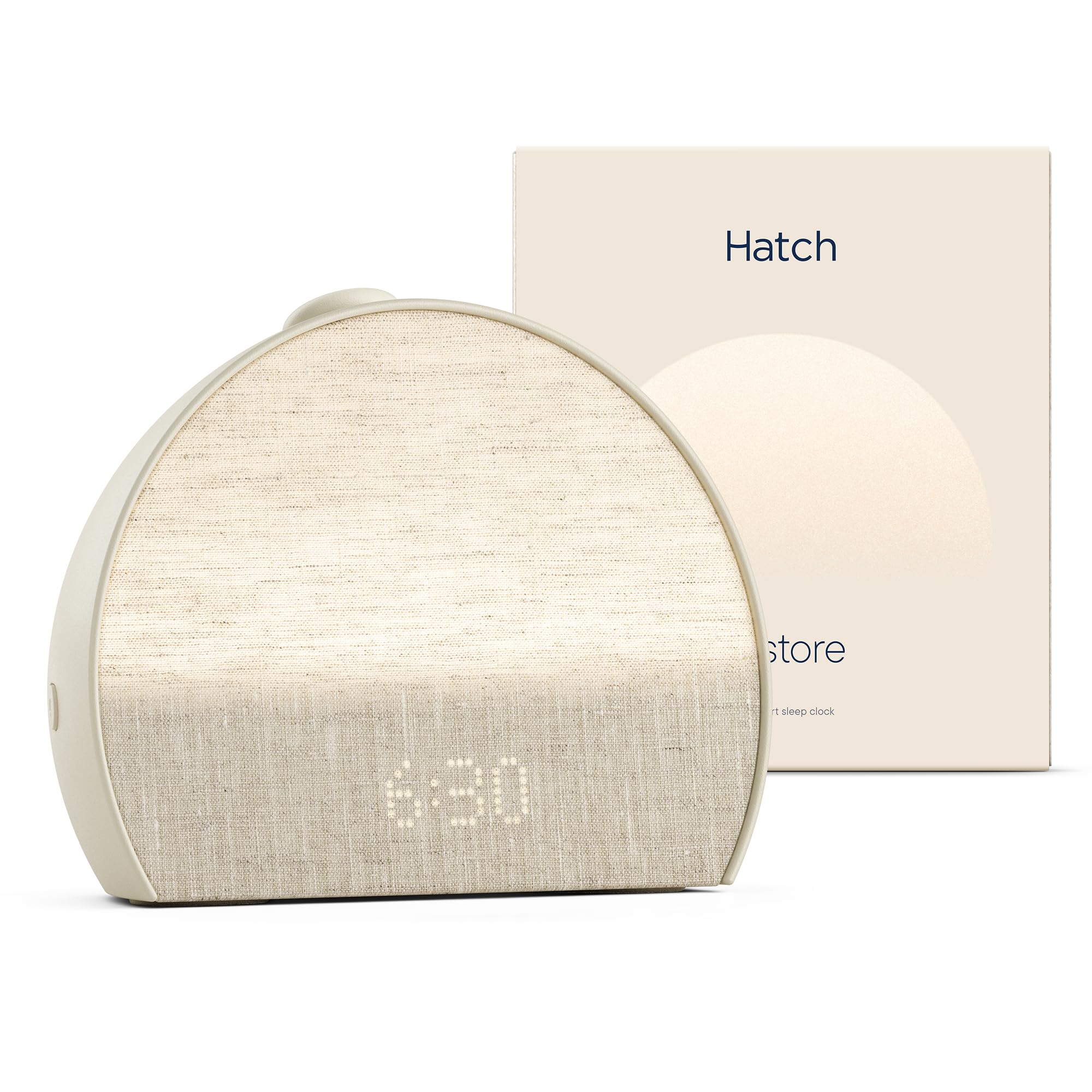
Hatch Restore 3
Key Features
- Sunrise Ramp & Light: Sunrise alarm
- Sound Library & Timer: 80+ sounds, meditations
- App Control & Cost: App, subscription after trial
- Dimmable Display: Dimmable clock
- Price: $$$
The Restore 3 pairs a sunrise alarm with app-curated light and audio routines in a screen-free bedside design. Where the no-app sunrise clock in this roundup keeps controls on the device, the Hatch app becomes the command center for scheduling light and sound. The dimmable light has a wide brightness range, so it can serve as a reading light before the wind-down sequence begins.
This is for design-conscious people who want a consistent, screen-free bedtime ritual and are comfortable paying for a Hatch+ subscription after the trial. The app handles Wi-Fi setup and daily scheduling in one guided flow, and the sleep library gives subscribers a deep set of meditations and sounds to cycle through.
The bedtime unwind routines are the main behavioral driver: pairing a dimming light with a selected sound encourages the user to leave the phone alone. For someone who wants a calm, repeatable pre-sleep sequence, that is the value the Restore 3 adds over simpler sunrise alarms.
Pros
- The paired light and audio routines support faster sleep onset and a more refreshed wake-up.
- The screen-free, minimalist case is easy to place in a bedroom and reads as calm rather than tech.
- The 80+ sound library and meditations give subscribers a deep set of sleep cues for nightly rotation.
Cons
- Scheduling runs through Wi-Fi and the Hatch app, so buyers who want physical-only controls won’t find a workaround.
- Premium content is gated behind Hatch+ after the trial; the recurring subscription fee is the main value factor on a premium-priced device.
For subscribers, the Restore 3 is a polished centerpiece for a screen-free bedtime routine; one-time-purchase buyers will find the no-app sunrise clock in this set a better fit.
Best for No-Subscription Classic
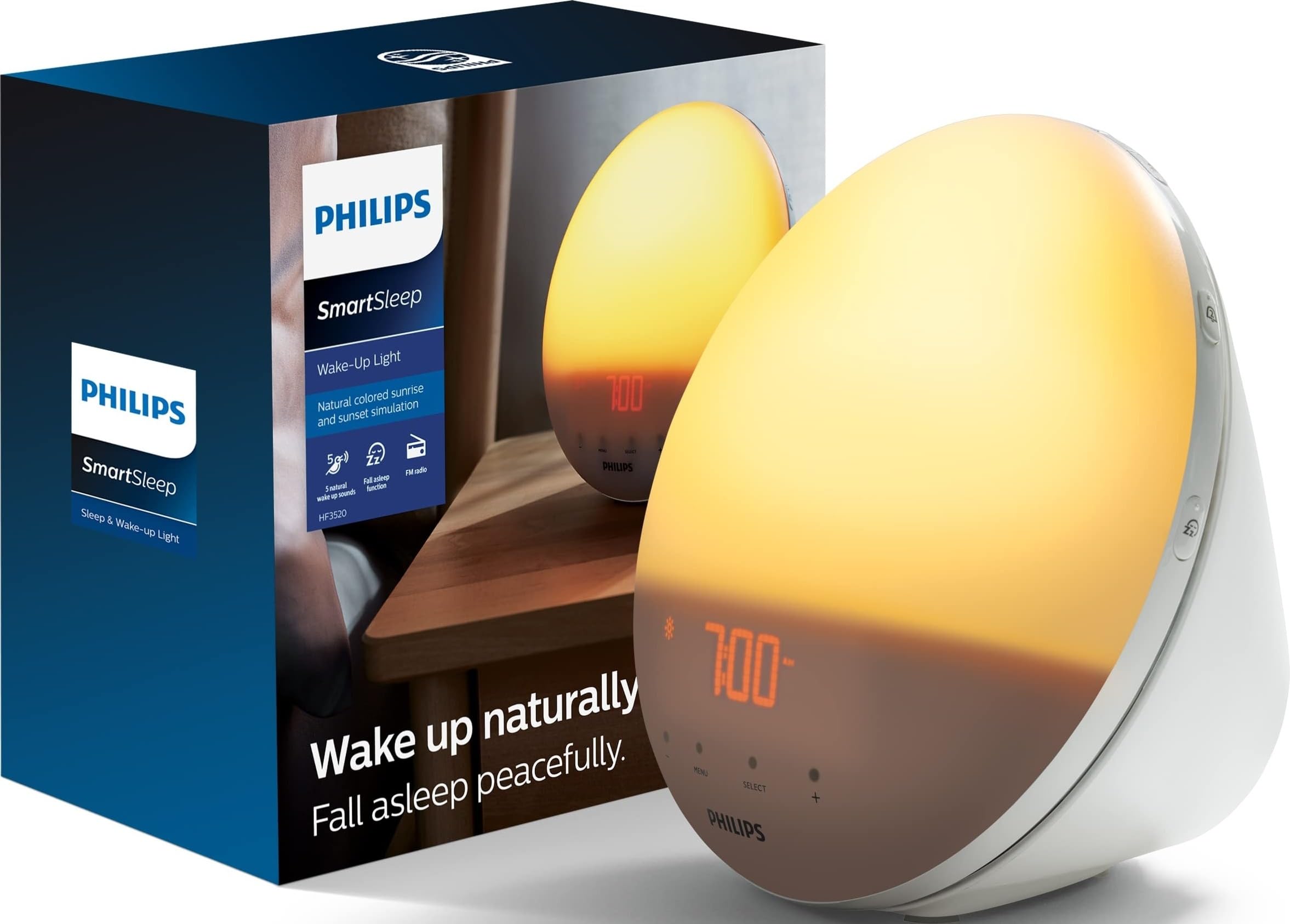
Philips HF3520
Key Features
- Sunrise Ramp & Light: 20 brightness levels
- Sound Library & Timer: 5 sounds, FM radio
- App Control & Cost: No app required
- Dimmable Display: Auto-dimming display
- Bedside Extras: FM radio
- Price: $$
The HF3520’s sunrise simulation is clinically tested and doubles as a genuine bedside lamp with 20 brightness levels. Colored sunrise and sunset ramps ease the transition from darkness to daytime, while five nature sounds and FM radio round out the non-light options. The same panel wakes you early and works later as a reading light.
In a dark room, the light reads as a slow natural dawn rather than a switch snapping on. That gradual build is the main reason this type of alarm works for people who respond to light instead of sound.
Buyers who want a no-subscription sunrise/sunset alarm from a recognized lighting brand will get the most value here. It is not the pick for app or voice-control households; the icon-based menu buttons take some getting used to, and the maximum light output can fall short for very heavy sleepers.
Pros
- Gradual sunrise simulation turns mornings into a calmer, light-based wake-up.
- 20-level brightness makes the same panel useful for bedtime reading.
- Five nature sounds and FM radio offer a no-app audio alternative.
Cons
- The icon-based menu can take a few sessions to learn.
- Maximum light output may be too low for very heavy sleepers.
- Long-term durability can vary; the panel or controls may become unresponsive after extended use.
For bedside buyers who don’t want an app or subscription, the HF3520’s clinical backing and lamp flexibility put it ahead of competitors that charge a monthly fee.
Best for Budget Full-Screen
JALL Full-Screen Sunrise Clock
Key Features
- Sunrise Ramp & Light: 10-60 min ramp
- Sound Library & Timer: 25 sounds, sleep timer
- App Control & Cost: No app required
- Dimmable Display: Full-screen light
- Bedside Extras: Bluetooth, FM radio
- Price: $
The JALL’s full-screen sunrise panel ramps a broad, bright light across the room for 10–60 minutes before the alarm, which is why heavy sleepers gravitate to it. That same unit also packs 25 natural sounds, FM radio, and a Bluetooth speaker, making it the most feature-dense bedside clock at its price level. Dual weekday/weekend alarms and a 5–20 minute snooze window round out the package.
This is for budget-conscious heavy sleepers and families who need separate weekday and weekend schedules. The tradeoff is a button-first design; if you are willing to spend one evening with the manual, the learning curve is manageable. Control-button consistency can vary between units, so testing the clock early is worth doing. The 25-sound library and FM radio can replace a separate white-noise machine on the nightstand, which keeps the surface from turning into a gadget pile.
Pros
- Full-screen sunrise panel throws broad, bright light across the room for heavy sleepers.
- Dual weekday/weekend alarms accommodate households on different schedules.
- 25 natural sounds, FM radio, and Bluetooth streaming cover both waking and sleeping.
Cons
- No app, Wi-Fi, or voice-assistant control; every schedule change happens at the unit.
- Button labels and menu structure can take time to interpret on first use.
A heavy sleeper’s budget pick when the priority is sunrise brightness and a full bedside sound machine.
Best for Premium Bedside Hub
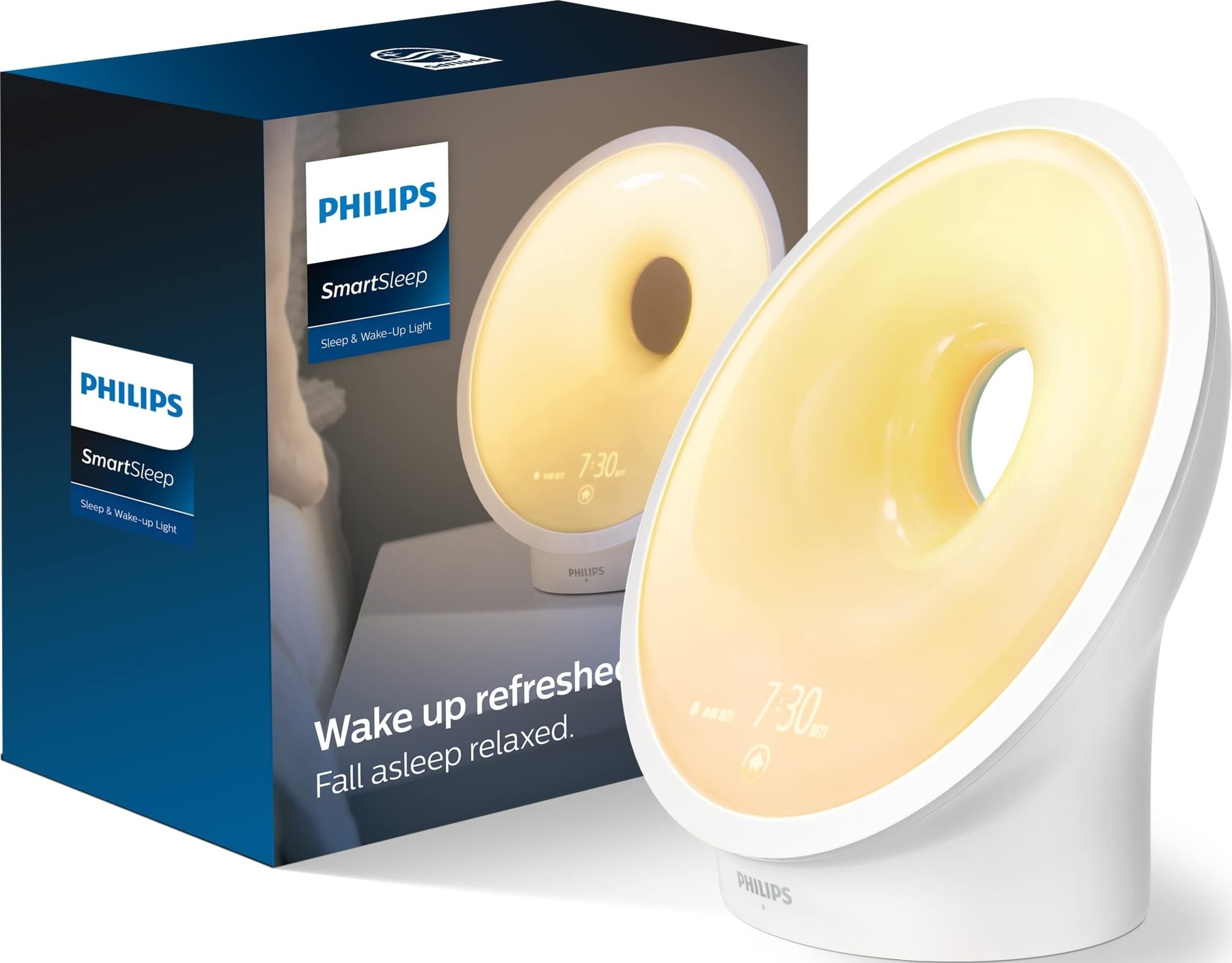
Philips HF3650
Key Features
- Sunrise Ramp & Light: Sunrise/sunset profiles
- Sound Library & Timer: Natural sounds, FM radio
- App Control & Cost: No app required
- Dimmable Display: Auto-dimming display
- Bedside Extras: Charging dock, power backup
- Price: $$$
Philips pairs its sunrise/sunset light simulation with a phone charging dock, power backup, and RelaxBreathe-guided breathing exercise, turning the HF3650 into a bedside hub rather than just another wake-up light. The classic Philips sunrise model covers the light-only role; this one adds the extras around it.
The display auto-dims for dark rooms, and the sunset setting fades the light down gradually instead of snapping off at bedtime.
This fits buyers who want a premium bedside setup and will actually use the charging dock, power backup, and breathing guide. Touch controls and menu navigation have a learning curve, and the premium price makes sense only if those extras get used. If app or voice control is the priority, this isn’t the model; it is a dedicated alarm clock with no companion app.
Pros
- Sunrise simulation starts dim and builds gradually, so mornings feel less abrupt.
- Adjustable light is bright enough to double as a bedside reading lamp.
- Build quality feels solid and the design suits a premium nightstand.
Cons
- Sound choices are limited to nature tones, with no true white noise track.
- A sudden shutdown is possible, which matters most if this is your sole alarm.
This is the bedside hub for buyers who want sunrise light, charging, backup power, and RelaxBreathe in one device.
Best for Alexa Users
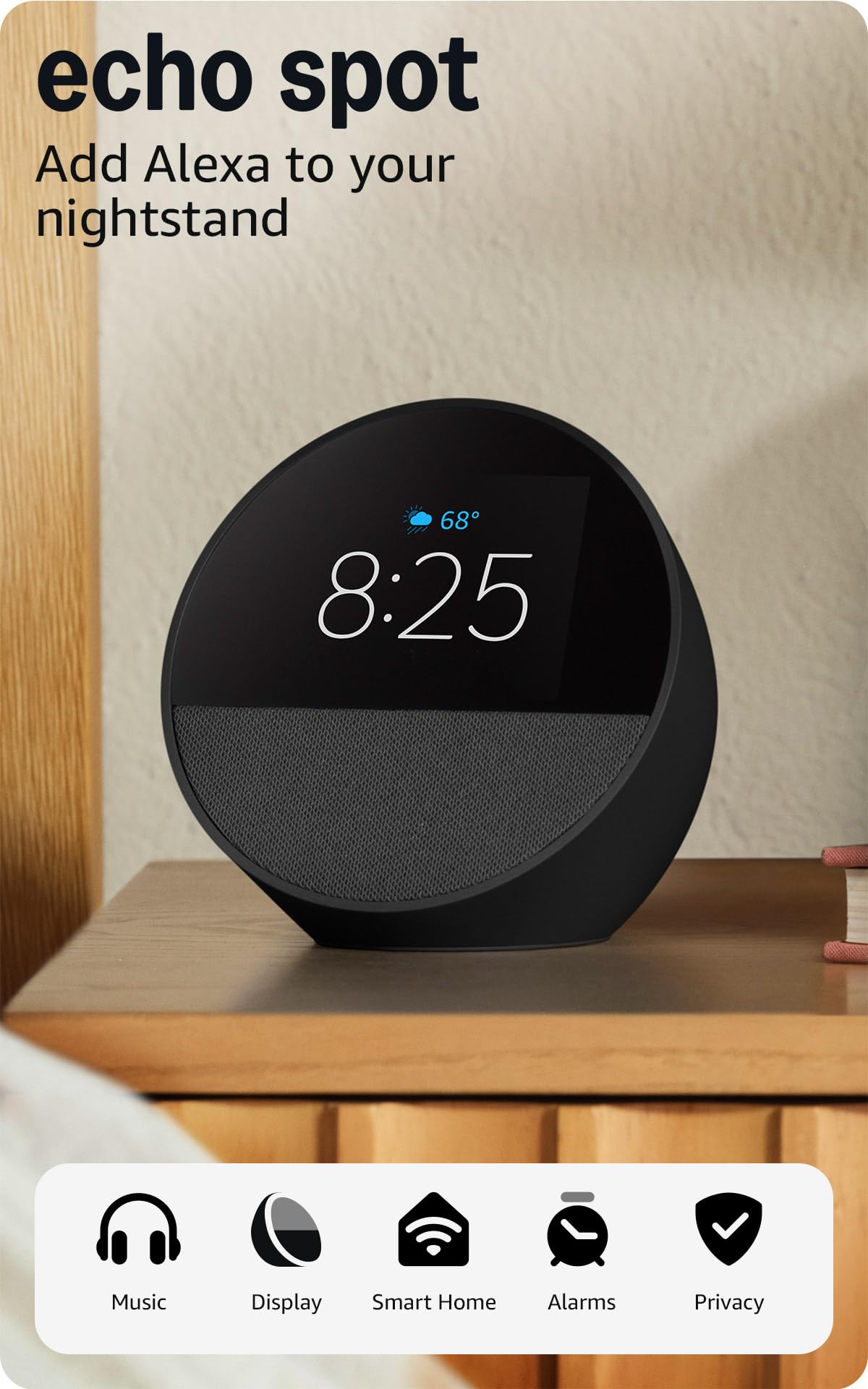
Amazon Echo Spot
Key Features
- Sunrise Ramp & Light: Gradual light routines
- Sound Library & Timer: Music, podcasts, Alexa
- App Control & Cost: Alexa voice control
- Dimmable Display: Auto-night display
- Bedside Extras: Smart home control
- Price: $$
The Echo Spot is the voice-first bedside clock in this roundup: Alexa handles alarms, timers, music, podcasts, and smart-home routines from the nightstand, and audio output is strong for a compact unit. Custom clock faces and automatic night display dimming keep it easy to live with in a dark room. It is a general smart display rather than the dedicated sunrise/sunset or sleep-sound unit, and occasional audio dropouts or unresponsive moments can surface during playback and alarm use. That makes it the right fit for an Alexa household that wants a multi-use bedside control center, not for buyers shopping by light-therapy specs.
Pros
- Voice control covers alarms, timers, music, podcasts, and smart-home devices from bed.
- Audio output is rich enough for a compact bedside speaker and alarm.
Cons
- Occasional dropped audio, volume quirks, or unresponsive touch can interrupt alarm and music use.
- For buyers who want a true sunrise/sunset panel, the Spot’s screen brightness is not a substitute.
Fits the Alexa household that wants a voice-driven bedside display with strong sound and smart-home reach.
Best for Budget White Noise
Mee 2ou Smart Alarm

Key Features
- Sound Library & Timer: 25 sounds, sleep timer
- App Control & Cost: No app required
- Dimmable Display: 10-step night light
- Bedside Extras: Night light
- Price: $
Compact and wall-powered, this budget alarm puts 25 white-noise and sleep sounds, 16 volume levels, and a 10-step warm-to-cool night light in a small bedside footprint. A sleep timer up to 480 minutes suits a kid’s room or guest room. It doesn’t simulate sunrise and has no app or voice control, so it falls short of the smart-alarm brief here. For buyers who only want a dimmable night light and steady white noise, it’s a cost-conscious pick.
Pros
- 25 white-noise and sleep sounds with 16 volume levels cover basic sound-machine needs.
- 10-step warm-to-cool night light functions as a dimmable bedside lamp without extra gear.
Cons
- Mains-powered design has no battery backup, so a power cut leaves the clock and night light off.
For a child’s nightstand or guest room where a dimmable night light and white noise are enough, this budget alarm covers the basics.
How to Choose
The sunrise light panel and sound library decide whether a smart alarm clock actually earns its place on your nightstand.
Sunrise Ramp and Light Output
Sunrise simulation only works if the panel is bright enough to reach closed eyelids. A 5-minute ramp is little better than a normal alarm if the bulb stays dim. Look for adjustable 10-60 minute ramps and a panel that can light the room; heavy sleepers should prioritize brightness over color temperature.
Sound Library and Sleep Timer
The alarm sound is your last-resort wake-up, so a shallow library gets old fast. Twenty-five-plus sounds offer fan noise, rain, and pink noise for falling asleep. A sleep timer that reaches 480 minutes lets the sound fade out automatically instead of waking you mid-sleep. Bluetooth models double as bedside speakers for phone playlists, which extends the library without a subscription.
App Control and Subscription Costs
App control is convenient until a subscription paywall gates the features. Some connected clocks require monthly fees for meditations, advanced sound libraries, or routines after a trial. If you only need a scheduled sunrise and a few sounds, a physical-button clock avoids app updates, logins, and server dependence.
Dimmable Display and Night Light
A bright display at 2 a.m. is a hidden sleep disruptor. Look for a clock that dims low enough to disappear in a dark room, or one you can turn off entirely. For a night light, warm dim light beats cool blue light, and a 0-100% dimming range gives the most control. A dimmable display is one of the cheapest specs to improve but the easiest to overlook.
Bedside Extras
Bluetooth speakers, FM radio, charging docks, and power backups only matter if the core alarm works. A charging dock is useless if your phone case blocks it, and power backup only helps during an outage. Treat extras as tie-breakers, not buying reasons.
FAQ
Why doesn’t my sunrise alarm clock wake me up?
The light panel is probably too dim, the ramp is too short, or the alarm sound is doing the actual waking. A useful sunrise needs to be bright enough to register through closed eyelids and should ramp for at least 20 to 30 minutes. If yours stays a soft glow until the beep, treat it as a night light rather than a wake-up tool.
Do I have to pay a subscription to use all the features on a Hatch Restore 3?
After the 30-day trial, Hatch+ is required for most premium content, including the full sound library and meditation collection. Basic alarm and sunrise functions remain usable, but the app-driven routine experience is tied to the subscription. Buy it only if you plan to use the library enough to justify the ongoing cost.
Can I use a sunrise alarm clock as a night light without disturbing my sleep?
Yes, if the light dims low enough and shifts away from blue tones. Look for a display and night light that dim to near-zero or a warm color at night; bright cool light near bedtime suppresses melatonin. A clock with a 0-100% dimming range or a dedicated night-light mode is the safer choice.
What’s the difference between a white noise machine and a sunrise alarm clock for heavy sleepers?
A white noise machine masks disruptive sounds and helps you fall asleep, but it does nothing to wake you gently. A sunrise alarm clock uses a bright, gradually increasing light to signal your body that morning has started, which works better for heavy sleepers when paired with a sound alarm. If you struggle most with falling asleep, choose white noise; if you struggle most with waking, choose sunrise.
How do I program a sunrise alarm clock with a complicated button layout?
Set aside 10 minutes with the manual rather than guessing; most button-based models require holding a set button and using plus/minus keys in a specific order. Use the weekday/weekend setting early so you don’t wake at 6 a.m. on Saturday. Once programmed, the controls rarely need changing.