
This post contains affiliate links. We may earn a small commission when you buy through our links — at no extra cost to you.
Side sleepers face a specific problem when shopping for a pillow: the gap between the head and shoulders. A pillow that’s too soft lets the head sink, kinking the neck. One that’s too firm pushes the head upward, straining the same muscles.
That’s why loft and adjustability matter more than the fluffy, hotel-style feel that dominates so many product listings. A down-alternative pillow that feels plush in the store can compress under sustained use, leaving the neck poorly supported by late morning.
The pillows in this guide were chosen to bridge that gap—some with adjustable fill to customize loft, others with a cervical contour that holds the neck in a neutral position. The right one for you depends on how much trial-and-error you want, whether you prefer a soft cradle or a firm contour, and how you handle a bit of initial memory-foam odor.



Best for Customizable Support
Coop Original Adjustable
Key Features
- Fill Material: Shredded + microfiber
- Adjustability: Removable fill
- Cooling Cover: Lulltra fabric
- Shape: Traditional
- Price: $$$
The Coop Original’s defining move is that it lets you decide the loft. A zippered Lulltra cover opens to a blend of cross-cut memory foam and microfiber, and the included extra fill bag lets you add height for a broader shoulder gap. The fill is cross-cut rather than solid, which allows it to move with the head and shoulders. The foam is CertiPUR-US and GREENGUARD Gold certified, so this adjustability is built on materials that meet third-party emissions standards. At 29 by 19 inches, it fits standard queen pillowcases.
Pulling fill out lowers the profile for back sleeping, while adding the reserve fill produces the taller, firmer stack that side sleepers need. The cover is soft and machine-washable, which keeps the pillow from becoming a hygiene problem after months of nightly use. The support comes from the combination of shredded memory foam and microfiber, which keeps the surface cushioned rather than blocky; that cushioning is why the pillow can ease neck stiffness while still feeling soft enough for side sleeping.
This is for side sleepers who treat pillow firmness as a personal setting rather than a fixed spec, and for neck-pain sufferers who want cervical support through an adjustable loft. The tradeoff is that the fill needs to be dialed in: the shredded blend can take trial-and-error, and the initial memory-foam odor may be noticeable for the first days until the pillow airs out. For buyers who value adjustability, it can be tuned to match changing sleep positions.
Premium pricing is easier to justify here than on fixed-loft pillows because the adjustability covers changing sleep positions without buying a new pillow. That makes the Coop a better long-term value for side sleepers who want one pillow that adapts to their needs.
Pros
- Fully adjustable loft and firmness from the removable fill and extra fill bag.
- Relieves neck pain and stiffness for side sleepers.
- High quality construction and materials that hold up during regular use.
- Supportive while still soft, so the pillow cradles without feeling hard.
Cons
- Premium price is more than budget-focused pillow shoppers will want to spend.
- Sleepers who want a fixed cervical contour rather than adjustable fill will not find a pre-shaped cradle here.
This is a pillow that adapts to the sleeper, not the other way around. Side sleepers who want one pillow that can shift between low, medium, and firm lofts have a clear reason to choose it.
Best for Soft-Yet-Supportive
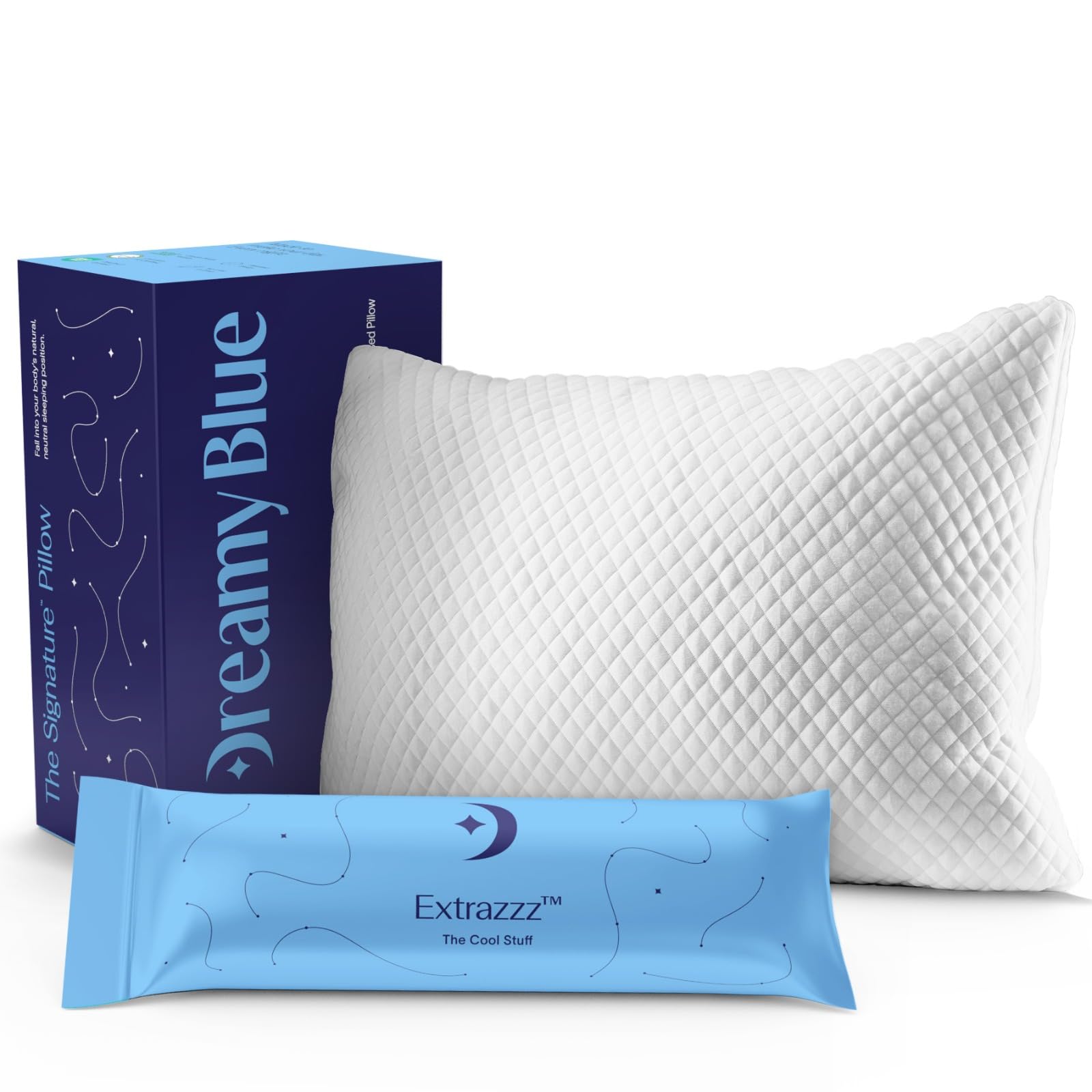
DreamyBlue Adjustable Queen
Key Features
- Fill Material: Shredded memory foam
- Adjustability: Zipper + extra fill
- Cooling Cover: Bamboo-rayon
- Shape: Traditional
- Price: $$$
DreamyBlue’s shredded memory foam blend produces a noticeably softer, more down-like motion than the denser fill in the top pick, while the bamboo-rayon cover keeps the surface smooth and breathable. The medium firmness reads as plush rather than hard, which is the main reason it feels different from a typical memory foam pillow. The result is a pillow that feels broken-in on the first night, without the stiff unpacking period some foam pillows have.
This pillow suits side sleepers who want a cradling feel rather than a firm contour. The zipper opens to remove or add fill, and extra fill is included for fine-tuning loft. Hot sleepers should note the cover is not actively cooling, and the premium price puts it beyond budget shoppers.
The foam cradles the head without letting it sink, which is what makes it work for neck-pain sufferers who prefer a softer support. Expect a short setup session to find your ideal fill level, but the adjustment holds once you set it.
Pros
- Feels high quality right out of the box, from the bamboo-rayon cover to the foam blend.
- Comfortable and easy to sleep on without a breaking-in period.
- Zipper adjustability with extra fill makes it simple to change loft.
Cons
- Side sleepers who prefer a firm, dense pillow may find the down-like feel too soft.
For side sleepers who prefer a plush, adjustable memory foam pillow, DreamyBlue delivers that feel without sacrificing neck support.
Best for Neck-Pain Relief
Royal Therapy Cervical Pillow
Key Features
- Fill Material: Memory foam
- Adjustability: 3-layer height
- Cooling Cover: Bamboo-rayon
- Shape: Contour
- Price: $$
The 3-layer adjustable height design lets sleepers change loft without losing the cervical contour shape. The medium memory foam gives a soft contact feel while the defined curve holds the neck in place, and the bamboo-rayon cover zips off for machine washing.
It reads softer than rigid cervical pillows, which makes it a practical option for side sleepers who find hard orthopedic shapes too firm. The contoured base still stops the neck from dropping into a flat position, so comfort does not come at the expense of support.
The shaped contour is less forgiving than a traditional pillow, and side sleepers who prefer a plush, fluffy feel may want a different shape. Stomach sleepers who need a very flat profile should stay with a conventional pillow. For side and back sleepers with neck pain who want a softer memory-foam feel, the adjustable height makes this a useful cervical option at a mid-range price.
Pros
- Comfortable memory-foam surface that avoids the rock-hard feel of some cervical pillows.
- Defined cervical curve keeps the neck supported during side and back sleeping.
- Neck-pain relief and improved sleep quality are the standout benefits.
Cons
- The medium-soft foam may feel too soft for side sleepers who prefer a firmer contour.
For side and back sleepers with neck pain, this is the contoured option to consider if you want adjustable height and a softer memory-foam feel without paying premium prices.
Best for Budget Hot Sleepers
QUTOOL Cooling Queen 2-Pack
Key Features
- Fill Material: Shredded memory foam
- Adjustability: Zipper + extra fill
- Cooling Cover: Dual-sided ice-silk
- Shape: Traditional
- Price: $
Two side-sleeper pillows for about the price of one premium single, with a dual-sided cover: ice-silk for a cool-to-the-touch surface and bamboo-rayon for a softer hand. The zippered shredded-foam fill adjusts from low to high loft, and the included extra fill lets each sleeper tune their own side. The medium-density blend carries the neck without the hard pressure of solid memory foam, and the look and finish read as more expensive than the price suggests.
This works best for side sleepers who want a cool cover and adjustable medium support at a budget price. The cooling is contact-based, not active temperature control, so it won’t overcome a very warm room. If you sleep cool but like a firmer contour, the shredded fill can be packed higher to fill the shoulder gap; if you prefer less loft, just remove fill.
Pros
- Build quality and finish read well above the budget price point.
- Zipper access and extra fill make it easy to match side-sleeper loft.
- Medium shredded-foam blend supports the neck without a hard pressure point.
Cons
- The ice-silk cover is cool to the touch but the overall effect stays subtle on warm nights.
- Fresh pillows may carry a foam scent that needs time to air out.
For budget-minded side sleepers who want adjustable loft and a cool cover, this two-pack delivers a comfortable medium feel with room to fine-tune each side.
Best for Dedicated Side Sleepers
KUCEY Cooling Side Pillow
Key Features
- Fill Material: Shredded memory foam
- Adjustability: Zipper
- Cooling Cover: Cooling fiber
- Shape: Crescent
- Price: $$
The crescent contour hugs the shoulder gap and keeps the head aligned in a side-only sleep position. The zipper opens to a shredded memory-foam fill, so you can remove material for a lower loft or add it back for more support. That makes it a more targeted option than the top pick, which suits a wider range of sleep positions.
The cooling cover feels cool to the touch at first and helps offset heat buildup for some sleepers, but it is contact-cooling rather than active temperature control. Dedicated side sleepers with neck or shoulder pain are the best match here; the curved contour reduces pressure along the shoulder line. The tradeoff is that this pillow is not intended for back or stomach sleeping, so if you rotate positions during the night, the crescent shape may feel restrictive.
Pros
- Crescent contour supports the shoulder gap and keeps neck alignment for side sleeping.
- Zippered shredded-foam fill adjusts loft without losing the curved shape.
- Contact-cooling cover helps reduce heat buildup for hot sleepers.
Cons
- The cooling effect is contact-based only, and the cool sensation can fade once the pillow warms.
- Sleepers who shift to back or stomach during the night may find the crescent shape restrictive.
Committed side sleepers get a stable curved contour and a cool-to-the-touch cover at a mid-range price; anyone who changes positions overnight should consider a more flexible pillow.
Best for Neck & Shoulder Pain
Sidney Sleep Curved Queen
Key Features
- Fill Material: Visco + polyester
- Adjustability: Zipper + extra fill
- Shape: Curved cut-out
- Price: $$
The Sidney Sleep curved pillow pairs a shoulder cut-out with a zipper and extra fill, so you can adjust the loft without losing the contoured neck support. That combination is rare among curved designs; most offer either a fixed shape or adjustability, not both. The curve follows the natural line from neck to shoulder, cutting down on pressure points compared to a flat pillow.
The fill is firm out of the box, so side sleepers should remove fill in small stages to match their shoulder width. It suits sleepers with neck or shoulder pressure who want a supportive contour and are willing to spend a few minutes on setup. Stomach sleepers and those who prefer a soft, feather-like feel should look elsewhere. Back sleepers can use it with a lower fill level, but the curve works best for side-dominant positions.
Pros
- Contoured shoulder cut-out relieves neck pressure and keeps the spine aligned.
- Zipper with extra fill lets you customize loft without losing the curved support.
- Shredded visco foam blend holds its loft, avoiding the flattening seen in down alternatives.
Cons
- The curved, directional shape needs correct orientation each night; flipping it puts the cut-out in the wrong place.
- No active cooling cover, so warm sleepers will need to add their own cooling layer.
For side sleepers who value adjustability and a shoulder-friendly curve, the Sidney Sleep is a cost-effective way to get both—if you’re willing to fine-tune the fill.
Best for Hotel-Style Comfort
Beckham Hotel Queen 2-Pack

Key Features
- Fill Material: Down alternative
- Adjustability: Fixed
- Cooling Cover: Cotton
- Shape: Traditional
- Price: $$
This mid-range down-alternative set delivers the fluffy, cushioned feel of a hotel pillow, with a cotton cover that stays comfortable through repeated machine washing. Back and stomach sleepers who like a plush, down-like loft will find it ready to sleep on from the first night. The main drawbacks for side sleepers are flatness and inconsistent neck support: the fill can compress with nightly use, and the soft surface may not hold a firm line under a side-lying head. That softness is the appeal for the right sleeper.
Pros
- Fluffy, hotel-style down-alternative feel with a plush, cushioned loft.
- Comfortable and cozy right away, with a machine-washable cotton cover that keeps care simple.
Cons
- Neck support can be inconsistent for side sleepers who need a firm, even surface.
Best for back and stomach sleepers who want a soft hotel feel at a mid-range price, or for guest rooms where plush comfort matters more than alignment.
Best for Budget-Friendly Value
Utopia Gusset Queen 2-Pack
Key Features
- Fill Material: Down alternative
- Adjustability: Fixed
- Cooling Cover: Polycotton
- Shape: Gusseted
- Price: $
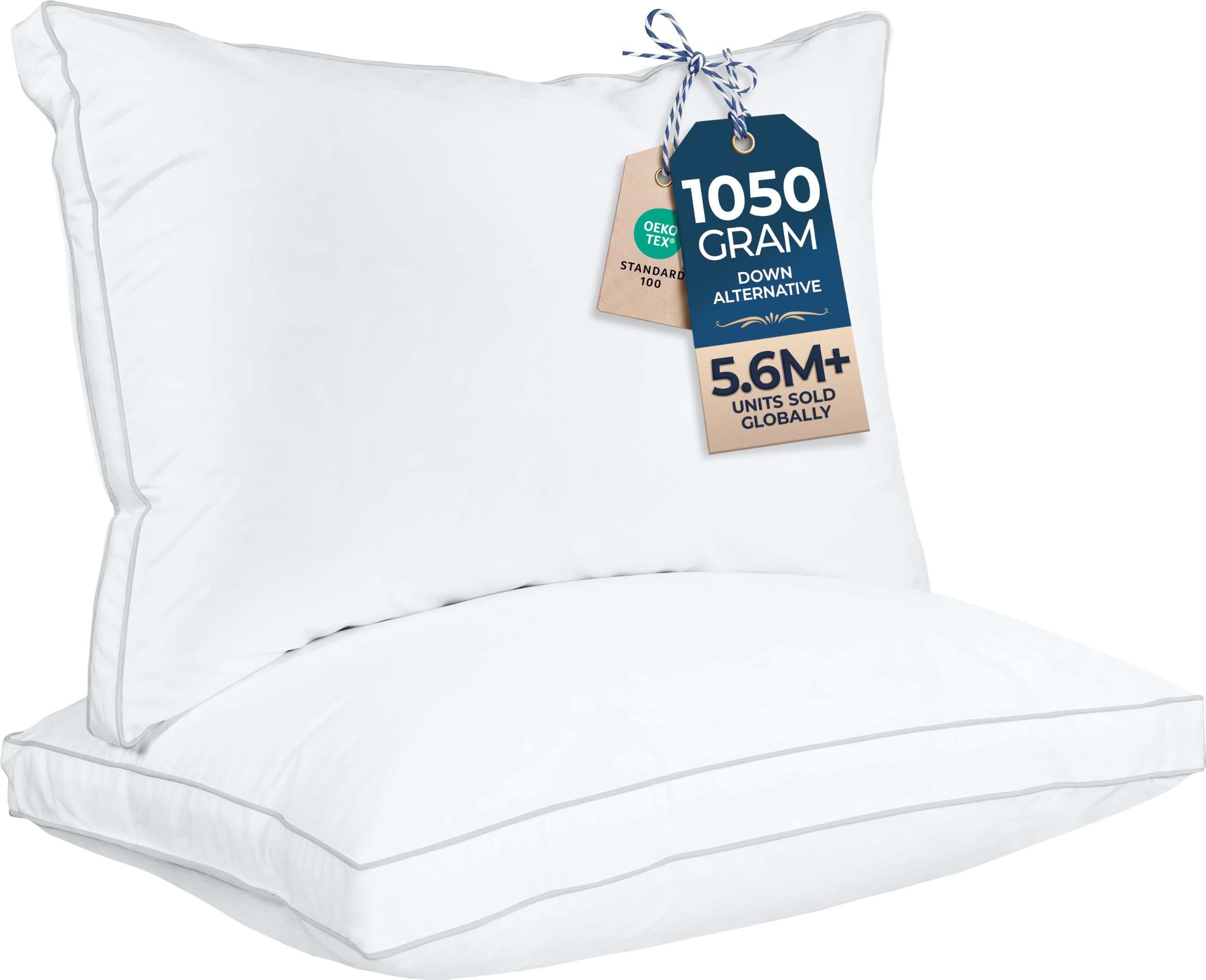
The gusseted sides give this budget two-pack a fluffier feel than the price suggests, and the plush polyester fill suits back sleepers who like soft, cloud-like support. For side sleepers, the loft can flatten under sustained use, leaving head and neck support inconsistent. That makes it a practical guest-room or back-sleeping pillow rather than a dedicated side-sleeper alignment tool; combination sleepers who prefer plush loft may accept the tradeoff.
Pros
- Gusseted construction adds a soft, cloud-like loft that feels more expensive than the price.
- Two-pack pricing delivers strong value for guest-room or back-sleeper use.
Cons
- Loft can flatten over time, so dedicated side sleepers may get inconsistent neck support.
A smart budget buy for back sleepers and guest rooms, as long as you don’t expect durable side-sleeper alignment.
Best for Value Cooling 2-Pack
SUPA MODERN Queen 2-Pack

Key Features
- Fill Material: Shredded memory foam
- Adjustability: Zipper + extra fill
- Cooling Cover: Dual-sided cooling
- Shape: Traditional
- Price: $
The SUPA MODERN two-pack pairs a genuinely cool-to-the-touch cover with shredded cross-cut memory foam you can adjust by unzipping the cover. That combination works for hot sleepers on their back or side who want a firmer, higher loft without paying for a single premium pillow. The cover’s cooling is contact-based, not active temperature control. Neck-pain outcomes are less consistent than the QUTOOL. It suits budget buyers who prioritize cooling and adjustable support over plushness or a low profile.
Pros
- Cool-to-the-touch cover delivers immediate contact cooling for hot sleepers.
- Adjustable shredded-foam fill lets you customize loft without losing support.
Cons
- The fill can feel too thick for smaller body frames even after removing some foam.
Best for hot sleepers on a budget who want two cool-surface pillows with a firm, adjustable loft.
Best for Neck-Pain Relief
Osteo Cervical Pillow
Key Features
- Fill Material: Memory foam
- Adjustability: Rotate or remove
- Cooling Cover: 3D mesh
- Shape: Hollow contour
- Price: $$
The hollow-center contour and 3D mesh cover make this a strong value pick for side sleepers with neck pain who don’t want premium pricing. The memory foam is structured and firm, which fits side and back sleepers who like a defined cradle under the neck; those who prefer soft, plush pillows will find the contour unyielding. It offers some height adjustment, but the more adjustable contoured option allows finer loft control, which is why this one sits a step below.
Pros
- Contoured hollow center cradles the neck and keeps side sleepers’ heads aligned through the night.
- Breathable 3D mesh cover and machine-washable design suit hot sleepers who dislike foam heat.
Cons
- Contoured foam is noticeably firm and can feel too hard for sleepers accustomed to soft plush pillows.
Best for side or back sleepers with neck pain who want a budget-friendly contoured pillow and don’t mind a firm feel.
Best for Neck-Pain Relief
Cozyplayer Contour Pillow
Key Features
- Fill Material: Memory foam
- Adjustability: Rotate or insert
- Cooling Cover: Arc-Chill
- Shape: Hollow contour
- Price: $$
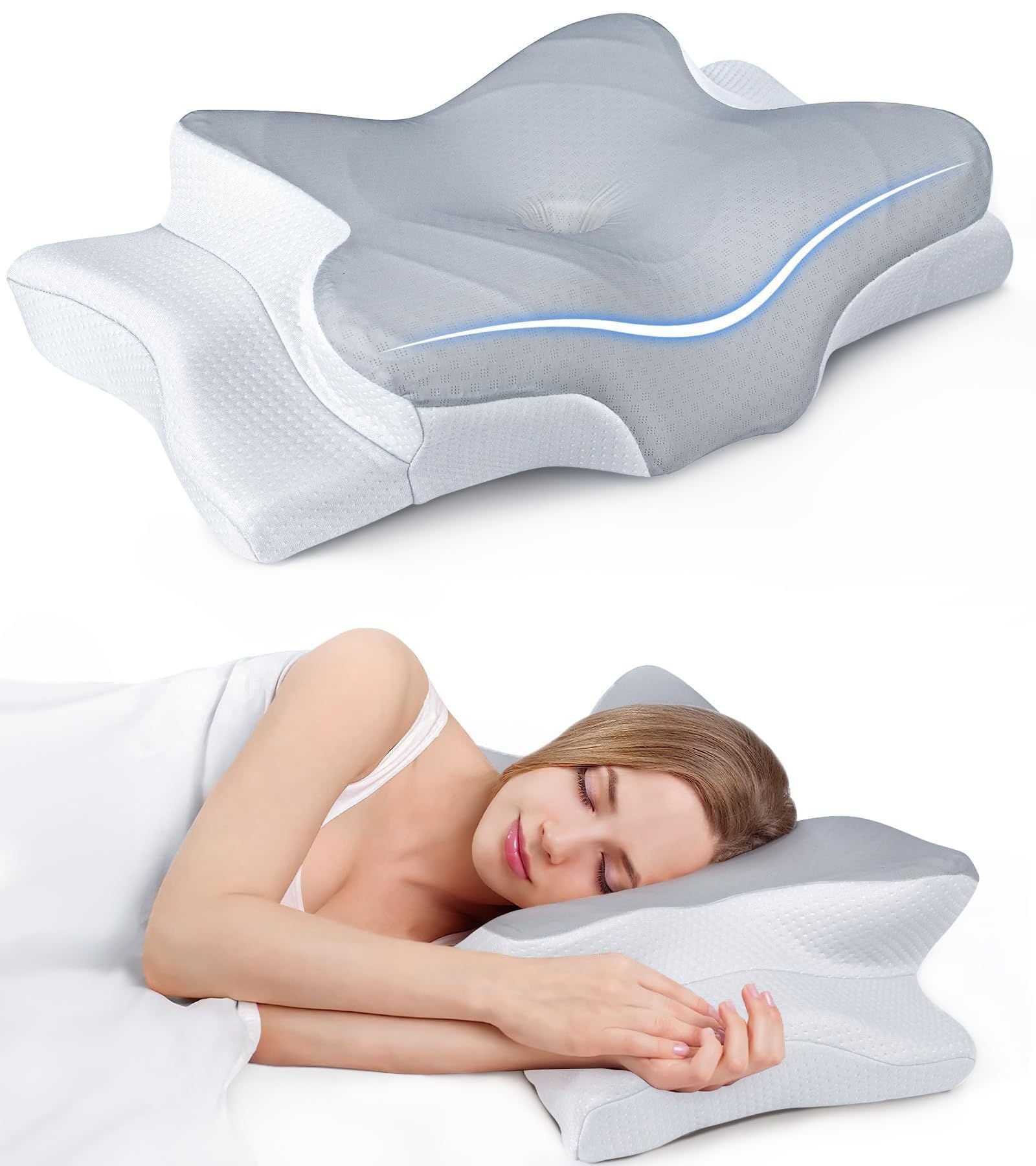
The Cozyplayer combines the Arc-Chill cooling cover with a removable bottom insert and rotatable height, letting side sleepers shift loft while keeping the cervical shape. For hot sleepers with neck pain, that makes it a feature-dense option with real support and a washable cover. It stops short of the top tiers in this roundup, but the cooling contour is a specialized fit for those who want a structured cervical surface.
Pros
- Cooling cover and washable design suit hot sleepers who want temperature relief.
- Rotatable height and removable insert allow loft changes while keeping the cervical contour.
Cons
- Before your neck adapts, the contoured firmness can feel stiff; smaller frames may find the lowest height too high.
Use this when you want a cooling cervical shape and are not expecting a plush conventional pillow.
Best for Firm Budget 2-Pack
Sasttie Firm Queen 2-Pack

Key Features
- Fill Material: Down alternative
- Adjustability: Fixed
- Cooling Cover: Microfiber
- Shape: Traditional
- Price: $
This budget two-pack uses a firmer down-alternative fill than is typical, and the fill bounces back nicely once opened. The supportive loft suits back and side sleepers who want a stiff traditional pillow rather than a contoured cervical shape; there is no contour or adjustability for severe neck pain. Unit-to-unit fill consistency can vary, so some pillows may arrive underfilled or flat — acceptable if you can adapt to loft changes, but not a sure thing for side sleepers who need predictable alignment.
Pros
- Firmer fill than typical budget down alternatives, giving side sleepers a sturdier base at a two-pack price.
- Fluffs up well after opening and supports the head and neck for back and side sleepers.
Cons
- Sleepers who need consistent loft may find fill varies between pillows, with some arriving underfilled or flat.
This set fits budget-focused side sleepers who want a firm traditional pillow and can tolerate occasional loft inconsistency; for those with neck pain, a contoured adjustable option is the safer route.
How to Choose
For side sleepers, the key to buying a pillow is finding the right loft—the height of the pillow when your head is resting—to fill the gap between your neck and the mattress, which is determined by your shoulder width and sleeping position.
Fill Material
The two main categories are down alternative and memory foam. Down alternative, usually polyester fiber, feels soft and fluffy initially, but it compresses under sustained head weight, which is why many of these pillows flatten within a few months of nightly use.
Memory foam, especially shredded memory foam, holds its shape much longer. It also responds to body heat, molding to the neck curve. The trade-off is a denser feel and potential off-gassing odor that requires airing out before first use.
Adjustability
Fixed-loft pillows are a gamble for side sleepers because the ideal height depends on shoulder breadth, body weight, and mattress firmness. A 5-inch loft that works for a petite person on a firm mattress will often be too low for a broad-shouldered person on a soft bed.
Adjustable pillows solve this by letting you remove or add shredded fill through a zipper. A removable fill core allows you to fine-tune the height until you feel your neck is in line with your spine. This is the most practical innovation in the category.
Contour Shape
Cervical contour pillows have a scooped-out center and raised edges that support the neck curve while keeping the head cradled. This design can relieve pain by maintaining alignment, but it is less forgiving for people who move around at night.
Curved pillows with a shoulder cut-out are designed for side sleepers specifically. The cut-out creates a recess for the shoulder, preventing the pillow from pushing the head up at an awkward angle. The shape reduces the need to constantly readjust.
Cooling Cover
Many cooling pillows use a cover with a cool-to-the-touch fabric. This works as a contact cooling layer, drawing heat away from the skin, but it does not actively regulate temperature. In a warm room, the effect fades.
For hot sleepers, a breathable cover material like bamboo-rayon or a 3D mesh is more significant than a ‘cooling’ label. These materials allow air to circulate around the foam core, dissipating body heat rather than just feeling cool for the first five minutes.
Firmness
Firmness is how much the pillow resists compression. Memory foam is naturally firmer than down alternative, and shredded memory foam can be made softer by removing fill. However, a pillow that is too firm for your body size can push the head upward, causing neck strain.
Pay attention to the firmness description in the specs. ‘Plush’ and ‘soft’ are code for low support, while ‘firm’ and ‘medium-firm’ are typically better for side sleepers. If you’re between sizes, an adjustable pillow with a medium out-of-the-box firmness is the safest choice.
FAQ
Why does my memory foam pillow smell like chemicals?
That odor is from the foam’s manufacturing process, not a defect. Volatile organic compounds (VOCs) are released when the foam is first unwrapped. The fix is simple: remove the pillow from its packaging and let it air out in a ventilated room for 24-48 hours before putting it on your bed. If the smell persists for more than a week, that’s a reason to consider a return.
Do down alternative pillows go flat?
Yes, and it’s the most common complaint in the category. Down alternative fill is made of hollow polyester fibers that compress and lose their springiness under the pressure of your head each night. A high-quality down alternative pillow may hold its shape for a year, but a budget option can flatten in weeks. Look for a gusseted design or a dense fiber fill, and consider a shredded memory foam pillow if you want something that lasts longer.
How much filling should I remove from an adjustable pillow for side sleeping?
Start by removing nothing; sleep on the pillow as it comes for one night. If your neck feels bent upward, take out a small handful of fill and retest the next night. If your head sinks and your neck feels compressed, add fill back. The goal is a neutral spine, where an imaginary line runs from your ear through your shoulder and hip. Most side sleepers end up removing a third to half of the fill to achieve this.
Why doesn’t my cooling pillow feel cool?
A ‘cooling’ cover typically uses a fabric that feels cold to the touch, but it only works while the fabric is cooler than your skin. Once your body heat warms the fabric, the effect stops. Active cooling, like a gel-infused layer that absorbs heat, works longer, but it’s not the same as a fan or an air-conditioned room. If you’re a hot sleeper, prioritize a highly breathable cover material like mesh over a ‘cooling’ label.