
This post contains affiliate links. We may earn a small commission when you buy through our links — at no extra cost to you.
Most pillows marketed for snoring are just contour shapes with a snoring label. The physical mechanism that actually keeps the airway open is upper-body elevation: sleeping on an incline stops the throat from collapsing in a way a head-only pillow cannot.
That makes a bed wedge the practical choice for most snorers. The trade-off is feel: wedges with a thin foam top sit on a hard base and press into shoulders and hips, while thicker memory-foam layers cost more and create a gentler transition from mattress to incline.
The right wedge depends on sleep position and required incline. Back sleepers can handle firmer support; side sleepers should look for a thick topper or a low transition edge. Match the wedge to that, and quieter breathing is a realistic outcome.




Best for Back Sleepers
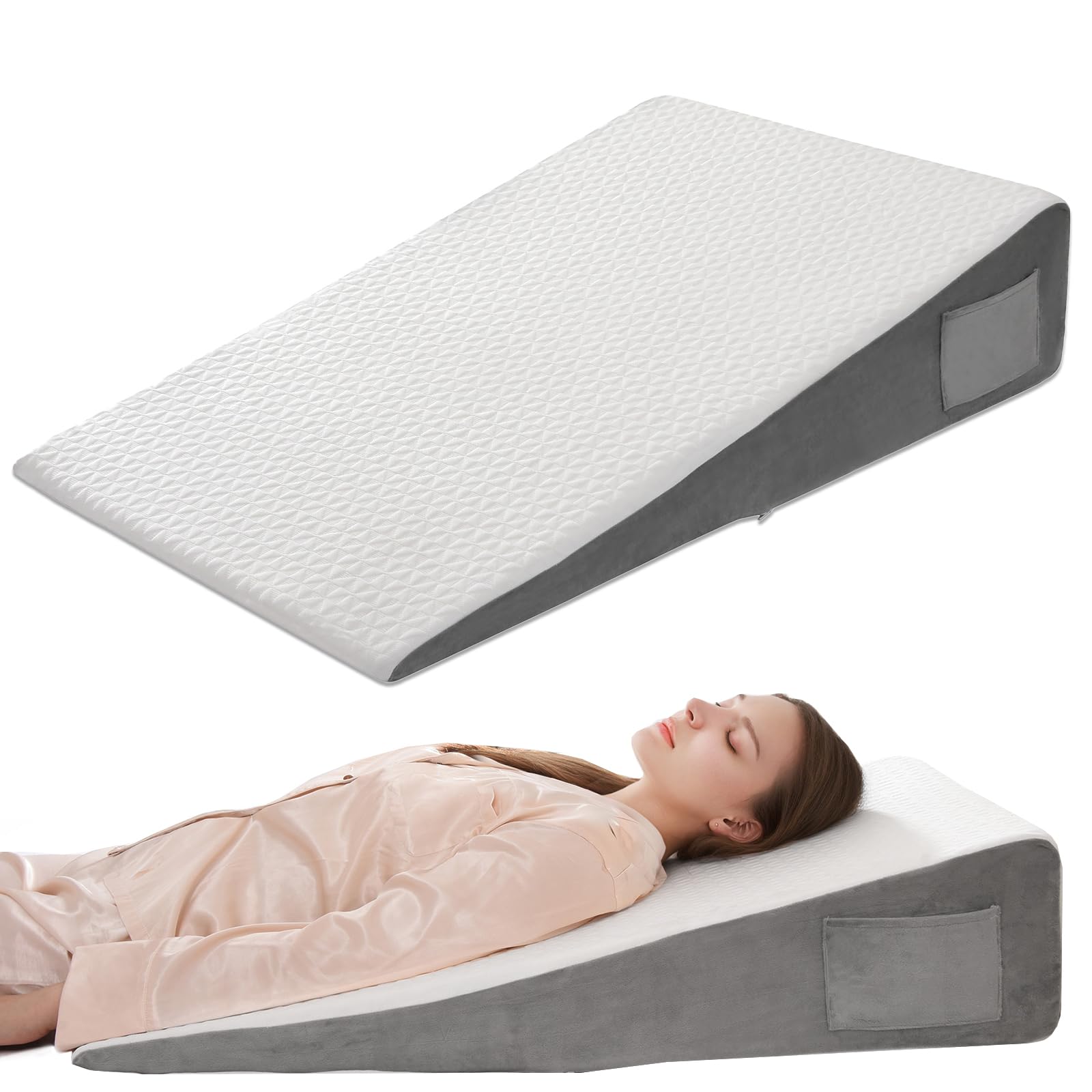
Kolbs Bed Wedge Pillow
Key Features
- Incline Height: 7.5 in
- Memory-Foam Top: 1.5-in memory foam
- Width / Length: 24 x 24 in
- Washable Cover: Removable, washable
- Adjustability: One-piece fixed
- Price: Mid-Range
The 7.5-inch incline tilts the head, neck, and torso enough to keep the airway clear, and the sleep-quality results are the strongest in this wedge category. Snoring lessens and apnea-related waking drops because the body stays elevated through the night. The rise creates a true torso incline, which is what separates this from a neck-only cervical pillow. The incline is high enough that you don’t need to stack additional pillows to get useful elevation. The same angle also relieves acid reflux and breathing discomfort, making it a practical anti-snoring buy rather than a single-purpose pillow.
The dense foam core holds its shape under nightly load, and the removable jacquard cover survives machine washing without pilling. Back sleepers get a 24-by-24-inch platform that is wide enough to stay put and tall enough to create a meaningful incline. The same shape works for upright reading and post-recovery lounging, so the wedge earns its keep beyond sleep alone. The cover unzips for cleaning, which matters when you’re using the wedge every night.
This is for back sleepers who want a structured incline for snoring or sleep apnea. The high-density core can feel rock-hard to some sleepers, so side sleepers may need a topper; stomach sleepers should skip the shape entirely because it won’t position the neck correctly. For back sleepers, the firmness serves the airway-opening goal rather than working against it. If you sleep on your back, the tradeoff is easy to accept.
Pros
- Elevates the head and torso enough to reduce snoring and apnea-related waking.
- Firm support for neck, back, and upper body holds through the night.
- Removable jacquard cover and dense foam core hold up through extended use.
- Relieves acid reflux and breathing discomfort, expanding its use beyond snoring.
Cons
- The 1.5-in memory-foam top is thinner than softer alternatives, so it won’t feel plush.
Back sleepers who want a structured incline for snoring and apnea relief will find the clearest answer in this wedge.
Best for Side Sleepers
Sleepnitez 8" Wedge Pillow
Key Features
- Incline Height: 8 in
- Memory-Foam Top: 3.25-in memory foam
- Width / Length: 27.2 x 25.2 in
- Washable Cover: Removable, washable
- Adjustability: One-piece fixed
- Price: Premium
The thickest memory-foam topper in this set and a low transition edge make the Sleepnitez the easiest wedge for side sleepers to tolerate. Unlike a flat cervical pillow, it raises the torso rather than just tilting the head. The foam cushions the hips and shoulders before the supportive base takes over, so the elevated angle stays comfortable through the night. That soft landing still keeps the upper body raised enough to open the airway and ease acid reflux, without the hard-ramp feel that makes traditional wedges hard to accept.
Side sleepers with snoring or sleep apnea who have rejected firmer wedges are the right fit. This premium-priced option carries a possible adjustment period while the back and neck adapt to the incline. The soft surface is the reason to choose it over the firmer category standard.
Pros
- Thick 3.25-inch memory-foam topper cushions hips and shoulders, making side sleeping comfortable on an incline.
- Low transition edge meets the mattress without a ledge, removing the hard step found on wedge pillows.
- Upper body elevation reduces acid reflux and snoring without the hard-foam feel of firmer wedges.
Cons
- New wedge users may feel temporary back or neck strain during the first nights on the incline.
- The 8-inch height isn’t enough for anyone who needs a 10-12 inch steep elevation.
For side sleepers with snoring or reflux who cannot accept hard wedge foam, the Sleepnitez delivers the comfort that makes an elevated night’s sleep possible.
Best for Headboard Gaps
Vekkia Extra-Long Wedge
Key Features
- Incline Height: 7.5 in
- Memory-Foam Top: High-density foam
- Width / Length: 34 x 22 in
- Washable Cover: Removable, washable
- Adjustability: One-piece fixed
- Price: Mid-Range
The 34-inch platform is the reason to consider this wedge: it spans the gap between mattress and headboard while holding the torso at a 7.5-inch incline. Compared with the category-leading wedge, the extra length does more for people whose pillows keep vanishing behind the bed, and the height still supports an airway-open position for snoring relief. The side pockets carry a phone, remote, or glasses without adding clutter to the sleeping surface.
This fits a snorer who needs upper-body lift and also has a headboard gap wide enough to eat a pillow. Bed fit is the honest boundary: on frames with an unusually wide mattress-to-wall opening, the wedge can slide down between them, so measure that gap before ordering. The 7.5-inch rise is moderate, so it helps snoring without the steep incline some reflux wedges use.
Pros
- 34-inch platform keeps pillows and remotes from falling behind the bed.
- 7.5-inch incline gives head, neck, and upper-body support for easier breathing while asleep.
- Built-in side pockets keep a phone, glasses, or remote within reach.
Cons
- The high-density foam can feel too firm for side sleepers, though others prefer that support.
- On frames with a wide mattress-to-wall gap, the wedge can slide down and lose position.
For a snorer whose bed has a headboard gap, this is the wedge that does double duty without a pillow-stuffing routine.
Best for Budget Back Sleepers
Bedluxe 10" Wedge
Key Features
- Incline Height: 10 in
- Memory-Foam Top: Gel-infused memory foam
- Width / Length: 24 x 24 in
- Washable Cover: Removable, washable
- Adjustability: One-piece fixed
- Price: Budget
The 10-inch incline puts this wedge at the high end of the budget range, and the cooling gel memory-foam top adds cushion without letting the surface collapse. That straight-line lift keeps the upper body elevated well enough to reduce snoring for back sleepers.
The high-density base holds its shape through the night, and the washable cover makes maintenance simple. That firmness also supports the neck and upper back without sagging, which is why back sleepers pair it with their usual pillow.
This wedge is for back sleepers who want a tall incline on a budget and have no issue with high-density foam. The base is firm, so stomach sleepers are not the right fit.
Pros
- Tall 10-inch incline lifts the head and torso to open the airway for back sleepers.
- Cooling gel memory-foam top softens the high-density base.
- Quality construction holds up under nightly use at a budget price.
Cons
- Side sleepers used to a soft transition may need a topper for the firm base.
- Stomach sleepers will not find a workable angle on a 10-inch incline.
Back-sleeping snorers on a budget get the elevation they need from this wedge; stomach sleepers should look elsewhere.
Best for Post-Surgery Support
Yojoker 4-Piece Wedge Set
Key Features
- Memory-Foam Top: Memory-foam set
- Washable Cover: Removable, washable
- Adjustability: 4-piece modular
- Price: Premium
The four-piece layout separates into head, back, and leg wedges, so elevation and body support can be tuned independently instead of being locked into one fixed angle. The pieces can form a continuous ramp for head-and-chest elevation or be split apart to support knees and lower back at the same time. A higher ramp keeps the upper body from folding at the neck, which is the mechanism behind snoring relief, and sleep apnea users get noticeably deeper rest on those configurations.
The best fit is a sleeper who needs post-surgery positioning and snoring support from the same kit, especially when back and leg elevation matter as much as head angle. The firm foam base keeps the elevated position stable through the night, which suits someone who wants structure rather than sink-in softness. Removable, machine-washable covers add convenience for recovery use.
Pros
- Separate wedges allow independent head, back, and leg support in one kit.
- Firm foam keeps the body from sinking and maintains an elevated sleeping angle.
- Removable, machine-washable covers keep the modular pieces easy to clean.
Cons
- Four pieces take more setup time and storage space than a single wedge.
- Firm foam can feel too hard for plush-pillow sleepers.
For a buyer who needs recovery positioning plus airway-open sleep support from one kit, this four-piece set is the flexible alternative to a single-angle wedge.
Best for Compact Side Sleepers
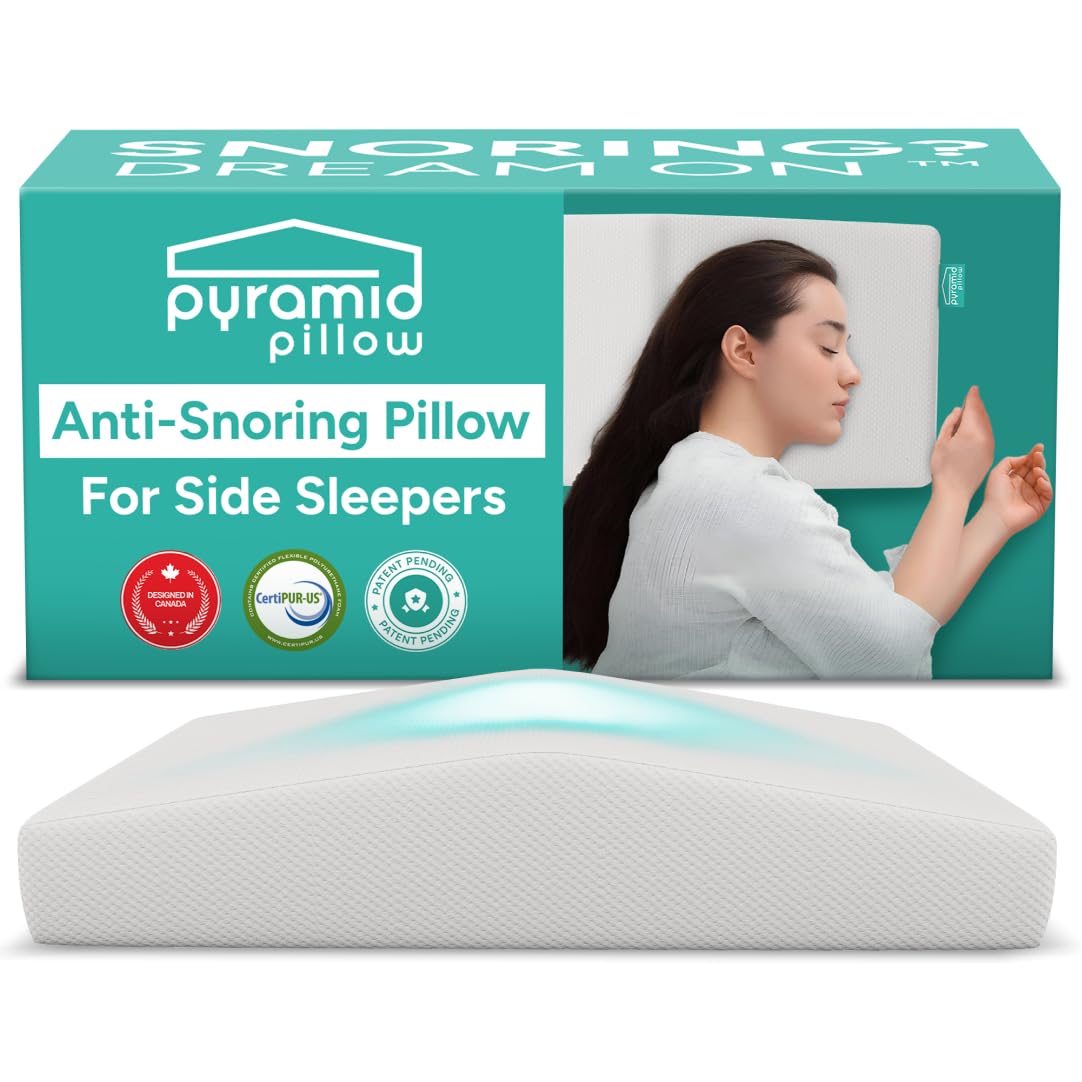
Pyramid Anti-Snoring Pillow
Key Features
- Incline Height: 9.5-degree incline
- Memory-Foam Top: Medium-firm memory foam
- Width / Length: 24 x 12 in
- Washable Cover: Removable, washable
- Adjustability: One-piece fixed
- Price: Premium
The 9.5-degree incline sits inside a conventional pillow shape, so side sleepers get anti-snoring elevation without the footprint of a full wedge. The medium-firm memory foam holds the head at a consistent angle through the night, and the removable polyester cover washes easily. The 5-inch profile keeps the transition from mattress to pillow gentle, and the compact format is simple to pack for travel or add to one side of the bed.
This is for side sleepers who want pillow-format airway support rather than a large wedge, including couples who need relief on one side only. The tradeoff is a compact footprint: it is not a full-width pillow, so broad-shouldered sleepers should check their usual pillow size. Back and stomach sleepers are better served by full wedge options; this shape assumes side positioning.
Pros
- Inclined memory-foam shape reduces snoring for side sleepers without the bulk of a full wedge.
- Compact pillow format is easy to travel with or use on just one side of the bed.
- Stable head positioning helps side sleepers feel more refreshed in the morning.
Cons
- Premium pricing is closer to full-size wedges than to standard pillows.
- Narrower than a standard pillow; broad-shouldered side sleepers may want more surface area.
For side sleepers who want targeted snoring relief without a wedge, this compact incline is worth the premium.
Best for Cpap Users
WGAKCED 3-Piece Wedge Set

Key Features
- Incline Height: 5.5-12 in adjustable
- Memory-Foam Top: Memory-foam head pillow
- Washable Cover: Removable, washable
- Adjustability: 3-piece adjustable
- Price: Budget
The 5.5-to-12-inch adjustable height is the standout: CPAP users and snorers can raise or lower the incline without buying a second wedge. The modular pieces work for sleeping, reading, and recovery, and the removable head pillow adds convenience. The main boundary is the Velcro-secured sections, which can shift overnight and may need re-setting before sleep. This limits it for restless sleepers who want a single locked wedge, but the height flexibility and budget price make it a practical option for anyone who wants to tune elevation.
Pros
- Works well for sleeping, watching TV, reading, and recovery.
- Improves sleep quality and reduces snoring.
Cons
- Foam can feel softer than a dense wedge, which may matter if you prefer extra-firm support.
Best for CPAP users and snorers who want adjustable elevation without paying premium-wedge prices.
Best for Budget with Pockets
Ruqmuis 10" Wedge

Key Features
- Incline Height: 10 in
- Memory-Foam Top: High-density foam
- Width / Length: 24 x 24 in
- Washable Cover: Removable, washable
- Adjustability: One-piece fixed
- Price: Budget
The 10-inch incline, washable jacquard cover, and side pockets make this a convenient budget wedge for elevating the head and torso while sleeping. That posture keeps the airway more open, supporting snoring and reflux relief. The dense foam is firm rather than plush, so side sleepers who dislike hard surfaces may want a topper. Some units can slide down the mattress or arrive compressed and never fully expand, and these tradeoffs keep it out of the top tiers.
Pros
- Firm 10-inch incline supports the head and torso in an airway-open position, aiding snoring and reflux relief.
- Improves sleep quality and comfort for back and side sleeping.
Cons
- The 24-inch length can push taller sleepers’ feet off the edge of the bed.
Back sleepers on a budget who don’t need plush foam get a functional 10-inch wedge at a value price.
Best for Recovery Support
Ahpmeoa 3-Piece Wedge Set

Key Features
- Memory-Foam Top: Memory foam
- Width / Length: 22.8 x 23.6 in
- Washable Cover: Removable, washable
- Adjustability: 3-piece adjustable
- Price: Mid-Range
Three-piece wedge set with solid back and neck support, easy repositioning, and non-slip backing that keeps the assembly in place while sitting up in bed. Post-surgery users benefit most from the modular layout. For snoring and sleep apnea, upper-body elevation can help, but the design is recovery-first: snoring support is secondary to its post-surgery and reflux strengths. This is a modular set, not a one-piece wedge, so expect to position the connected sections before use.
Pros
- Three-piece layout repositions easily for reading, sleeping, and sitting up in bed.
- Stable support holds the back, neck, and upper body in place during recovery.
Cons
- Firm foam can feel hard to side sleepers who expect plush memory-foam comfort.
Choose this when adjustable post-surgery or reflux support is the main job and snoring relief is a useful extra.
Best for Soft-Wedge Seekers
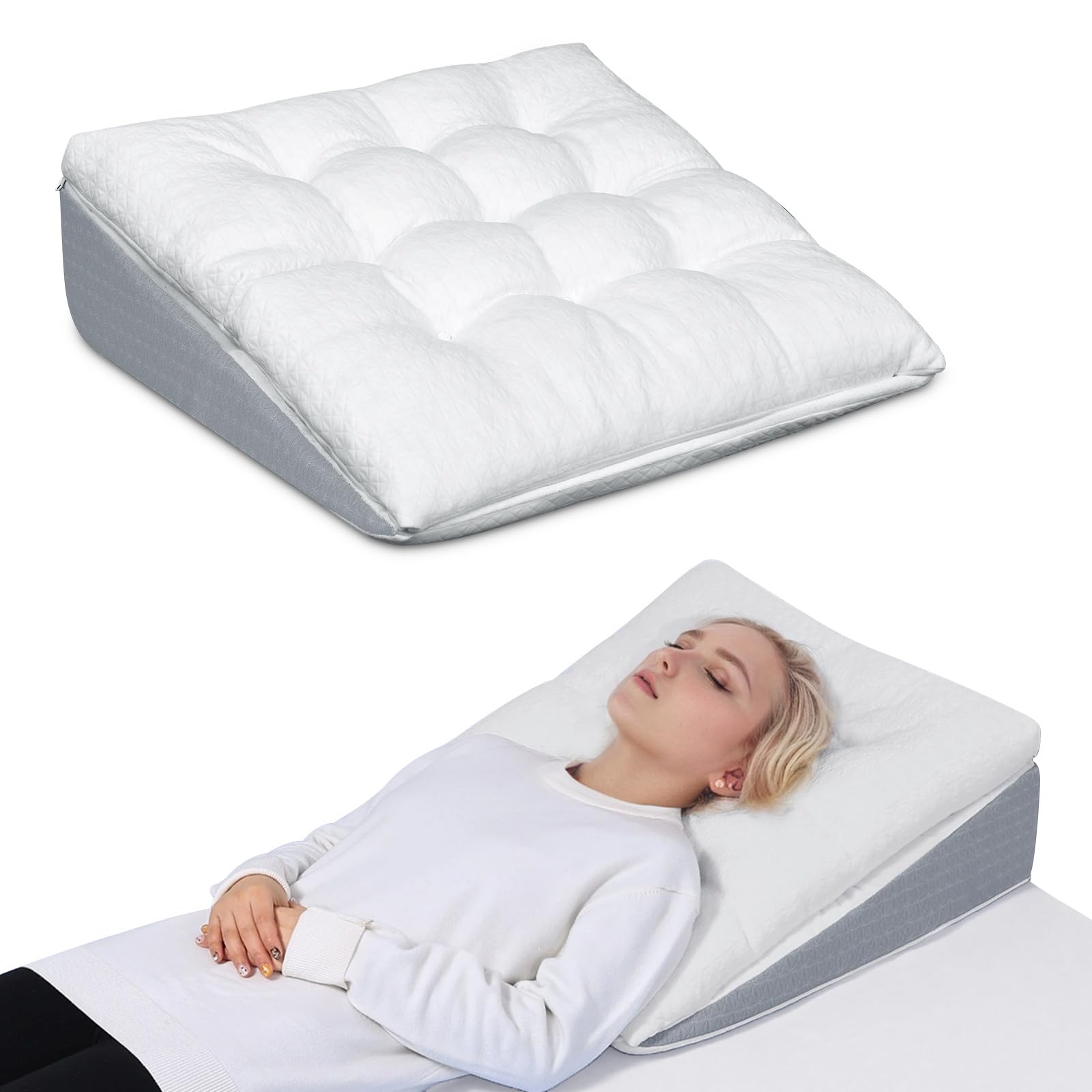
TANYOO 7.5" Wedge
Key Features
- Incline Height: 5.5-8.5 in adjustable
- Memory-Foam Top: Shredded memory topper
- Width / Length: 24 x 24 in
- Washable Cover: Removable, washable
- Adjustability: Detachable topper
- Price: Mid-Range
The removable shredded-memory-foam topper softens the wedge surface and lets you adjust the sleeping angle from 5.5 to 8.5 inches, which matters for snorers who need upper-body elevation but dislike hard foam. The 7.5-inch base supports an airway-open position for back and side sleepers, and the topper doubles as a lumbar pillow when detached. The cover zipper can snag or separate during removal, so buyers who expect to launder the cover regularly should account for that.
Pros
- Removable shredded-memory-foam topper lets you soften the wedge surface or detach it for a lower 5.5-inch profile.
- Soft surface supports snoring and reflux relief while avoiding the hard feel of standard wedge foam.
Cons
- The plush topper can compress too much for sleepers who need a firm, high-elevation incline.
For snorers who find hard wedge surfaces unbearable, the adjustable soft topper makes this a reasonable pick for moderate elevation needs.
Best for Contour Comfort
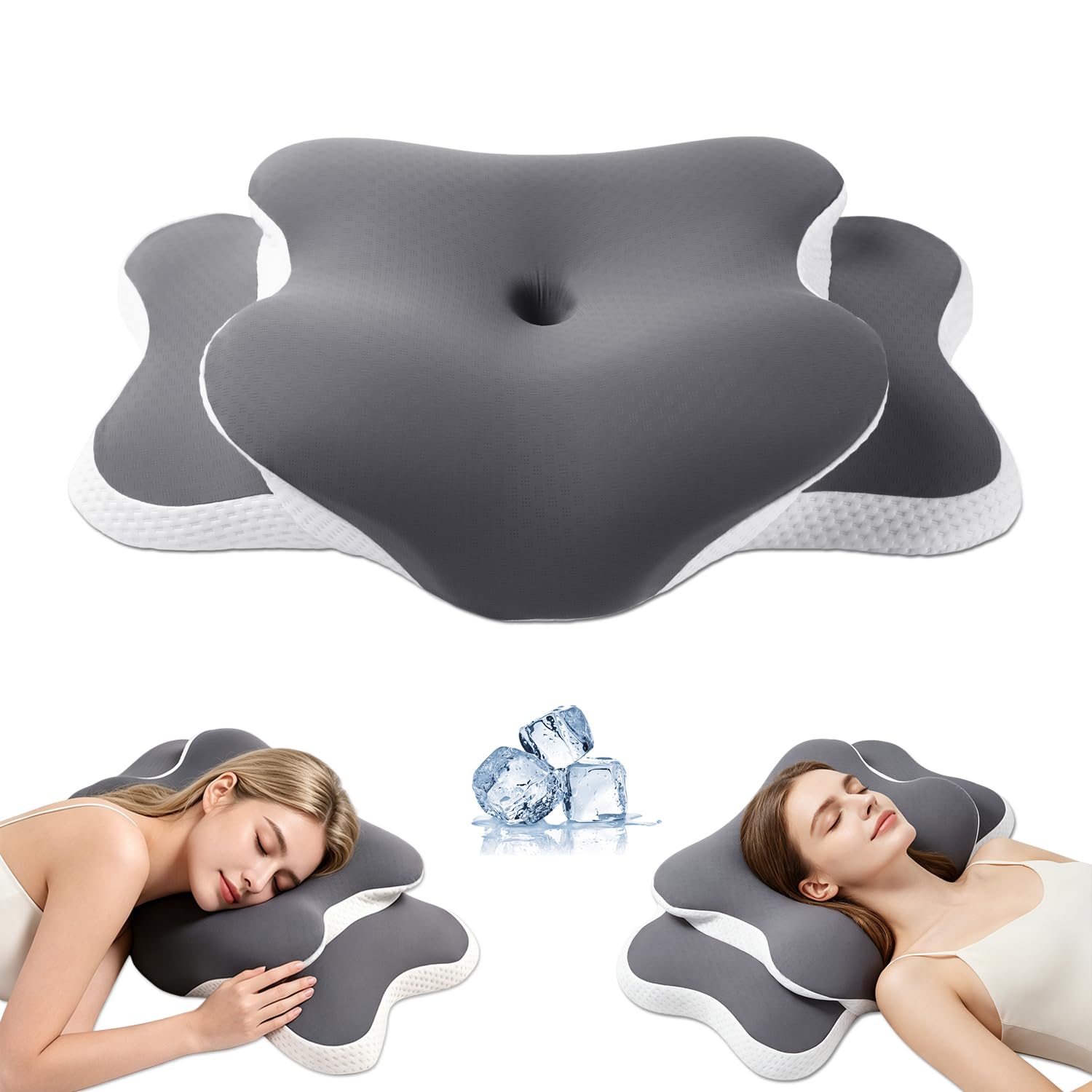
Ergo Sleep Apnea Pillow
Key Features
- Memory-Foam Top: Slow-rebound memory foam
- Width / Length: 25.6 x 15.8 in
- Washable Cover: Removable, washable
- Adjustability: Fixed contour
- Price: Mid-Range
Cradling cervical support, a washable cooling cover, and a comfortable fit for side and back sleepers make this a useful non-wedge option for those seeking pillow-based airway positioning. Sleep quality can improve for apnea users, yet snoring and apnea relief is inconsistent: the same contour that helps one sleeper may have no effect on another. That mixed outcome is why it remains a comfort-first cervical pillow rather than a dedicated snoring solution.
Pros
- Cradling contour and washable cooling cover suit side and back sleepers.
- Can improve sleep quality for apnea users while keeping a pillow format.
Cons
- Firm contour can feel too rigid for those used to soft pillows.
Best for side/back sleepers who want a cooling cervical pillow and prefer a firmer contour.
Best for Neck-Pain Relief
SAHEYER Cervical Pillow

Key Features
- Memory-Foam Top: Certified memory foam
- Width / Length: 27.5 x 15.7 in
- Washable Cover: Removable, washable
- Adjustability: Fixed contour
- Price: Mid-Range
SAHEYER’s dual-level cervical contour delivers firm support that relieves neck and shoulder tension for back and side sleepers, and the removable cover is machine washable. The foam is very firm, so it suits structured support but not anyone who wants a plush surface under the head and neck. Snoring relief is a secondary label on a neck-pain-first contour, which makes this a secondary option for an anti-snoring search.
Pros
- Firm dual-level contour relieves neck and shoulder tension for back and side sleepers.
- Works well for side sleepers who need a stable, firm sleeping surface.
Cons
- For anti-snoring buyers expecting wedge-style elevation, the contour offers none; airway positioning relies on the cervical curve.
If firm neck and shoulder pain relief is the priority, this mid-range contour fits and snoring relief can be treated as a bonus; for a dedicated airway-positioning pillow, a wedge-style design is the better match.
How to Choose
The single most important thing to understand is that a snoring pillow works only if it changes the angle of your throat; head cradling alone rarely does.
Incline Height
A 7.5-inch to 10-inch wedge raises the chest enough to keep the airway from collapsing during sleep. Anything shorter behaves like a thick pillow, and anything steeper can make you slide toward the foot of the bed.
Choose height based on how your breathing feels when you are slightly propped up. If you wake gasping or with a dry throat, move to a higher wedge before changing anything else.
Memory-Foam Top Thickness
The layer above the hard base controls whether a wedge feels like an easy ramp or a board. A 1-inch topper leaves shoulders pressing into dense foam, which is why many side sleepers abandon wedges after a few nights.
A 3-inch or thicker memory-foam layer lets the shoulder sink in while keeping the chest elevated. That soft transition is the difference between a wedge you tolerate and one you sleep on.
Width and Length
A standard 24-inch square wedge supports the torso but gives limited room to shift at night. Extra-long versions like 34 inches cover the headboard gap, keep pillows from falling behind the bed, and give broader shoulder support.
Measure the gap between your mattress and wall before choosing. A wedge that overhangs or slides into the gap will leave you propped at an awkward angle, defeating the airway support.
Washable Cover
Snoring pillows collect drool, skin oils, and dust mites, so a removable washable cover is not a luxury. Wedges are too large to spot-clean effectively in place.
Choose a zippered cover that comes off without wrestling the whole wedge. If removing it requires effort, the cover will not make it into the wash as often as it should.
Modular or One-Piece
One-piece wedges stay in place and hold their angle through the night. Modular sets with separate foam pieces allow different head, torso, and leg positions, but they rely on Velcro or friction to stay aligned.
Restless sleepers should favor a one-piece wedge to avoid waking up on a shifted seam. Multi-piece sets are worth the extra management if you need recovery positions or want the option of a lower profile.
FAQ
Why does my wedge pillow smell like foam and how long does it take to expand?
Compressed foam wedges need 24-48 hours to expand and air out. The smell is residual foam off-gassing, not a defect; put the wedge in a ventilated room and wait. If the odor lasts beyond a week, return it.
Is a wedge pillow or a cervical pillow better for snoring?
For snoring, a wedge is the more direct tool because it elevates the upper body instead of just cradling the head. Cervical contour pillows support neck alignment but do not change the throat angle enough to prevent collapse. Choose a 7.5-10 inch wedge if your goal is quieter breathing.
Can a wedge pillow actually stop snoring or only help acid reflux?
A wedge improves snoring by keeping the airway open through torso elevation; reflux relief is a secondary benefit. The mechanism is the same: gravity keeps soft tissue from blocking the throat. Expect a change within the first few nights, though it is not a cure for sleep apnea.
Why does my anti-snoring pillow not stop my snoring?
A pillow labeled anti-snoring can still be the wrong shape for your sleep position. Side sleepers need a wedge or inclined pillow that supports the torso; back sleepers need enough height to keep the chin from dropping toward the chest. If your pillow only cradles the head, it will not stop snoring.