
This post contains affiliate links. We may earn a small commission when you buy through our links — at no extra cost to you.
College mattress listings lean heavily on cooling gel, green tea foam, and ‘CertiPUR-US’ labels. Those ingredients matter less than what happens after the box opens: whether the bed reaches its listed height and whether the firmness matches how you sleep. Most 5- and 6-inch beds feel fine for the first week, then turn into a board over the slats.
The bigger trap is price. A cheap mattress can look like a steal until you’re waking up with shoulder pain or sinking into a soft spot that never puffs back. Beds in the 8-12 inch range with a firmness that fits your sleeping position are the ones that get used for four years instead of being replaced mid-semester.
This guide treats dorm mattresses as the main sleeping surface they are, not as temporary crash pads. That means prioritizing enough thickness, honest expansion, and sleep-position fit over marketing buzzwords.


Best for Everyday Adult Sleep
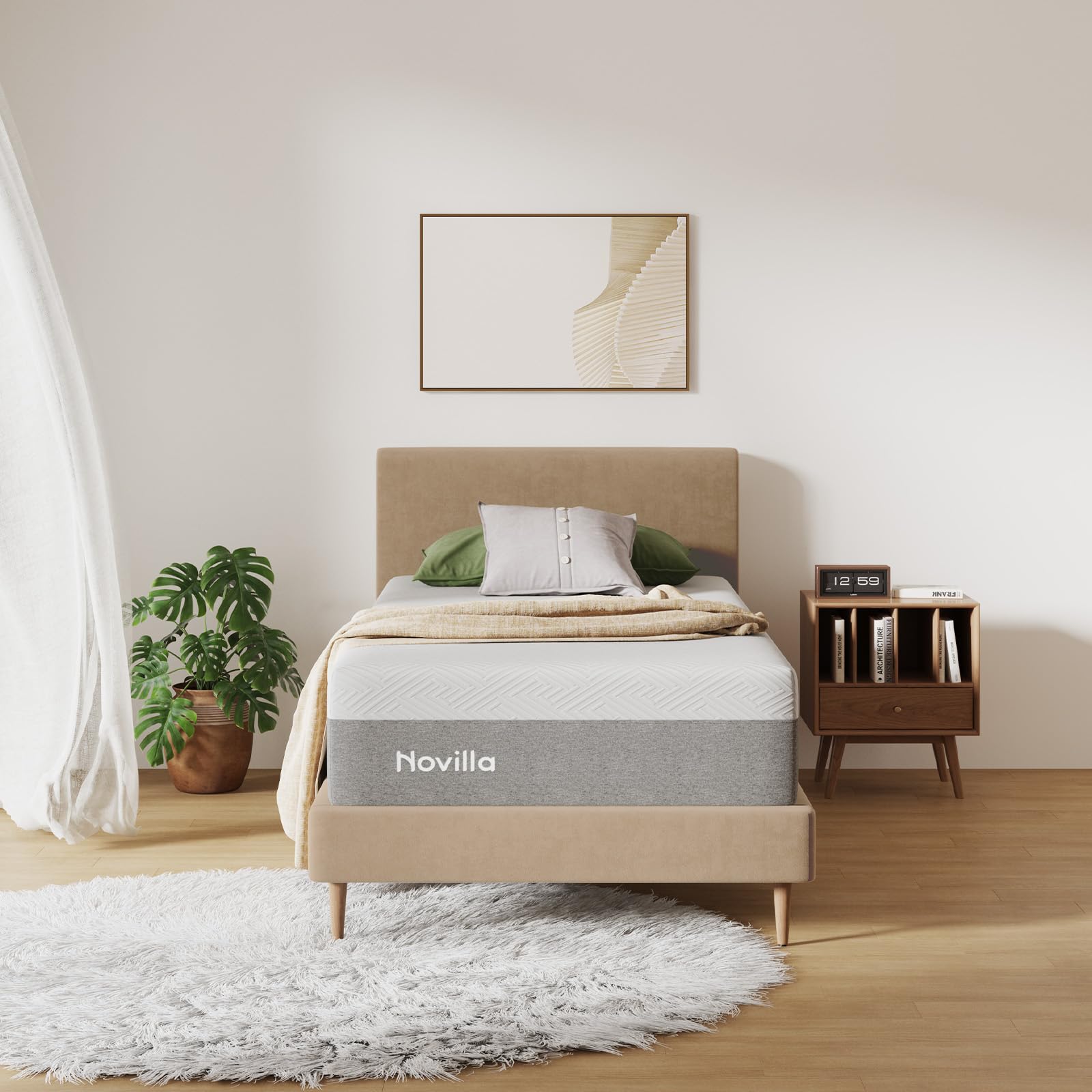
Novilla 12-Inch Memory Foam Twin
Key Features
- Size: Twin
- Thickness: 12 inches
- Firmness: Medium Plush
- Construction: Gel memory foam
- Price: $$
The 12-inch gel-infused foam build directly answers the two biggest dorm-bed complaints: thin support layers that let sleepers feel the frame, and foam that traps heat. Four foam layers create a medium-plush cradle that suits side and back sleepers, while the added height keeps the bed from bottoming out during full-time adult use.
Cooling is a genuine strength: the gel top layer keeps the surface temperature-neutral, and the support core handles heavier adult sleepers without the sagging sensation of slimmer foam beds. The combination is rare at a mid-range price, where student-oriented beds in this class stop at 6 or 8 inches and lean on a single comfort layer.
This Twin fits students who want a thicker, better-supporting memory foam bed without premium pricing and who can allow a 72-hour expansion window. The medium-plush feel is a boundary for strict firm-mattress fans, and some units expand unevenly with sunken corners or a height short of 12 inches, so checking the surface before fitting sheets is a practical step. Shoppers who need a Twin XL or Full should verify availability before ordering.
Pros
- A 12-inch gel-infused build with cooling at a price students can justify.
- Cooling-gel comfort layer stays temperature-neutral, a genuine plus for hot sleepers.
- Support core handles full-time adult use without the sagging of thin foam beds.
Cons
- Medium-plush contouring is a boundary for strict firm-mattress shoppers.
- Some units expand unevenly, leaving sunken corners or a height below 12 inches.
For a dorm or first apartment, the Novilla 12-inch Twin brings thick support and cooling to students without the premium tag.
Best for Budget Hybrid Feel
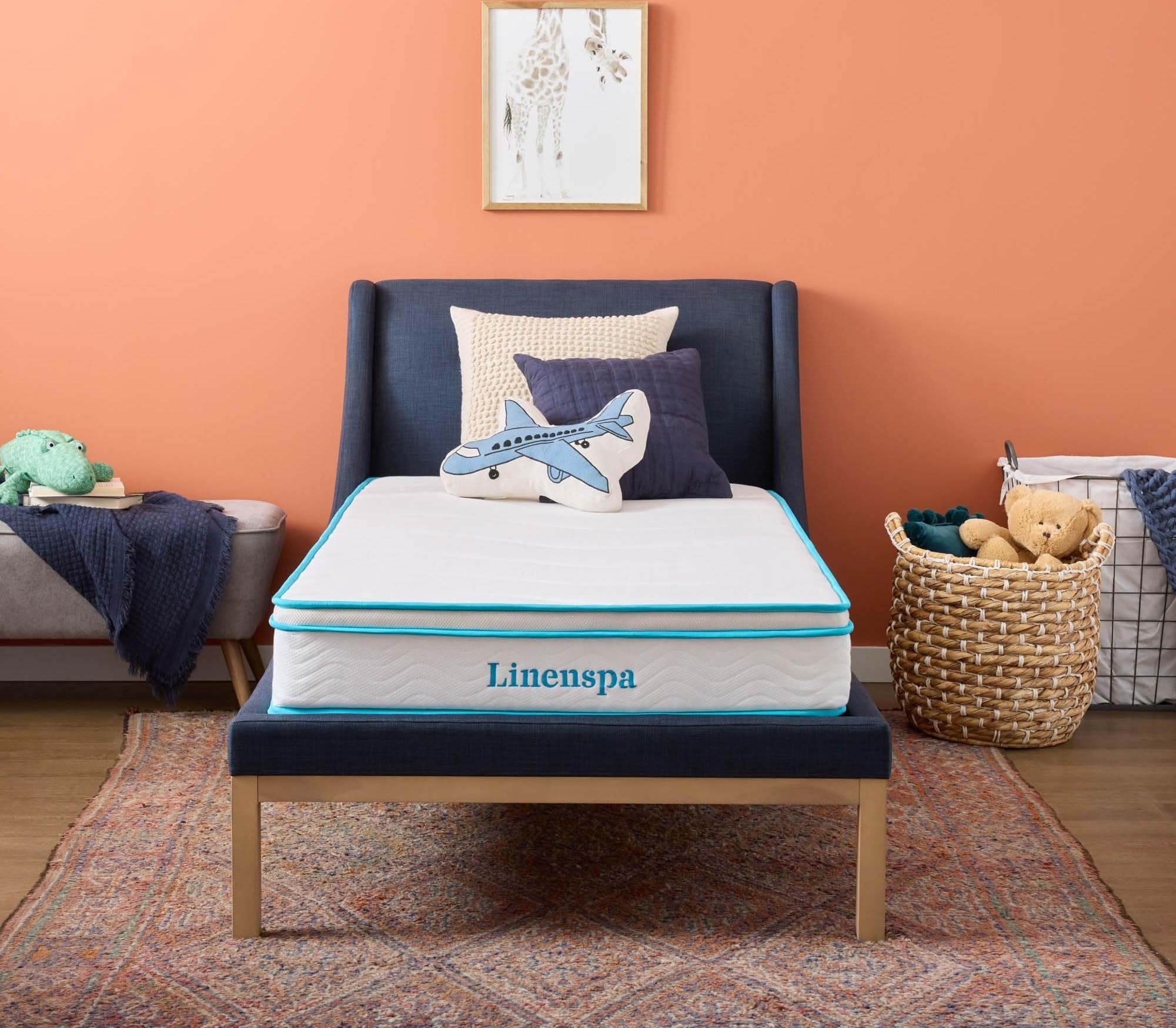
Linenspa 8-Inch Hybrid Twin
Key Features
- Size: Twin
- Thickness: 8 inches
- Firmness: Medium Firm
- Construction: Foam + innerspring coils
- Price: $
The Linenspa 8-inch hybrid pairs a thin memory-foam comfort layer with a continuous innerspring coil base, delivering a traditional hybrid feel at a budget price. The coil response is the defining trait here, giving the bed more bounce than the top pick’s thicker foam build while keeping the cost low.
This suits lighter-weight sleepers, kids in bunk or trundle beds, and guest rooms. It is not a long-term primary mattress for heavier adults, and side sleepers who notice springs should consider the thicker top pick. For a dorm bed used every night, that means the thicker pick is a safer bet.
Pros
- Delivers a traditional hybrid feel at a price that fits dorm budgets.
- Lighter-weight sleepers find the comfort layer cozy and supportive.
- Bunk, trundle, and youth beds report successful use.
Cons
- Coil feel can be noticeable through the thin comfort layer, especially for side sleepers.
- Long-term durability under nightly adult use is less certain than thicker foam beds.
For a dorm or guest room where a traditional coil feel and entry-level pricing matter more than maximum support, this hybrid fits.
Best for Budget Twin Pick
PayLessHere 8-Inch Foam Twin
Key Features
- Size: Twin
- Thickness: 8 inches
- Firmness: Medium Firm
- Construction: Green tea gel memory foam
- Price: $
PayLessHere’s 8-inch twin layers gel memory foam with CertiPUR-US certification into a medium-firm profile that gives back sleepers a controlled, supportive surface. The green tea infusion sets it apart from plain budget foam, and the material responds slowly enough to relieve pressure without feeling mushy. It undercuts the top pick’s price while keeping a firmer support feel.
Best for a cost-focused student who sleeps on the back and wants a firm, low-maintenance dorm mattress. Strict side sleepers may find the medium-firm surface too unyielding at the shoulder and hip. Back sleepers who prefer support to plushness get a mattress that feels more substantial than its price.
Pros
- Back sleepers get a firm, controlled surface that holds up to all-night dorm use
- Budget pricing pairs with a quality build that feels more substantial than the cost
- Sleep quality consistently supports waking up rested
Cons
- The 8-inch profile provides less separation from the bed frame than the top pick’s 12-inch build
Back sleepers on a tight dorm budget get a firm, supportive mattress without paying the usual premium for more height.
Best for Dorm Twin Xl
EGOHOME 5-Inch Foam Twin XL
Key Features
- Size: Twin XL
- Thickness: 5 inches
- Firmness: Medium Firm
- Construction: Green tea gel memory foam
- Price: $
The EGOHOME is the lowest-cost Twin XL option in this set, and its quick expansion makes move-in simple. The 5-inch green tea memory foam surface rides firm and low, giving back sleepers the stable feel they want without the sink-in of thicker foam.
This fits a back-sleeping student who wants an entry-level dorm bed and accepts firmness as part of the deal. The 5-inch profile can cause back pain with extended adult use, especially for side sleepers, so students who are heavier or need more cushioning should choose a thicker model.
Pros
- Twin XL sizing at the lowest entry price in this set.
- Fast expansion and quality that exceeds expectations for the cost.
Cons
- Firm surface can be too hard for sleepers who prefer a softer feel.
A low-cost Twin XL that works best for back-sleeping college students who want a firm, low-profile bed.
Best for Budget Full-Size
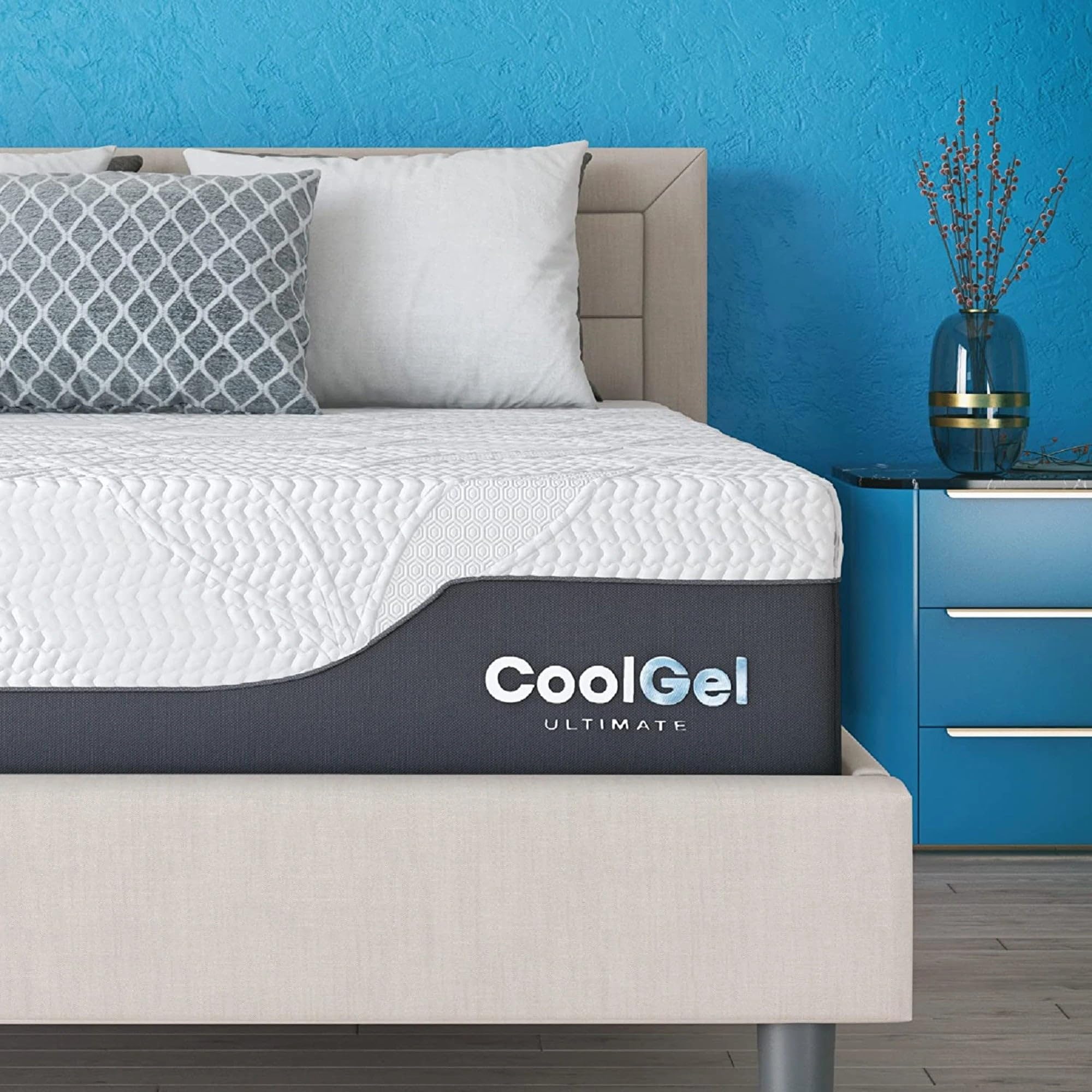
Classic Brands 6-Inch Gel Full
Key Features
- Size: Full
- Thickness: 6 inches
- Firmness: Medium
- Construction: Gel memory foam
- Price: $
The 6-inch gel memory foam full handles the basics well: a cooling gel layer that keeps heat from building up, and a dense base foam that keeps the surface stable without the hard feel you sometimes get at this price.
This is the right full-size for dorm and apartment renters who want a low-profile bed at entry-level pricing. Some units arrive with a strong odor, and the low profile may let sleepers feel the frame, so a solid platform or bunk setup is the better match than a plush primary bed. Buyers who need a thick plush mattress should look to the thicker option.
Pros
- Gel-infused memory foam helps keep hot sleepers comfortable.
- Budget-friendly full-size pricing fits a tight dorm or apartment budget.
- Comfort is a clear strength for a budget foam bed.
Cons
- A few units expand to less than the advertised 6 inches, so the final height can disappoint.
For a budget-conscious dorm or apartment shopper, this 6-inch gel full is the low-profile value pick among full-size foam beds.
Best for Hot Firm Sleepers
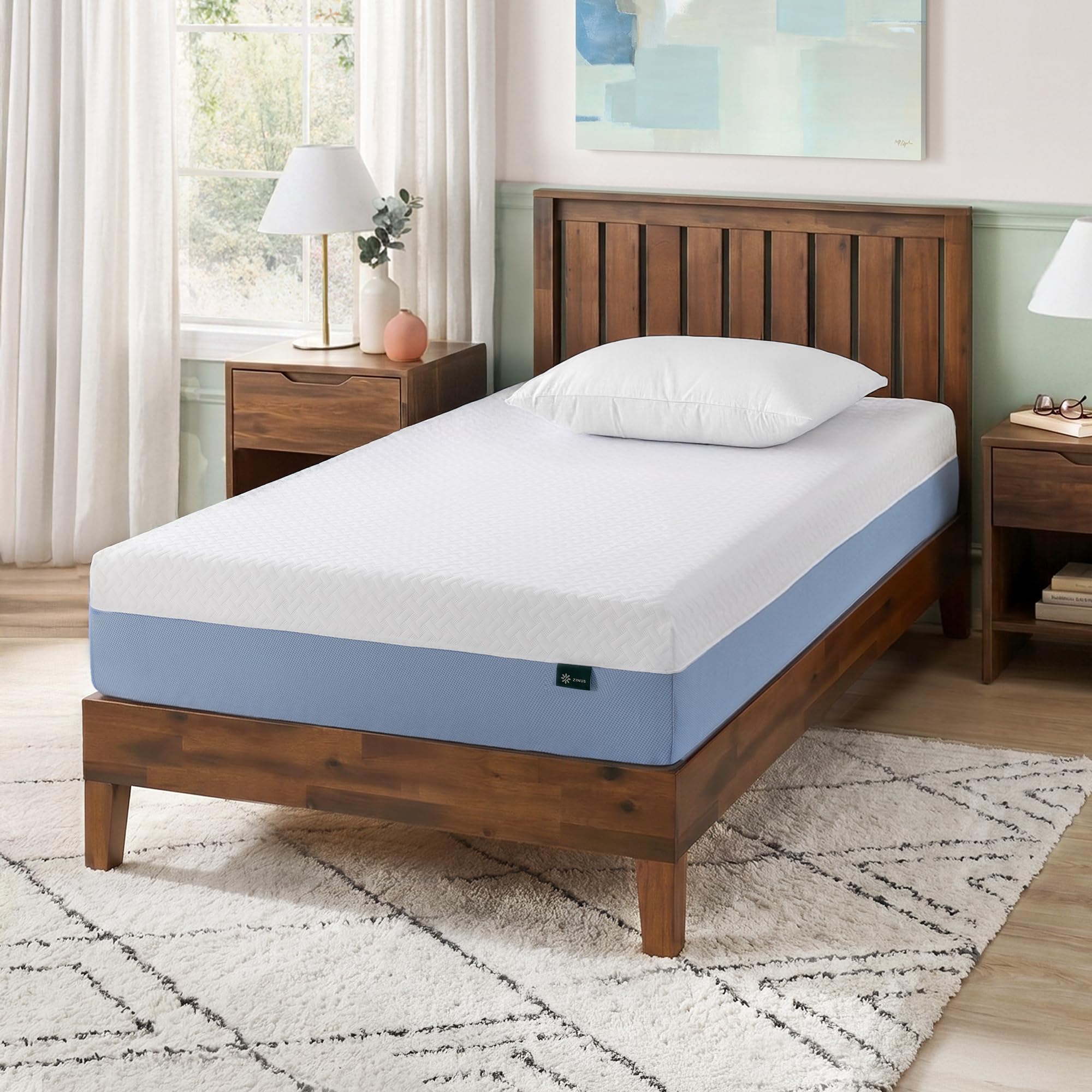
Zinus 8-Inch Cooling Foam Twin
Key Features
- Size: Twin
- Thickness: 8 inches
- Firmness: Medium
- Construction: Airflow memory foam
- Price: $
Zinus builds an 8-inch twin with airflow foam and certified materials at a budget price. The airflow layer keeps heat from pooling, while the firm surface holds back and stomach sleepers in a stable position. Compared with the thicker 12-inch top pick, this one trades plush support for lower cost and a lower profile.
This works as a dorm mattress for hot sleepers who prefer a firmer feel, but side sleepers may find the surface too hard. The 250-pound weight capacity also leaves limited margin for heavier adults.
Pros
- Entry-level price keeps the certified foam twin affordable for dorm budgets.
- Firm comfort suits back and stomach sleepers who want a stable surface.
Cons
- Support can feel less stable around the edges, and continued use may bring back pain for some sleepers.
A cost-effective dorm twin for hot back and stomach sleepers who want certified foam without paying for extra thickness.
Best for Budget Plush Twin
Amazon Basics 8-Inch Foam Twin

Key Features
- Size: Twin
- Thickness: 8 inches
- Firmness: Plush
- Construction: 3-layer memory foam
- Price: $
An 8-inch plush memory foam twin is easy on the budget and genuinely comfortable for lighter sleepers, which suits a first dorm room or temporary apartment setup. Plush softness can also leave heavier sleepers wanting more support, so this works best as a light-duty bed rather than a primary adult mattress.
Pros
- Plush comfort at a budget price makes this a practical first dorm bed.
- Soft memory foam feel helps lighter sleepers fall asleep faster and wake up refreshed.
Cons
- In a small dorm room, the chemical smell can linger on some units, so a move-in weekend may not clear it.
For a lighter sleeper who knows plush comfort is the priority, this twin is a budget-friendly dorm option.
Best for Low-Profile Firm Bed
Lucid 6-Inch Firm Gel Foam Twin

Key Features
- Size: Twin
- Thickness: 6 inches
- Firmness: Medium Firm
- Construction: Gel foam + base foam
- Price: $
This Lucid twin is a firm, fiberglass-free 6-inch bed that fits bunk, trundle, and RV spaces at a budget price. It suits back sleepers who want a low-profile surface, but college students shopping for a primary dorm mattress will find it too thin and firm, especially side sleepers and heavier adults. Long-term durability under regular adult use can vary.
Pros
- Cost-effective firm, low-profile foam construction for tight spaces.
- Firm gel foam keeps the surface stable for back and stomach sleepers.
Cons
- In a tight bunk or trundle setup, expansion can fall short of the advertised 6 inches, reducing support and leaving uneven edges.
For a bunk, trundle, or RV where a low, firm surface is the point, this is a sensible budget buy.
Best for Budget Second Bed
Best Price 6-Inch Foam Full

Key Features
- Size: Full
- Thickness: 6 inches
- Construction: Green tea memory foam
- Price: $
This CertiPUR-US certified 6-inch full fits a tight dorm budget and comes with a 10-year warranty. Its green tea-infused memory foam is a budget-friendly full-size option for guest rooms or secondary beds. No detailed review content in the product set, so the recommendation is provisional.
Pros
- Budget-friendly full-size build keeps cost appropriate for a dorm or guest room.
- CertiPUR-US certified foam addresses basic material-safety standards at an entry-level price.
Cons
- The 6-inch profile can let heavier sleepers feel the bed frame beneath the foam.
Use this as a guest-room full or secondary dorm sleeping surface; for a primary daily mattress, a thicker option is worth the extra cost.
How to Choose
A dorm mattress is the main sleeping surface for four years, so thickness and firmness matter more than the foam flavor in the listing.
Match the Size to the Frame
Twin and Twin XL are not interchangeable: standard dorm extra-long frames are 80 inches long, while a regular Twin is 74. A Twin on a Twin XL frame leaves a gap at the foot that collects pillows and makes the bed look unfinished. Measure the frame before buying, and if your dorm lists Twin XL, get the Twin XL.
Choose Enough Thickness
Comfort layers sit on top of a base layer that keeps your hips from punching through to the slats. A 5- or 6-inch mattress has just 1-3 inches of comfort foam above a thin base, so a 150-pound side sleeper can feel the frame by the second month.
An 8- to 12-inch bed spreads body weight across more material, which is why the thicker models in this group are the ones that survive a full school year without sagging.
Match Firmness to Sleep Position
Firmness ratings are not standardized; a foam that feels medium to one person can feel rock hard to another. Side sleepers need enough give around the shoulder and hip to keep the spine straight, while back and stomach sleepers need a firmer surface to prevent the midsection from sinking. Read comments for your sleep position rather than the label.
Foam vs. Hybrid Construction
All-foam mattresses isolate motion and contour closely, but they also sleep warmer and can develop body impressions over time. Hybrids add innerspring coils, which makes the bed bouncier, cooler, and easier to move on.
A thin comfort layer in a budget hybrid means some sleepers feel the springs. If you toss and turn, a hybrid is easier; if you want deep pressure relief, foam wins.
Expansion: Give It Time and Measure It
A bed-in-a-box needs 24-72 hours to reach full height because compressed foam expands as air replaces the vacuum-sealed voids. When a mattress comes up short, it is not just an aesthetic issue: the missing height is usually support material, so the bed develops soft spots and the frame becomes part of the sleep surface.
After unboxing, wait the full period and measure the edge before deciding to keep it.
FAQ
Why didn’t my memory foam mattress expand to its advertised height?
Compressed foam needs time and airflow to regain shape, but if a mattress is still 2-3 inches short after 72 hours, that’s not normal. The missing height is usually support foam, which means the bed will feel firmer and may develop soft spots. Measure the edges and contact the seller for a replacement while it’s within the return window.
Is a 6-inch mattress too thin for a college dorm?
For lightweight back or stomach sleepers in a trundle, 6 inches can work; for average adult side sleepers, it usually isn’t enough cushioning to keep shoulders and hips aligned. The bigger issue is the base layer: a 6-inch bed often has a thin support core, so the slats or frame can be felt through the surface. If this is your main bed for the year, an 8-12 inch model is the safer choice.
Will a firm memory foam mattress soften up after a few weeks?
Foam will break in slightly as the cells warm and flex, but the change is small. A mattress that feels like a board on day one is unlikely to become plush by finals week; it will just conform a little more to your body. If the firmness is already causing shoulder or hip pain early on, swap it while the return period is still open.
Can I sleep on a mattress in a box the same night I open it?
You can, but the foam won’t be at full support or size until it has had 24-72 hours to expand. Sleeping on it early usually means a lower, firmer surface and can make expansion more uneven. If possible, unbox it in the morning and plan a temporary setup for the first night.