
This post contains affiliate links. We may earn a small commission when you buy through our links — at no extra cost to you.
The term ‘heated cat bed’ covers two different mechanisms. Self-warming mats use a reflective layer to bounce the cat’s body heat back; electric beds actively warm the surface with a low-watt heater. That distinction, not brand or price, decides whether a bed feels warm enough in your home.
Many electric models are also pet-activated, which means they stay cool when empty and only heat once a cat settles in. What reads as a defect — a cold pad — is actually how the thermostat is supposed to work.
The practical trade-off comes down to room temperature and the cat in question. A self-warming mat is a cheap, cord-free way to keep a healthy cat comfortable in a normally heated room, while a certified electric bed is the safer answer for senior cats, cold climates, and drafty corners. Match the mechanism to the cat and the room, and the right pick follows.


Best for Most Cat Owners
FurHaven ThermaNAP Mat
Key Features
- Heat Source: Self-warming
- Heat Control: Body heat reflection
- Weight & Size: 20 lb, 22×17 in
- Care & Cord Safety: No cord, machine washable
- Price: Budget
The ThermaNAP is a plush, machine-washable reflective mat at budget pricing. The 22-inch length gives two smaller cats room to stretch out side by side, and the soft faux-fur surface usually earns quick acceptance from cats and small dogs. It is a mat, not a structured bed, so it stays flexible enough for crates and carriers.
Machine washing keeps cleanup easy: hair and dirt come out without the reflective layer shifting or the plush surface matting. The polyester fabric holds up to daily naps and stays soft. Because there is no cord, moving the mat between rooms, crates, or carriers takes seconds. The 22×17-inch footprint is compact enough to tuck into a travel carrier while still leaving room to sleep.
This mat suits everyday cat households, multi-cat households on a budget, and anyone layering warmth into a crate or carrier. The heat is passive: it reflects the cat’s own body warmth rather than actively warming a cold room. If your home runs very cold or your cat needs electric heat, an electric heated bed is the better lane.
Pros
- Warmth without electricity through a reflective layer
- Plush faux-fur surface that cats accept quickly
- Machine washable for easy cleanup
Cons
- Thin profile offers light padding on hard floors.
- Flat mat lacks raised sides, so cats that prefer enclosed sleeping spots may not settle in.
For a low-cost warm spot that travels well and works in multi-cat households, this is the mat to put down.
Best for Cold-Sensitive Seniors
K&H Fashion Splash
Key Features
- Heat Source: Electric plug-in
- Heat Control: Pet-activated thermostat
- Weight & Size: 45 lb, 18×18 in
- Care & Cord Safety: Washable cover, MET listed
- Price: Mid-Range
Safety-listed 4W electric heat sits under an orthopedic foam base, so a senior cat gets gentle warmth with joint support. A built-in thermostat keeps the surface cool when the bed is empty. The plush cover removes for washing, and the heater pulls out separately, which keeps the bed practical for daily use.
This bed suits small-to-medium cats that curl up rather than stretch out. The internal heater may not cover the entire sleeping surface, so larger cats can find cold edges; senior cats with joint discomfort who settle over the warm center are the clearest match.
Pros
- Gentle, pet-activated warmth without overheating
- Orthopedic foam base supports senior cats with joint discomfort
- Removable cover and heater make cleanup practical
Cons
- For a cat that sprawls, the heated zone covers less than the full sleeping surface, so cold edges may be noticeable
For a small-to-medium senior cat that curls up, this is the electric bed to choose: safety-listed warmth, orthopedic support, and a washable cover in one mid-range package.
Best for Noise-Sensitive Cats
Mora Self-Warming Mat
Key Features
- Heat Source: Self-warming
- Heat Control: Body heat reflection
- Weight & Size: 25 lb, 24×18 in
- Care & Cord Safety: Zippered cover, washable
- Price: Mid-Range
The Mora stays quiet where foil-backed mats can crinkle, and its carbon-infused layer warms up from the cat’s own body heat. The removable zippered cover comes off for easy washing, and the non-slip bottom keeps the mat anchored on smooth floors. The 24-inch length fits standard cat beds without dominating a room.
This suits noise-sensitive cats and unheated outdoor shelters without power, where passive warmth and silence matter more than padding. It is not a plush-cushion bed for cats that prefer deep padding; for a quiet, washable heat layer it fits crates and carriers well. Cats that avoid crinkly surfaces settle into it more readily.
Pros
- Warms up quickly from body heat without cords
- Soft, fluffy surface cats settle into readily
- Removable zippered cover makes washing simple
Cons
- Thin padding limits cushioning on hard floors
A quiet, washable self-warming mat for noise-sensitive cats and shelters without power — no cord, no crinkling.
Best for Budget Cat Owners
K&H Self-Warming Pad
Key Features
- Heat Source: Self-warming
- Heat Control: Body heat reflection
- Weight & Size: 20 lb, 21×17 in
- Care & Cord Safety: No cord, machine washable
- Price: Budget
The K&H Self-Warming Pad is an entry-level passive warmer: it reflects a cat’s body heat back through a soft, reversible cover with no plug-in required. It works in crates, carriers, or layered over an existing bed, and the whole mat goes in the washing machine when it needs freshening.
This pad is best for budget-conscious owners who want a low-commitment warm layer in several rooms rather than a primary heater. Heavy kneading and frequent washing can loosen the cover’s fibers over time, and durability varies with a cat’s kneading habits.
Pros
- Reflects body heat well enough to feel noticeably warmer during naps.
- Soft, fluffy cover adds comfort to hard-bottom crates and carriers.
- Machine-washable and dryable, so it stays fresh after heavy use.
Cons
- Slight crinkle in the cover can bother cats sensitive to crinkle sounds.
- Passive warmth only — it won’t actively heat a cold room.
For a cat that naps in crates or carriers, this is an easy way to add warmth without managing cords or outlets.
Best for Small Cats, Kittens
Petmate Aspen Round Bed
Key Features
- Heat Source: Self-warming
- Heat Control: Body heat reflection
- Weight & Size: 10 lb, 16×16 in
- Care & Cord Safety: No cord, machine washable
- Price: Mid-Range
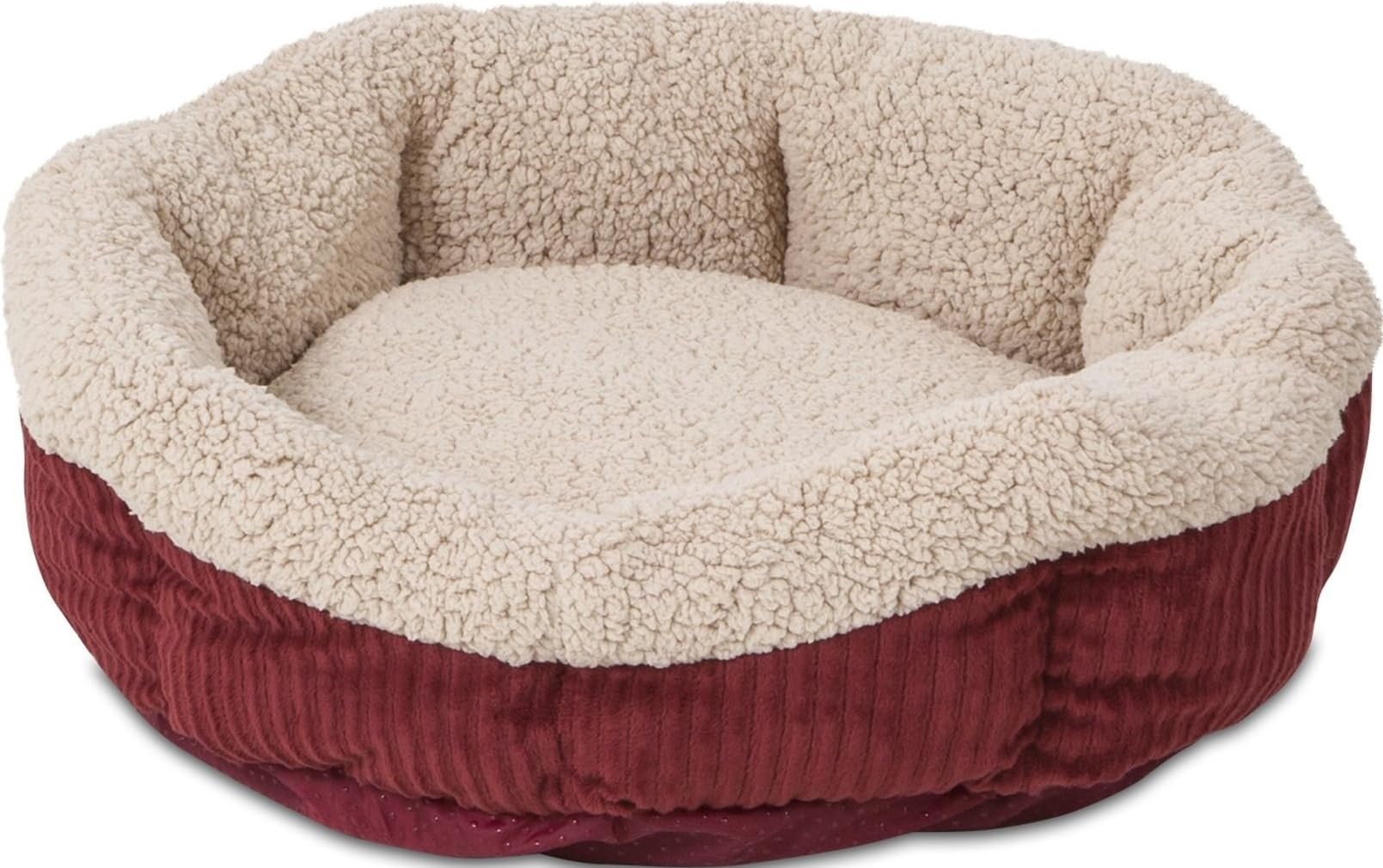
This self-warming round nest is built for cats that want to curl up in a secure, enclosed space, not stretch out on a flat mat. Mylar lining reflects body heat and warms quickly, while the plush walls create a snug cave for a small cat or kitten. The round 16-inch floor suits a curled-up sleeper, and the whole bed holds up to machine washing.
Best for small cats and kittens under 10 pounds, especially burrow-loving cats who prefer a secure pocket over an open pad. Larger cats will find the sleeping area cramped; this is a tradeoff of its enclosed shape rather than a flaw. For travel or road trips, the walled nest offers familiar, self-contained warmth in new spaces.
Pros
- Mylar lining warms quickly and holds body heat without needing a cord.
- Plush materials and rounded walls create a comfortable, secure sleeping space.
- Machine-washable construction keeps the nest fresh through regular cleaning.
Cons
- The 10-lb weight limit and 16-inch floor mean larger cats may feel cramped.
For a small or young cat that likes to burrow, this mid-priced nest delivers warmth without a plug. Cats over 10 pounds need a wider bed.
Best for Budget Buyers
WanpeeGoo Warm Mat

Key Features
- Heat Source: Self-warming
- Heat Control: Body heat reflection
- Care & Cord Safety: Removable zippered cover
- Price: Budget
At a budget price, this self-warming mat offers a removable zippered fleece cover and a non-slip base, aimed at small cats that prefer flat, low-profile surfaces. The Mylar foil reflects body heat without a cord. On bare floors, the thin construction limits comfort compared with the top self-warming mats; layered in a crate or shelter, that tradeoff matters less.
Pros
- Cats accept it readily, which helps when the sleeping spot is new.
- Removable zippered fleece cover makes washing simple.
Cons
- A 15-inch length suits small cats; larger cats need more stretching room.
For a small cat that prefers flat surfaces, or as an affordable layer inside a crate or shelter, this mat fits.
How to Choose
The most important insight is that ‘heated’ means two mechanisms — a passive reflective layer or an active electric heater — and the right one depends on your cat and room temperature.
Heat Source
Self-warming mats use a reflective insert, usually Mylar or carbon-infused fabric, that bounces the cat’s body heat back into its coat. They add no heat of their own, so they only work while the cat is on them.
Electric beds use a low-watt heater, typically 4-6W, to warm the surface directly. If your home drops below about 60°F, or the cat is senior or sleeps in a draft, electric is the version that actually keeps it warm.
Heated Surface Coverage
Several well-reviewed beds fit a heating insert that covers only part of the sleeping area. A cat that curls up may overlap it fine, while a cat that sprawls ends up with its hindquarters on a cold patch.
Check the heater dimensions against the bed footprint. Long-bodied cats need a longer heating element more than they need a thicker pad.
Heat Control
Pet-activated electric beds use a weight switch, so the heater only runs when the cat is on it. A cool surface when empty is normal, not a defect.
Adjustable models add temperature dials and timers, which give control but add parts that can wear out. Senior cats that want warmth on demand are better served by a continuous low-watt bed.
Weight & Size
Weight limits track heater size and bed structure. A 10 lb-rated nest crowds a 15 lb cat, and a narrow mat forces a curled cat to choose between the warm strip and a comfortable ball position.
Measure your cat’s sleeping posture. Sprawlers need a longer flat mat; burrowers want high sides and a smaller footprint.
Cover Care & Cord Safety
A removable, machine-washable cover matters more than the fill because bedding absorbs fur, oil, and odor. Zippered covers keep the bed itself usable while the cover goes through the wash.
For electric models, a chew-resistant cord and a safety listing (MET or UL) matter most. Kittens and anxious chewers are the reason certifications exist.
FAQ
Why doesn’t my heated cat bed feel warm when the cat isn’t in it?
Most electric cat beds are pet-activated, meaning a weight switch turns the heater on only when the cat is lying on it. A cool surface when empty is normal, not a defect. Have your cat sit on the bed for a few minutes, then feel the spot where the cat was lying.
Do self-warming cat beds work or do I need a plug-in heated bed?
Self-warming beds reflect the cat’s own body heat, so they help in a normally heated room but add no warmth of their own. A drafty house, a cold garage, or a senior cat calls for a plug-in electric bed, which delivers real heat. Healthy adult cats in average rooms are usually fine with a self-warming mat.
Why is the heating element in my cat bed smaller than the bed?
Manufacturers often pair a smaller heater with a larger bed to cut cost, which leaves cold zones around the warm area. Cats that stretch out usually notice the gap; cats that curl into a ball often don’t. Check the heater dimensions in the listing and match them to how your cat sleeps.
Why did my electric cat heating pad stop working after a few months?
Several budget electric pads use thermostats and wiring that degrade with daily use, and some units stop heating or show error codes within months. Safety-listed models from established brands have a better track record, and simple pet-activated thermostats have fewer parts that can go wrong. For daily, year-round use, look for a MET or UL listing and avoid the cheapest no-name pads.