
This post contains affiliate links. We may earn a small commission when you buy through our links — at no extra cost to you.
The earplug aisle reads like a test of decibel ratings: 29, 31, 33. But the number on the box matters less than the seal you get in your own ear canal. A plug that doesn’t match your ear shape will work loose by 2 a.m., no matter what the packaging promises.
Side sleeping changes the equation as well. Firm foam cylinders press against the pillow, while low-pressure foam, moldable silicone, and wax behave differently against the ear and the bedding. The right choice depends on your ear shape, sleep position, and how much you move overnight.
This guide matches sleeping earplugs to those real-world conditions. It treats the NRR number as a ceiling, not a guarantee, and focuses on which plug stays seated, stays comfortable, and actually quiets the noise. The best one for you is the one that seals without hurting, not the one with the biggest rating.


Best for Snoring Partners
Mack’s Ultra Soft 50ct
Key Features
- Noise Reduction: NRR 33 dB
- Fit: Standard cylinder
- Foam Softness: Ultra-soft low-pressure
- Material: Low-pressure foam
- Pack Size: 50 pairs
- Price: Budget
NRR 33 low-pressure foam cylinders block snoring and ambient noise while keeping ears comfortable through the night. The slow-recovery foam expands to fill the ear canal without the hard pressure of firmer plugs. Routine bedroom noise drops to a distant murmur, and the soft material avoids the sore-ear feeling that denser foam can create. Properly inserted, the plug stays put for side sleepers; the cylinder expands evenly and doesn’t require constant adjustment. The low-pressure character is what makes it a sleep plug rather than just a workshop plug.
This is the benchmark for sleepers with average-size ear canals who want soft, high-NRR foam without paying boutique prices. The standard cylinder does not seal every ear canal; very small canals may need a slim or low-pressure alternative. That fit boundary is the main check before committing to a 50-pair box.
Fifty pairs at a budget-friendly cost per pair makes this a buy-it-and-have-it-around purchase. The foam is consistent from pair to pair, and the pack size doesn’t force rationing for weekday sleep, travel, or study. Keep a pair by the bed, another in a travel bag, and one on a desk; the supply covers all of it. There’s no need to save the last pair for a big event; the value is in using it daily.
Pros
- Soft low-pressure foam blocks snoring and ambient noise without the ache of firmer plugs.
- Comfort holds through the night; no morning soreness after all-night wear.
- Fifty-pair pack at a budget price per pair suits daily sleep, travel, and study.
Cons
- Loud sounds are reduced but not removed; alarms or heavy snoring can still come through.
- Standard cylinder length and width suit average canals; smaller or shorter ear canals can get a partial fit.
The 50-pair pack to keep by the bed if you’re a light sleeper with average-size canals and want soft NRR33 foam without paying extra.
Best for Side Sleepers
Mack’s Pillow Soft Silicone
Key Features
- Noise Reduction: NRR 22 dB
- Fit: Custom mold to outer ear
- Material: Moldable silicone putty
- Pack Size: 12 pairs
- Price: Mid-Range
Mack’s Pillow Soft is the moldable silicone option in this sleep set: it shapes to the outer ear and blocks snoring without the pressure of expanding foam. Side sleepers and anyone with tender ear canals get a custom fit that foam cylinders can’t match, and the putty holds through the night once pressed into place.
Noise reduction is lower than the leading foam pick at NRR 22, so very loud bedrooms may need foam instead. The putty can be sticky and may catch long hair or pillowcases — a tradeoff that matters less for anyone who keeps hair tied back.
Pros
- Molds to the outer ear for a custom fit that suits sensitive ear canals.
- Blocks snoring and household noise without the pressure of expanding foam.
- Reusable putty is cost-effective compared with custom-molded sleep plugs.
Cons
- Long hair and pillowcases can pick up the putty’s tacky surface during the night.
- For some ear shapes, the putty may not form a stable seal, so noise blocking drops.
Side sleepers with foam-sensitive ears get a quiet, reusable fit that holds through the night.
Best for Small Canals
Howard Leight Max Lite 200ct
Key Features
- Noise Reduction: NRR 30 dB
- Fit: Designed for smaller canals
- Foam Softness: Low-density
- Material: PE foam
- Pack Size: 200 pairs
- Price: Budget
Two hundred pairs of low-density T-shaped foam make this the bulk option for small or sensitive ear canals. Unlike the slimmer cylinder in this set, the T-shape takes a different comfort route: low-pressure foam that stays soft through the night, which matters for side sleepers who find standard plugs too firm.
This is the pick for narrow or tender ear canals that react poorly to standard foam. The T-shape needs deliberate insertion; a shallow fit can loosen overnight, so it suits buyers who don’t mind a T-shaped insertion technique.
Pros
- Low-density foam keeps pressure low for small or sensitive ear canals.
- Blocking power handles snoring and ambient noise at 30dB NRR.
- 200-pair box keeps per-pair cost low for nightly users.
Cons
- The 30dB NRR is one step below the top pick’s 33dB.
For small or sensitive ear canals, this is the low-pressure 200-pair stash that covers months of nightly use.
Best for Budget Bulk
Flents Quiet Time 70ct
Key Features
- Noise Reduction: NRR 33 dB
- Fit: Standard cylinder
- Foam Softness: Soft slow-recovery
- Material: Latex-free foam
- Pack Size: 70 pairs
- Price: Budget
Flents Quiet Time is the bulk value play: 70 latex-free NRR33 foam pairs in one box, sized for standard ear canals and priced to keep a pair in every room. The foam softens after rolling, blocks snoring and background noise, and stays comfortable for all-night wear.
This suits budget-focused households that want a large supply for sleep, travel, and work. Fit is less forgiving for small canals, and active side sleepers may find plugs working loose by morning; if that is you, a slimmer or low-pressure plug will hold better.
Pros
- Blocks snoring and background noise well enough for sleep or focused work.
- Soft slow-recovery foam stays comfortable through all-night wear without ear canal irritation.
- Muffles noise while leaving alarm clocks audible.
Cons
- For sensitive ears, the foam can feel firmer than low-pressure sleep plugs.
- In smaller ear canals, the seal may not hold, and active side sleepers can work them loose overnight.
A large supply of NRR33 foam at a per-pair price that suits standard-size canals and budget-focused households.
Best for Comfort-First Sleepers
Moldex Softies 50ct
Key Features
- Noise Reduction: NRR 33 dB
- Foam Softness: Comfy Cush
- Material: Low-pressure foam
- Pack Size: 50 pairs
- Price: Budget
Comfy Cush low-pressure foam gives the Moldex Softies a 33dB NRR with a softer feel than typical standard cylinders. The bright colors make a dropped plug easy to find in a dark bedroom, and the 50-pair pack keeps the per-pair cost down. Snoring and ambient noise are blocked well enough for light sleepers to stay under without morning soreness.
The Softies fit comfort-first sleepers with average-to-larger ear canals. Very small canals are better served by a slim-diameter alternative. The 33dB seal leaves alarm volume audible enough to wake on schedule.
Pros
- Soft low-pressure foam blocks snoring and ambient noise for all-night wear.
- Low-pressure material prevents ear soreness during long overnight use.
- Muffles noise while keeping a morning alarm audible enough to wake to.
Cons
- Standard-size cylinder can feel too large in narrower ears and work loose overnight.
For sleepers who fit a standard foam cylinder, this is a budget-friendly 50-pair foam with high NRR and all-night comfort.
Best for Secure Fit
3M E-A-R Classic 30ct
Key Features
- Noise Reduction: NRR 29 dB
- Fit: Classic cylinder
- Foam Softness: Low-pressure
- Material: Self-adjusting foam
- Pack Size: 30 pairs
- Price: Mid-Range
This self-adjusting low-pressure foam locks into place in average-to-large ear canals and keeps alarm and speech sounds audible while blocking snoring and ambient noise. The classic cylinder is firmer than the top pick’s sleep-specific foam, so it doesn’t compete on plush softness; instead, it prioritizes a stable seal and consistent positioning through the night.
Best for sleepers who want a stable, industrial fit and don’t need the softest low-pressure plug. Small or sensitive ear canals may feel pressure from the larger classic shape, making a slim or low-pressure alternative a better match.
Pros
- Self-adjusting low-pressure foam creates a secure seal in average-to-large canals.
- Blocks snoring and ambient noise while keeping alarm clocks audible.
- Thirty-pair supply at a cost-effective mid-range price.
Cons
- Firmer and larger than low-pressure sleep plugs; small or sensitive canals may feel pressure.
Average-to-large canals get a stable overnight seal with alarm awareness — the industrial-classic option for sleepers who don’t need the softest foam.
Best for Contoured Fit
Flents Quiet Contour 50ct

Key Features
- Noise Reduction: NRR 33 dB
- Fit: Contoured shape
- Foam Softness: Soft
- Material: Tapered foam
- Pack Size: 50 pairs
- Price: Budget
Contoured NRR33 foam blocks snoring and ambient noise with a tapered shape that sits closer than a straight cylinder. The 50-pair pack is a budget-friendly bulk buy. The taper doesn’t suit every ear: small canals can feel pressure, and active side sleepers may have the plug work loose. A standard cylinder is the safer default.
Pros
- Tapered contour blocks snoring and ambient noise with a fit that suits sleepers who dislike straight cylinders.
- 50-pair pack at budget pricing keeps the per-plug cost low for nightly use.
Cons
- Foam softness can vary between pairs; one pack may feel blobby while another runs firmer.
A budget-conscious contour pick for sleepers who prefer shaped plugs over straight cylinders and want a 50-pair supply.
Best for Wax Lovers
Peace&Quiet Wax 15ct

Key Features
- Noise Reduction: 32 dB
- Fit: Molds to outer ear
- Material: Wax-gel silicone
- Pack Size: 15 pillows
- Price: Mid-Range
Peace&Quiet’s wax-gel molds to the outer ear and blocks snoring without expanding foam, a strong fit for side sleepers who find foam pressure uncomfortable. The wax can catch long hair and may soften in warm sleeping environments, and that tradeoff narrows its audience to wax fans who accept some stickiness and keep the bedroom cool.
Pros
- Molds to the outer ear for a personalized seal that side sleepers can keep all night.
- Blocks snoring and ambient noise without foam pressure inside the ear canal.
Cons
- Wax can catch long hair and may soften in warm sleeping environments.
For side sleepers who already prefer wax plugs and want a custom outer-ear fit without foam pressure, this is a comfortable mid-range option.
Best for Travel Use
AXBUS Silicone 16ct

Key Features
- Noise Reduction: NRR 32 dB
- Fit: Low-profile flanged
- Material: Reusable silicone
- Pack Size: 16 pairs
- Price: Budget
Sixteen washable silicone pairs, with corded and uncorded options, cover travel and occasional noise at a budget-friendly price. Noise reduction is effective across typical noisy settings, though flanged tips can feel too large or painful for small ear canals. For nightly side-sleeping comfort, moldable silicone or foam is a better fit.
Pros
- Washable silicone tips deliver useful noise reduction for travel and occasional loud rooms.
- Reusable 16-pair pack offers budget-friendly value for a ready-to-grab earplug stash.
Cons
- Flanged tips can feel too large or painful for small ear canals.
Best as a travel companion or occasional-use set for average-to-large ears, not a nightly side-sleep plug.
Best for Bulk Buyers
Quality Plugs 200ct

Key Features
- Noise Reduction: NRR 32 dB
- Fit: Standard self-adjusting
- Foam Softness: Soft
- Material: Non-toxic foam
- Pack Size: 200 pairs
- Price: Budget
Quality Plugs’ 200 individually wrapped foam pairs cost very little per pair, and the NRR 32 rating handles snoring and machinery. The standard cylinders run large and the foam is firmer than plush sleep-specific options, so petite or sensitive ears can feel pressure. For average-to-large ear canals, it’s a practical bulk workhorse; those prioritizing all-night softness should look elsewhere.
Pros
- 200 individually wrapped pairs at a very low per-pair price for bulk buyers and workplace use.
- NRR 32 foam muffles snoring and machine noise for sleep and work.
Cons
- Standard size runs large and the foam is firmer than plush sleep plugs, so small ears may feel pressure.
Best suited for workplaces, shooting sessions, and sleepers with average or larger ear canals who want a huge supply and don’t need the softest all-night foam.
Best for Occasional Use
LYSIAN Soft Foam 60ct

Key Features
- Noise Reduction: NRR 31 dB
- Fit: Compact/small
- Foam Softness: Slow-rebound
- Material: Soft foam
- Pack Size: 60 pairs
- Price: Budget
Budget-minded 60-pair jar with a bonus silicone pair and carry case works best as a travel spare. Slow-rebound foam blocks noise when the compact plugs seal properly. Those plugs are small and short, so the fit favors smaller canals; noise leakage can occur when the fit misses, keeping it a spare rather than a nightly solution.
Pros
- Large 60-pair pack with a low cost per pair, plus a bonus silicone pair and carry case.
- Noise blocking works when the foam is rolled and inserted to a full seal.
Cons
- Plugs can work loose overnight in average or larger ear canals.
Pick it for occasional hotel or workday noise, where a backup pair matters more than overnight retention.
Best for Snoring Spouses
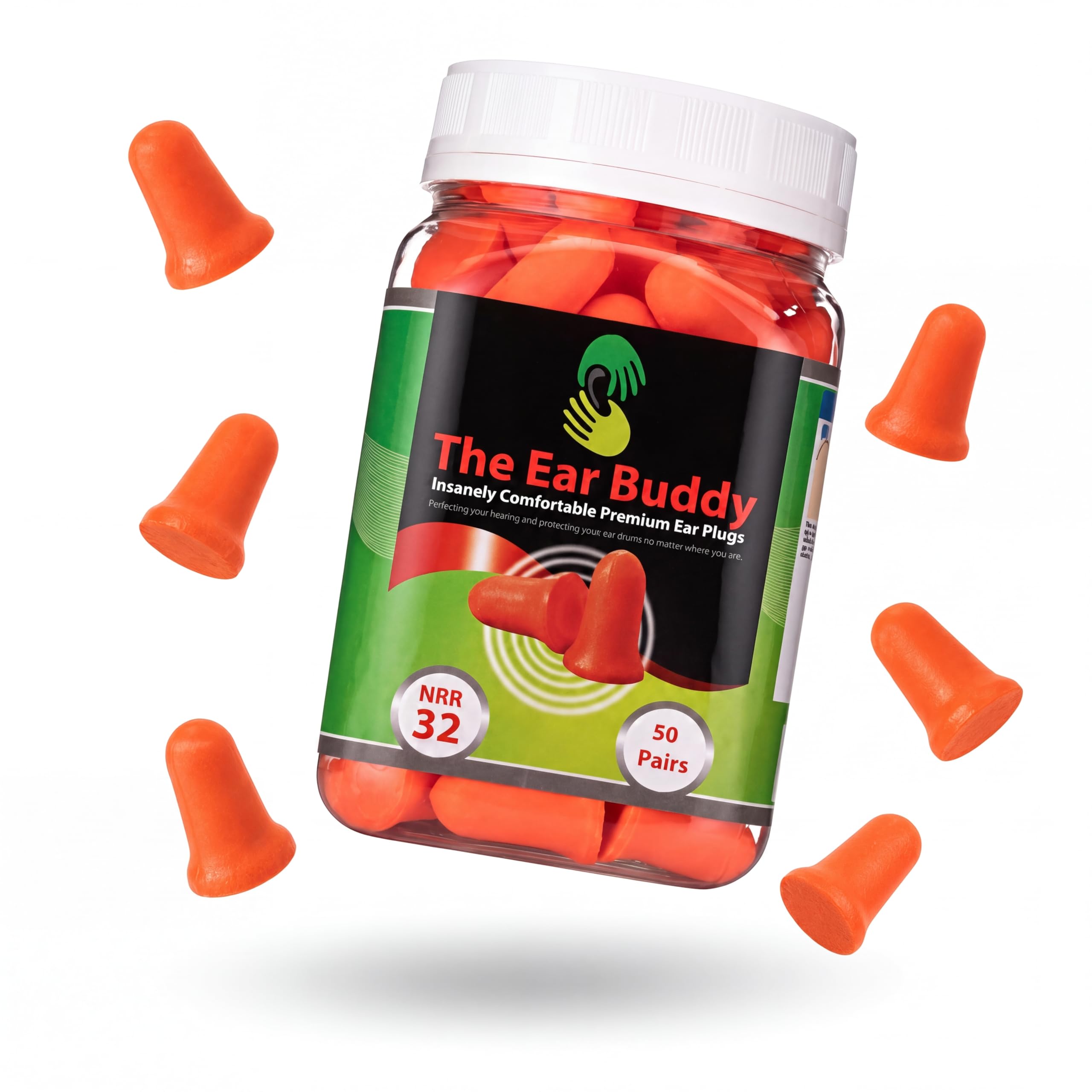
Ear Buddy Soft Foam 50ct
Key Features
- Noise Reduction: NRR 32 dB
- Fit: Bell-flared shape
- Foam Softness: Ultra-soft
- Material: Non-latex foam
- Pack Size: 50 pairs
- Price: Mid-Range
The flared bell shape holds securely in ears that like it and cuts snoring noise at NRR 32. Soft foam and a 50-pair pack keep the value reasonable. Side sleepers who find flared plugs bulky should choose a slimmer cylinder. This is for buyers who want that bell hold; otherwise, standard foam does the same job for less.
Pros
- Strong noise cancellation blocks snoring and traffic well for a foam plug.
- Soft foam and a 50-pair pack offer a fair value for nightly use.
Cons
- The flared shape can be too large for small ear canals or work loose overnight.
Choose this 50-pair pack only if you already know a flared bell shape matches your ears and sleeping position; otherwise, the top pick’s standard cylinder is the default.
How to Choose
Ear canal shape, not the NRR number, decides whether an earplug stays quiet all night.
Noise Reduction Rating
NRR is measured with a perfect insertion in a lab, not on a pillow at 3 a.m. A plug that leaks around the edges will let in more sound than a lower-rated plug that seals completely. Treat the number as a ceiling, not a promise.
Snoring and street noise have different frequencies, but fit affects both. A well-seated 29dB plug often beats a leaking 33dB plug in a real bedroom.
Fit and Diameter
Standard cylinders work well for average canals but can feel too large for smaller ears or too short to seal. Slim and contoured shapes trade raw surface area for a better match to narrow anatomy. If the plug doesn’t sit snugly, no amount of insulation rating will keep noise out.
Check the sizing language: some slim plugs are about 10 percent smaller than standard, while others are 20 percent smaller. Because ear canals vary within that range, user fit feedback matters more than a one-size description.
Foam Softness
Low-pressure, slow-recovery foam compresses gently and expands gradually, which reduces soreness during all-night wear. Firm foam holds its shape better but pushes harder against the canal wall. Side sleepers should favor softer foam because the pillow presses the plug deeper.
Slow-release foam also gives you time to insert it before it expands. If the plug springs back too quickly, it can feel like it is pushing out of the ear.
Material and Form
Foam blocks the most sound but needs a dry, clean canal and a deliberate roll-and-insert technique. Moldable silicone and wax sit in the outer ear, making them easier on sensitive canals and side sleepers. They also get sticky and catch hair, and they offer less noise reduction than a properly seated foam plug.
Wax and silicone plugs advertise lower NRR but still win for side sleepers because they eliminate pressure points. If you have sensitive canals or wake with sore ears, the tradeoff is worth it.
Pack Size
Bulk packs make sense only when the fit works. A 200-pair box is a bargain at the per-pair price, but it becomes waste if every pair falls out by morning. Buy a small pack first, confirm the fit overnight, then commit to the bulk size.
Travelers and occasional users may prefer reusable silicone, which costs more per use but needs no restocking. Foam is disposable, so the true cost depends on how often you replace it.
FAQ
Why do my foam earplugs fall out when I sleep on my side?
Side sleeping presses the pillow against the plug, and a standard cylinder can work loose as you shift. Low-pressure foam, moldable silicone, or wax plugs are less likely to move because they conform or compress instead of pushing back. If you prefer foam, look for a slim, tapered, or low-density shape rather than a firm standard cylinder.
Can I still hear my alarm with NRR 33 earplugs?
Yes. NRR 33 reduces sound by about 33 decibels under lab conditions, but real-world attenuation is lower, especially if the seal is imperfect. Most users report hearing alarms and even snoring through foam plugs. If you rely on an alarm, keep the volume high or use a vibrating alarm.
Are silicone or wax earplugs better than foam for side sleepers?
For most side sleepers, yes. Moldable silicone and wax sit outside the ear canal, so they don’t create the pressure that firm foam cylinders cause against a pillow. They also hold their position better because they mold to the outer ear. The tradeoff is stickiness and a lower noise reduction than a well-sealed foam plug.
How many times can I reuse disposable foam earplugs?
Disposable foam plugs are designed for one or two nights, though some users stretch them to three or four. Each reuse compresses the foam and collects earwax, which degrades the seal and raises hygiene concerns. Replace them when they no longer rebound fully or look dirty.