
This post contains affiliate links. We may earn a small commission when you buy through our links — at no extra cost to you.
An earplug’s NRR number tells you how much noise it blocks in a lab. Against a pillow, that number changes fast — a plug that doesn’t seal will shift as you turn, and a plug that presses into your ear canal will have you pulling it out by 2 a.m. For side sleepers, fit is the real spec that matters.
This guide focuses on how each earplug behaves under pillow pressure and through the night, not just on its attenuation rating. The right match depends on your ear canal size and whether you prefer foam, silicone, or moldable putty. Some people need a slimmer plug, some need zero in-ear pressure, and some just need a bulk pack that actually stays in.
A well-sealed 28 dB plug outperforms a 33 dB plug that doesn’t match your ear shape, so prioritize comfort and retention first, then compare noise ratings.


Best for Maximum Foam Blocking
Mack’s Ultra Soft Foam 50pk
Key Features
- Noise Rating: NRR 33
- Fit Profile: Standard
- Material: Low-pressure slow-release foam
- Pair Count: 50 pairs
- Low-Profile Design: Flush fit
- Price: $
Mack’s Ultra Soft Foam Earplugs deliver 33 dB NRR in a 50-pair jar, pairing strong noise reduction with low-pressure slow-release foam that keeps ears comfortable through the night. For side sleepers, this is the benchmark high-attenuation foam: it blocks snoring and background noise while the soft material handles pillow pressure without digging in, and the jar fits handily on a nightstand.
The foam cushions the ear canal well and holds its seal through positional shifts, so a snoring partner becomes far less noticeable once the plugs settle. Those sharing a bed with a snorer get the headroom a 33 dB rating provides, and the soft feel avoids the morning soreness that firmer plugs can cause. Fit depends on ear canal size; in some cases the plugs are too small or too soft to hold a seal overnight, especially for narrower canals where a slimmer profile is a safer match.
Best for side sleepers with average-to-large ear canals who want a bulk supply of disposable earplugs for sleep, travel, or work. The 50-pair count keeps per-night cost low enough to replace regularly. If you have small canals or need a petite-specific fit, the slimmer options in this lineup are a better match.
Pros
- Blocks snoring and background noise, delivering 33 dB NRR in a foam that holds up through the night.
- Low-pressure foam cushions the ear all night, avoiding the soreness that firmer plugs can cause.
- 50-pair jar at a budget-friendly price keeps per-night cost low for regular replacement.
Cons
- In narrow ear canals, the plugs can feel too small or too soft to keep a seal through the night.
- People who can’t tolerate any in-ear foam pressure may still feel the slow-release expansion overnight.
A 50-pair jar of 33 dB foam that pairs effective noise blocking with all-night comfort — the right starting point for side sleepers who want consistent sleep without spending much per pair.
Best for Sensitive Ear Canals
Mack’s Pillow Soft 12pk
Key Features
- Noise Rating: NRR 22
- Fit Profile: Moldable
- Material: Silicone putty
- Pair Count: 12 pairs
- Low-Profile Design: Flush outer-ear
- Price: $$
This moldable silicone seals over the ear opening, which removes the pressure that makes in-ear plugs painful for side sleepers. It shapes easily to the outer ear and stays low-profile under a pillow.
Side sleepers with sensitive ear canals or an aversion to expanding foam fit this design best. The NRR 22 rating is lower than high-NRR foam, so loud rooms stay audible — this suits moderate snoring and household noise rather than construction-level sound. Swimmers can use the same plugs for water and sleep, though the putty can stick to hair and pillowcases, so removal needs care.
Pros
- Blocks snoring and background noise effectively for a moldable plug.
- Perceived quality is high, and comfort holds up through the night.
- Easy to mold and use, so getting a consistent seal takes seconds.
Cons
- Removal can be messy; the putty may stick to hair and pillowcases.
- Noise reduction is lower than high-NRR foam, so very loud environments remain audible.
A zero-pressure alternative for side sleepers whose ears reject foam — comfort is the main payoff.
Best for Eco-Conscious Side Sleepers
Loop Quiet 2 Reusable
Key Features
- Noise Rating: SNR 24
- Fit Profile: Four tip sizes
- Material: Reusable silicone
- Pair Count: 1 pair
- Low-Profile Design: Flush fit
- Price: $$$
Loop Quiet 2 combines XS-L ear tips with a flush silicone body, so side sleepers get a pillow-friendly seal without the stem trimming that some budget reusable designs require. The 24 dB SNR is moderate, which keeps this in comfort-first territory for light-to-moderate noise.
The low-profile ring can press against the ear for some side sleepers, so tip selection matters as much as the plug itself. If your priority is a washable, low-profile reusable, this fits that use-case, and the XS-L tip selection gives you room to adjust.
Pros
- Flush silicone body sits low enough for side sleeping without stem trimming.
- Four tip sizes from XS to L help sensitive ears find a custom seal.
- Washable silicone and a carrying case make repeat travel and sleep use easy.
Cons
- Premium price for a reusable; budget foam remains cheaper per pair.
Side sleepers who want a washable, low-profile plug with multiple fit options will find the Loop Quiet 2 the reusable to keep by the bed.
Best for Petite Ear Canals
Hearos Nanos 25pk
Key Features
- Noise Rating: NRR 28
- Fit Profile: Extra small
- Material: Closed-cell foam
- Pair Count: 25 pairs
- Low-Profile Design: Flush fit
- Price: $
These extra-small foam earplugs swap the standard-diameter shape that presses on small ears for a lower-profile fit that stays comfortable against a pillow. The closed-cell foam expands gently, and the NRR 28 rating takes the edge off snoring and street noise once the plug is inserted correctly.
This is a petite-canal specialist rather than a universal-size plug. Side sleepers with narrow ear canals who find regular foam painful or loose are the right audience; those with average or larger canals may not get the seal needed for full noise reduction, so standard-size foam is the safer route for that ear shape.
Pros
- Petite shape removes the pressure ache that standard foam creates in small ear canals.
- NRR 28 foam softens snoring and street noise when the small fit seals properly.
- Low-profile design keeps side-sleeping pressure off the ear against the pillow.
Cons
- Average or larger ear canals may not form the seal this extra-small size depends on.
For side sleepers with small ear canals, this is the targeted alternative to standard foam: it removes the pressure problem while keeping real-world noise reduction.
Best for Budget Snore Blocking
Flents Quiet Contour 10pk
Key Features
- Noise Rating: NRR 33
- Fit Profile: Contoured
- Material: Latex-free foam
- Pair Count: 10 pairs
- Low-Profile Design: Flush fit
- Price: $
The Flents Quiet Contour delivers 33 dB foam in a tapered shape that sits lower in the ear, giving side sleepers snore-blocking coverage with less pillow pressure than a standard cylinder. The latex-free foam is comfortable for all-night wear, and the 10-pair pack keeps the price firmly in budget territory.
This works well for side sleepers with medium-to-larger ear canals who want a high-NRR contour at a low per-pair cost, including couples dealing with snoring. Very small canals may not get a secure seal, so sizing is the boundary to check before buying.
Pros
- Tapered 33 dB foam blocks snoring and background noise effectively.
- Latex-free foam stays comfortable through the night.
- Budget-friendly 10-pair pack delivers high NRR at a low per-pair cost.
Cons
- The foam feels firmer than ultra-soft, low-pressure options, which can bother pressure-sensitive sleepers.
For side sleepers with medium-to-larger canals, the contour profile provides strong 33 dB noise blocking at a price that’s easy to stock up on.
Best for Budget Reusable Silicone
ANBOW Silicone 3-Pair
Key Features
- Fit Profile: Stemmed
- Material: BPA-free silicone
- Pair Count: 3 pairs
- Low-Profile Design: Protruding stems
- Price: $
Three washable silicone pairs with cases put this set at the budget end of reusable earplugs. The material seals comfortably without the expanding pressure of foam, and noise reduction holds up for sleep, travel, concert, and swim use.
Side sleepers who want reusable silicone get the most value once they accept a small DIY adjustment; out of the box the stems sit proud and can press into a pillow until trimmed. This is a low-waste alternative to disposable foam for light sleepers and travelers.
Pros
- Soft silicone stays comfortable without the expanding pressure of foam.
- Noise cancellation holds up for sleep, travel, concert, and swim use.
- Reusable and washable, cutting the waste of disposable foam.
Cons
- Noise isolation is moderate, so very loud environments can leak through.
- Needs a stem trim to reach a flush, side-sleeping profile.
For side sleepers who are willing to make one small adjustment, this set provides a comfortable, washable sleep seal at a budget-friendly price.
Best for Budget Bulk Foam
LYSIAN Soft Foam 60pk

Key Features
- Noise Rating: SNR 38
- Fit Profile: Small standard
- Material: Slow-rebound foam
- Pair Count: 60 pairs
- Low-Profile Design: Flush fit
- Price: $
This 60-pair pack offers a low cost per pair, and the slow-rebound foam stays soft through the night. The plugs run smaller than standard, though, so the seal may loosen under pillow pressure for some side sleepers. Best for travelers and bulk buyers who want disposable supply over guaranteed blocking.
Pros
- Soft slow-rebound foam that suits typical bedroom sleeping conditions.
- Sixty pairs at a budget price keeps replacement costs low.
Cons
- Plugs run smaller and softer than standard, so some don’t expand enough, loosen overnight, or let snoring through.
A convenient stash for travel or guest rooms where budget matters more than peak blocking.
Best for Moldable Wax Sleep
Peace&Quiet Wax 15-Pillow

Key Features
- Noise Rating: 32 dB claimed
- Fit Profile: Moldable
- Material: Wax/gel
- Pair Count: 15 pillows
- Low-Profile Design: Flush outer-ear
- Price: $$
Peace&Quiet’s wax/gel shapes into a soft outer-ear plug that sits flush against the pillow, so side sleepers avoid the pressure pain of expanding foam. It also handles water well enough for swimming. The waxy surface can stick to hair or pillowcases, and removal needs care. Noise blocking is less predictable than high-NRR foam.
Pros
- Blocks snoring and steady noise while avoiding the pressure of expanding foam.
- Sleep quality improves when the wax is shaped to match the outer ear.
Cons
- Overnight fit can loosen, disrupting the seal for some sleepers.
Choose this wax for side sleepers and swimmers who want a low-pressure outer-ear seal without in-ear foam expansion.
Best for Travel Silicone Backup
YUNHAN Silicone 8-Pair

Key Features
- Noise Rating: NRR 32
- Fit Profile: Triple-seal
- Material: BPA-free silicone
- Pair Count: 8 pairs
- Price: $
Eight washable pairs with individual cases make this a low-cost reusable travel or backup kit. Side sleepers should plan to trim the stems for a lower profile; the soft silicone can be fussy to seat and may shift under pillow pressure.
Pros
- Eight washable pairs with individual cases deliver a low-cost reusable travel or backup setup.
- Claimed NRR 32 triple-seal silicone targets moderate noise during sleep.
Cons
- Tiny ear canals may not hold a secure seal with these plugs.
Travel and backup use is where this set fits; side sleepers needing a dependable nightly seal should choose a better-fitting moldable or foam option.
Best for Budget Moldable Silicone
Schiara Silicone 16ct

Key Features
- Noise Rating: NRR 27
- Fit Profile: Moldable
- Material: Moldable silicone
- Pair Count: 8 pairs
- Low-Profile Design: Flush outer-ear
- Price: $
Moldable silicone conforms to the outer ear, giving side sleepers a low-profile, pressure-free seal that blocks snoring and general bedroom noise. The budget-friendly NRR 27 rating keeps very loud environments audible, so this is a comfort-first choice rather than a high-attenuation blocker.
Pros
- Moldable silicone seals over the ear opening, blocking snoring and bedroom noise without in-ear pressure.
- Soft putty conforms to individual ear shapes, keeping the plug flush for side sleepers and sensitive canals.
Cons
- Moldable putty can stick to hair and pillowcases, so removal requires care.
Side sleepers who want a low-profile, pressure-free fit at a budget price will get the most from this pack.
Best for Custom Ear Tips
JUSTRVN Reusable 2pk

Key Features
- Noise Rating: 25-30 dB claimed
- Fit Profile: Eight ear tips
- Material: Reusable silicone
- Pair Count: 2 pairs + 8 tips
- Price: $
Two reusable plugs with eight ear tips and a travel case deliver a fit-first approach for light sleepers and events. The multiple tips let side sleepers adjust for pressure points, but attenuation is modest: snoring can still cut through and a tip may shift out overnight.
Pros
- Eight ear-tip sizes make it easier to find a comfortable seal, which matters for side sleepers.
- Reusable silicone with a travel case suits study, concerts, and travel between sleep uses.
Cons
- Getting the right seal can take a few ear-tip swaps, so no-fuss users may find the setup fiddly.
For side sleepers who like tailoring the fit, this is a budget-friendly reusable option; pick high-attenuation foam when noise levels are loud.
Best for General Sleep Use
Flents Quiet Time Foam 10pk
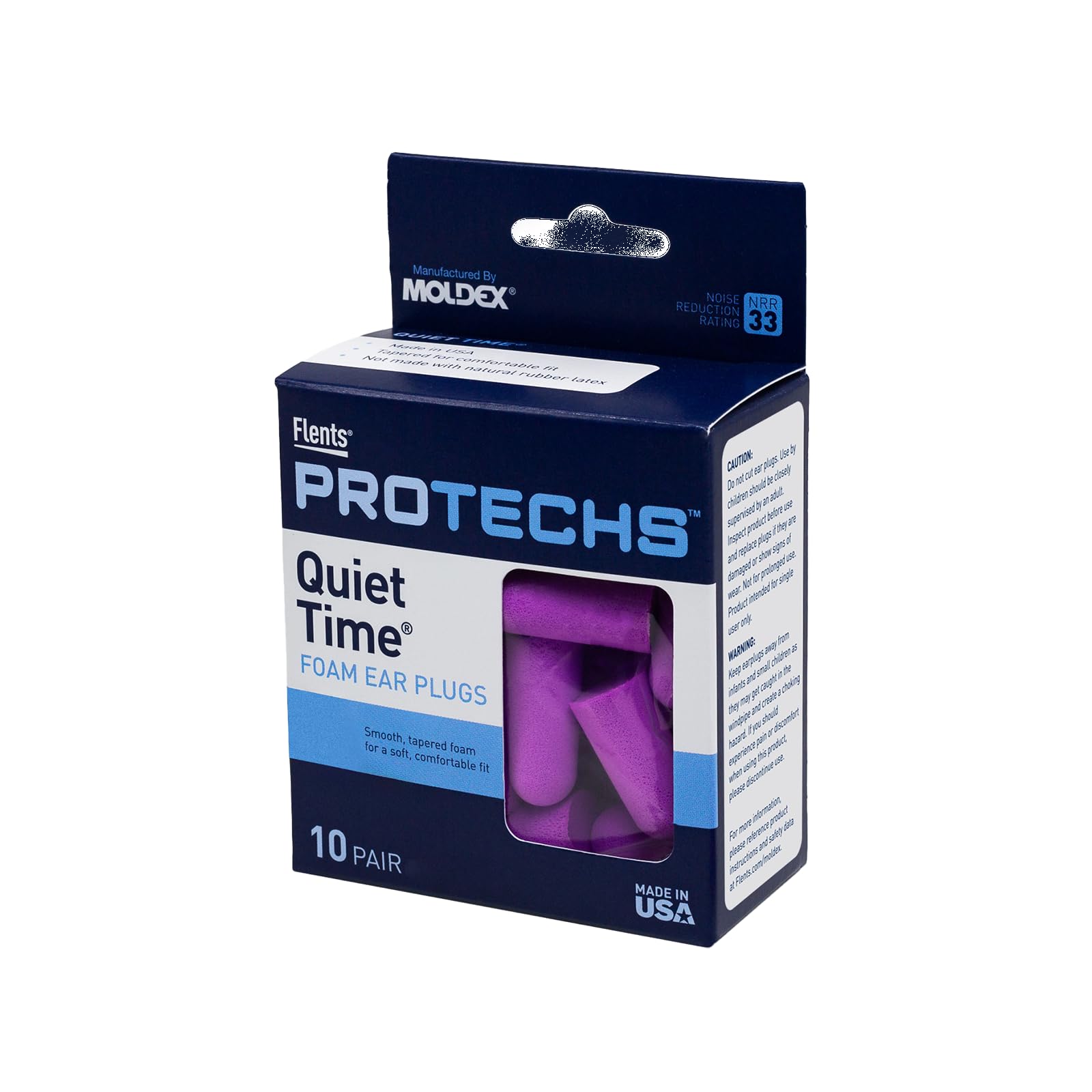
Key Features
- Noise Rating: NRR 33
- Fit Profile: Standard
- Material: Slow-recovery foam
- Pair Count: 10 pairs
- Low-Profile Design: Flush fit
- Price: $
Flents Quiet Time delivers 33 dB of noise reduction from slow-recovery foam at a budget price, and it handles light-to-moderate noise comfortably for back and stomach sleepers. The manufacturer advises against frequent side sleeping, which is the main boundary for this budget-friendly 10-pair option.
Pros
- 33 dB noise blocking at a budget price for light or moderate noise.
- Slow-recovery latex-free foam stays comfortable for back and stomach sleepers.
Cons
- Under pillow pressure, these plugs can loosen or fall out overnight.
Back and stomach sleepers on a budget get a cost-effective light-to-moderate noise blocker here.
How to Choose
Fit determines real-world noise blocking more than the NRR number on the box.
Noise Rating vs. Real-World Blocking
NRR is a lab measurement taken with a perfect seal. In real sleep, that seal is disturbed by pillow pressure, head movement, and ear canal shape, so actual attenuation usually runs below the label.
For snoring partners, look for NRR 30+ foam or a moldable plug that forms a complete outer seal. A 24 dB reusable plug reduces background noise but may let loud snoring through, so match the rating to your specific noise environment.
Ear Canal Fit
Ear canals vary more than most buyers expect. Standard foam assumes an average canal, so people with small or narrow canals feel pressure, while larger canals may not get a full seal.
Contoured, slim, and petite variants change the plug’s diameter or shape to match anatomy. A smaller plug removes the ‘too big’ ache but can reduce blocking if your canals are average-sized, so choose based on your own fit experience rather than the packaging.
Foam, Silicone, or Wax
Foam expands to fill the canal, which creates a strong seal but presses on the ear wall all night. Low-pressure and slow-release foams reduce that ache, though they are softer and may shift more in the ear.
Silicone putty and wax sit over the ear opening instead of inside the canal, removing in-ear pressure entirely. That helps sensitive ears, but these materials stick to hair and pillowcases and typically block a few dB less than high-NRR foam.
Pair Count and Replacement Cost
Disposable foam loses shape over time, especially when compressed every night. A bulk pack lowers the cost per pair and makes regular replacement easy, but a huge jar means you are living with degrading foam for months.
Reusable silicone costs more upfront but washes clean and lasts many sleep cycles if maintained. Count the pairs against your sleep schedule and how often you misplace earplugs, not just the upfront cost.
Low-Profile Design
Side sleepers press the ear directly into the pillow, so anything protruding from the ear canal becomes a pressure point. Flush-fitting foam and moldable putty spread that load across the ear, while stemmed reusable plugs push inward and cause soreness.
Some stemmed silicone plugs can be trimmed; shortening the stem removes the pressure point without changing the seal. If you sleep on your side every night, low-profile design matters more than any other comfort feature.
FAQ
Why do my foam earplugs keep falling out during the night?
Foam plugs work by expanding to fill your ear canal, but body heat, jaw movement, and pillow pressure soften the foam and slowly push it outward. If your ear canals are smaller than average, a standard plug can’t expand enough to grip. Try a petite or slim-fit foam like Mack’s Slim Fit or Hearos Nanos, or a moldable silicone that seals outside the canal. A properly sized plug should still feel secure when you wake up.
Can silicone earplugs be comfortable for side sleepers without hurting?
Yes, if you choose the right style. Moldable putty sits over the ear opening, so it doesn’t press on the canal wall, while reusable silicone plugs with stems can push into the pillow unless the stems are trimmed. Side sleepers with sensitive ears usually do best with moldable putty or a flush reusable design like Loop Quiet 2. Expect a tradeoff: silicone blocks a few dB less than high-NRR foam.
Which earplugs block snoring but still let you hear your alarm?
High-NRR foam (30 dB or more) muffles most snoring, but it can also mute an alarm clock on the nightstand. Moldable silicone and reusable plugs with lower attenuation (roughly 24-27 dB) reduce snoring while keeping alarm tones audible. If you need both, put the alarm across the room or use a vibration alarm rather than chasing a plug that does both perfectly.
What does NRR 33 actually mean for sleeping with a snoring partner?
NRR 33 is a lab rating that assumes a perfect seal; in real sleep, most people get closer to 20-25 dB of reduction because the plug shifts against the pillow. It’s still the strongest foam rating available, and it handles typical snoring well when the fit is right. If a 33 dB plug doesn’t seal in your ear, a smaller 28 dB plug that seals will sound quieter in practice.