
This post contains affiliate links. We may earn a small commission when you buy through our links — at no extra cost to you.
CPAP filter listings tend to lead with big pack counts and broad compatibility claims. The catch is that a filter only works when it matches the exact machine generation and the right media density for your room air. An AirSense 10 filter won’t fit an AirSense 11, and a DreamStation 1 refill won’t seat in a DreamStation 2.
The trade-off is usually between convenience and cost per usable week. A filter with denser media may protect better but require more frequent changes or more careful fitting. A cheaper bulk pack can look like a bargain until you need two filters at once to get the same filtration.
This guide sorts through those trade-offs by focusing on model fit, media density, and what a replacement actually costs over a year. Match those three, and you won’t need to overpay for supplies.


Best for Resmed 10/S9 Owners
Bay State ResMed 10 20-Pack
Key Features
- Machine Compatibility: AirSense 10, AirCurve 10, S9
- Filter Count: 20-pack
- Media Type: Disposable non-woven
- Filter Density: Ultra-fine media
- Installation: Slide-in slot
- Price: $
Bay State’s 20-pack fits ResMed AirSense 10, AirCurve 10, S9, and AirStart machines precisely, with slide-in media that seats cleanly in the labeled intake slot. The ultra-fine synthetic non-woven filter loads in seconds and holds its position without glue or springs. There is no separate frame to assemble, so the swap is a one-step push. Each 2 1/8 by 1 7/16-inch filter matches the ResMed opening, making trimming unnecessary. Twenty filters per box keeps the replacement cycle affordable without forcing a year-long commitment.
Installation stays consistent across the pack: align the white rectangle with the slot, push it in until it sits flush, and close the door. Filter dimensions are uniform, so there is no re-learning after the first change. The white media gives a clear visual cue when dust loading starts to build up, which makes the recommended every-two-week check easy to follow. At a two-week replacement schedule, the 20-pack covers about five months of use before you need to reorder. For a two-machine household, the 20-pack runs out in about ten weeks.
This is the set for AirSense 10, AirCurve 10, S9, and AirStart owners who want a dependable supply without a 60-pack bulk commitment. AirSense 11 and DreamStation owners need model-specific refills; this pack is not built for their intake designs. If the first filter feels thinner than the OEM equivalent, plan to change it at the first sign of visible dust rather than waiting for the full two-week interval. The per-filter price is low enough that a weekly swap in dusty rooms still lands within a reasonable budget. The 20-pack also works well as a trial size for first-time aftermarket buyers.
Pros
- Precise fit for ResMed AirSense 10, AirCurve 10, S9, and AirStart intake slots.
- Filters slide in without tools and stay seated during therapy.
- Filtration performance remains consistent across the 20-pack.
- Pack size avoids the hassle of a year-long bulk box.
Cons
- Filter media can be noticeably thinner than OEM in some packs, which may require more frequent changes.
This is the balanced middle ground for AirSense 10-series owners: a precise fit at a budget price, with enough filters to make the two-week schedule practical.
Best for Resmed Bulk Buyers
RespLabs ResMed 10 60-Pack
Key Features
- Machine Compatibility: AirSense 10, AirCurve 10, S9
- Filter Count: 60-pack
- Media Type: Disposable non-woven
- Filter Density: Ultra-fine media
- Installation: Slide-in slot
- Price: $
The 60-count RespLabs box is the lowest-cost way to keep a ResMed AirSense 10, AirCurve 10, or S9 on a two-week filter schedule for a full year. The non-woven media slides into the side slot without tools or adapters. The top pick’s 20-pack balances supply and fit, but this bulk set shifts the priority to per-filter price: roughly the same money for triple the filters. The 60 count means you don’t need to stock multiple boxes or remember a refill date.
This suits price-focused ResMed 10/S9 owners who accept the thickness trade-off of aftermarket media. It is not for AirSense 11 or DreamStation machines, and in a dusty room the media may need swapping before the two-week mark. Buyers who double filters to compensate will cut into the cost advantage. Affordable per-filter pricing makes an early swap painless.
Pros
- Per-filter cost is low enough to swap on schedule without rationing filters.
- Filters slide into the ResMed AirSense 10, AirCurve 10, and S9 slot without tools.
- Airflow stays steady across ResMed 10 and S9 machines.
Cons
- Filter sizing can vary between packs; an occasional filter may need a nudge to seat flush.
- The per-filter savings assume single-filter use; doubling filters in dusty environments reduces the bulk value.
For cost-first ResMed 10/S9 owners, this 60-pack is the supply-volume option: one box, no rationing, and a full year of two-week changes.
Best for Airsense 11 Owners
Bay State AirSense 11 20-Pack
Key Features
- Machine Compatibility: AirSense 11, AirCurve 11
- Filter Count: 20-pack
- Media Type: Disposable polypropylene
- Filter Density: Ultra-fine media
- Installation: Rear-slot slide-in
- Price: $$
Bay State’s 20-pack is built for the AirSense 11 rear slot, and the polypropylene media slides in flush without trimming or force. The 20 filters use an ultra-fine construction aimed at keeping dust and pet hair out of the machine’s intake while maintaining normal airflow. The filter body keeps its shape during handling, so the swap is a clean pull-and-replace job. That direct fit matters with this machine because the rear slot leaves less room for misaligned edges than older side-door designs.
The 20-count supply gives you a full replacement routine with room to spare, whether you stay on a monthly swap or follow a two-week cadence. For AirSense 11/AirCurve 11 owners who change filters regularly, the box is practical without pushing you into bulk inventory. The media seats squarely against the intake housing, so the seal stays consistent across all 20 filters. The filter media is dense enough to catch common household particles while still letting the AirSense 11 maintain normal pressure. The rear-slot mounting means there is no side door to open and no frame to assemble before each change. These are disposable filters, so the routine is simply pull, slide, and resume therapy.
AirSense 11/AirCurve 11 owners who want a 20-pack with a precise rear-slot fit are the right audience. This is a generation-specific filter, so older side-door ResMed machines require a different pack. The mid-range price makes sense for users who replace filters regularly and don’t want to store a year’s worth of filters at once. The 20-pack sits between trial packs and bulk boxes, which keeps storage low without leaving you short.
Pros
- Slides into the AirSense 11 rear slot with a flush, secure seat.
- Consistent media quality between filters keeps swaps predictable.
- Sensible mid-range pricing for a 20-pack.
- Maintains normal airflow and sealing in the AirSense 11 intake.
Cons
- 20-count supply means more frequent reorders than 60-count bulk options.
- Filter thickness can differ from OEM, which may slightly change airflow feel.
AirSense 11 owners who value a precise fit over bulk-bin pricing will find this 20-pack the better buy.
Best for Dreamstation 1 Owners
Mars Wellness DS1 24-Pack
Key Features
- Machine Compatibility: DreamStation 1
- Filter Count: 24 pieces
- Media Type: Reusable + disposable
- Filter Density: Pollen + ultrafine
- Installation: Frame assembly required
- Price: $$
The Mars Wellness 24-piece combo gives DreamStation 1 owners four reusable pollen frames and 20 ultrafine disposables, covering a year of scheduled changes without committing to a 52-piece bulk box. It competes with larger budget kits on fit rather than sheer count: the media seats flush in the filter door, and the two-stage design works as well as OEM filters in daily use. That makes it the middle-ground option for buyers who want a practical rotation, not a warehouse supply.
This set is for DreamStation 1 owners who want a moderate year supply and don’t mind monthly disposable changes with quarterly foam washing. The replacement rhythm is clear: swap the ultrafine inserts every 30 days and clean the reusable foam every 90 days. It only fits DreamStation 1, so ResMed and DreamStation 2 owners should look elsewhere. Frame sturdiness is the minor durability trade-off: the reusable frames feel lighter than the original Philips parts, which matters if you handle them roughly.
Pros
- Accurate DreamStation 1 fit — the media sits flush in the filter door with no gap.
- Strong mid-range value for a two-stage kit — per-filter cost undercuts the 8-piece starter box.
- Aftermarket filtration matches OEM performance in everyday use, so brand-name refills are optional.
Cons
- Reusable frames can feel flimsier than the original Philips frames.
DreamStation 1 owners who want a moderate year supply get a balanced filter kit with accurate fit and dual-stage coverage, minus the bulk-box excess.
Best for Dreamstation 2 Owners
Medihealer DS2 52-Pack
Key Features
- Machine Compatibility: DreamStation 2
- Filter Count: 52 pieces
- Media Type: Reusable + disposable
- Filter Density: Pollen + ultrafine
- Installation: Frame assembly required
- Price: $
The Medihealer 52-pack is the DS2 year-plus value kit: 22 pollen filters, 22 ultra-fine media pads, and four preassembled filters. The 52-piece count lines up with the every-two-week replacement rule, covering a year-plus of DS2 maintenance without a reorder, and the per-filter cost stays within budget range for a machine-specific refill.
The remaining 48 media pads mount into reusable frames. Some media pieces need careful seating in the frames, so this kit favors DS2 owners who are comfortable with assembly-based filter changes. ResMed and DreamStation 1 machines are outside its compatibility.
The two media types split the DS2’s intake duty: the pollen foam catches the coarse household dust, and the ultra-fine pad handles finer particles. The frame design keeps swaps quick once media is seated, so routine changes don’t turn into a project.
Pros
- Year-plus DS2 supply with 52 pieces at a budget-friendly per-filter cost.
- Fits DreamStation 2 specifically, with filter media that works with the machine’s intake slot.
- Quick filter swaps once the media is seated, reducing the maintenance burden of regular changes.
Cons
- The 48 unassembled media pads must be mounted into frames before use.
- Occasional media pieces may sit loosely in the frame until pressed firmly into place.
For DreamStation 2 owners who want a year-plus of filters without restocking, this kit delivers the strongest per-filter value in the group.
Best for Ds1 Budget Buyers
IBEET DreamStation 1 52-Pack

Key Features
- Machine Compatibility: DreamStation 1
- Filter Count: 52 pieces
- Media Type: Reusable + disposable
- Filter Density: Foam + ultrafine
- Installation: Frame assembly required
- Price: $
IBEET’s 52-piece set gives DreamStation 1 owners a year-plus supply at a per-filter price below DME pricing. Reusable frames cut waste: swap the foam or ultra-fine media instead of discarding a whole filter. Fit is secure, and it works as an OEM-style replacement. The tradeoff is media consistency: airflow and filtration density can vary between packs, so this bulk option trails the balanced combo in this lineup. It suits buyers who inspect filters at each change and don’t demand OEM-identical density. AirSense or DreamStation 2 owners need a different filter.
Pros
- Year-plus supply for DreamStation 1 at a per-filter price far below DME pricing.
- Reusable frames reduce plastic waste and hold replacement media securely.
Cons
- Airflow and filtration density can vary between packs, so the media may need more frequent inspection.
For DreamStation 1 owners on a tight budget who will inspect filters at each change, this 52-pack is the cost play. If you want more consistent filtration density, the balanced combo in this lineup is worth the extra cost.
Best for Ds1 Budget Buyers
Medihealer DS1 52-Pack

Key Features
- Machine Compatibility: DreamStation 1
- Filter Count: 52 pieces
- Media Type: Reusable + disposable
- Filter Density: Foam + ultrafine
- Installation: Frame assembly required
- Price: $
The Medihealer kit packs 52 pieces for the DreamStation 1 and lands at a per-filter price that undercuts typical DME refills. Inside are four assembled frames plus 22 foam and 22 ultra-fine inserts, so each layer has to be seated into the reusable frames before use. Fit is generally good for the DS1, but the listing lacks detailed specifications and filtration effectiveness can vary — a boundary worth respecting if you need maximum filtration certainty. For budget-focused owners who don’t mind assembly, this is a strong supply play.
Pros
- 52-piece supply drives the per-filter cost below typical DME refills.
- Fits the DreamStation 1 cleanly, and the reusable frames load without special tools.
Cons
- Airflow can feel more restricted than stock filters, which matters for pressure-sensitive users.
This kit fits DreamStation 1 owners who want a large, cheap supply and don’t mind assembly; if maximum filtration certainty matters more than cost, choose a denser option.
Best for Resmed Budget Users
Timok ResMed 10 40-Pack

Key Features
- Machine Compatibility: AirSense 10, AirCurve 10, S9
- Filter Count: 40-pack
- Media Type: Disposable non-woven
- Filter Density: 5-layer ultrafine
- Installation: Slide-in slot
- Price: $
The Timok 40-pack gives ResMed AirSense 10, AirCurve 10, S9, and AirStart owners a 5-layer ultra-fine filter at a rock-bottom per-filter price. The dimensions align with the stock filter slot and the media holds up between changes. Pack-to-pack fit can vary, which keeps it behind the Bay State 20-pack. Not for AirSense 11 or DreamStation; it’s a cost-saving trial option before committing to a larger bulk pack.
Pros
- Forty filters at a budget price lowers the cost of keeping a clean intake filter in rotation.
- Fits the AirSense 10, AirCurve 10, S9, and AirStart slots without the need for adapters.
Cons
- A filter may seat loosely or need extra pressure to slide in, depending on the pack.
For budget-conscious AirSense 10/S9 users who replace filters often, this 40-pack is a low-cost way to keep a full rotation of spares.
Best for As11 Bulk Users
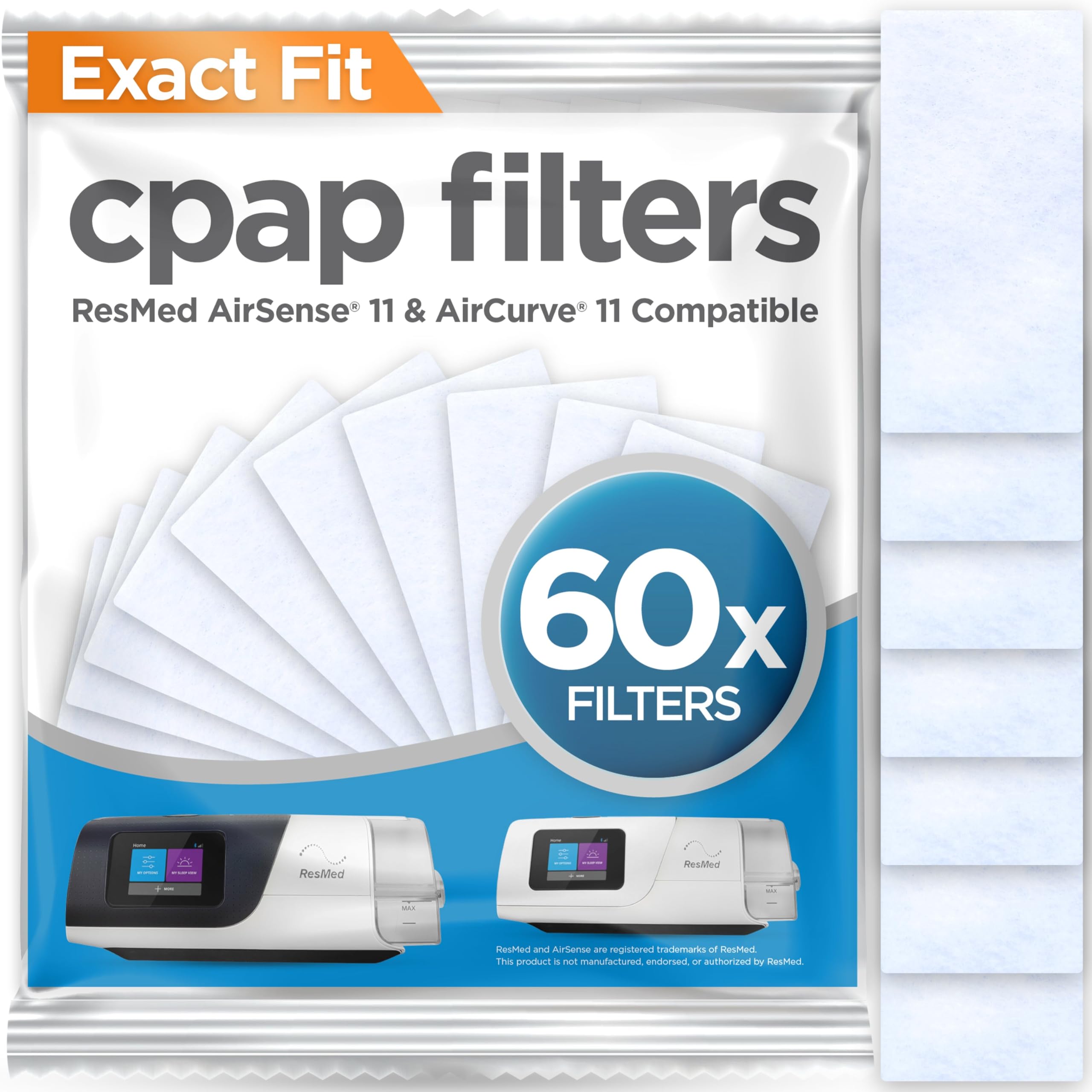
RespLabs AirSense 11 60-Pack
Key Features
- Machine Compatibility: AirSense 11, AirCurve 11
- Filter Count: 60-pack
- Media Type: Disposable non-woven
- Filter Density: Ultra-fine media
- Installation: Rear-slot slide-in
- Price: $
RespLabs packs 60 rear-slot filters for the AirSense 11/AirCurve 11 at a price that keeps the two-week change schedule affordable for a full year. The media runs thinner than OEM, which can push buyers toward doubling filters — a workaround that eats into the cost advantage. Fit is generally precise, but the occasional size variance between packs makes a quick rear-slot seal check after install worthwhile. The top AS11 pick uses denser media with more consistent fit, which is where this bulk pack trails.
Pros
- Sits cleanly in the AirSense 11 rear slot with no trimming or folding needed.
- Sixty filters at a per-filter price that keeps the two-week swap schedule economical.
Cons
- Filter size can vary slightly between packs, so confirming the rear-slot seal after install is worthwhile.
- Media is noticeably thinner than OEM, which may lead to stacking two filters in the slot.
AirSense 11 owners on a two-week filter schedule get a per-filter price that makes the habit affordable, as long as OEM-thickness media isn’t required.
Best for Usa-Made Ds1 Kit
NUWAVE DS1 27-Piece Kit

Key Features
- Machine Compatibility: DreamStation 1
- Filter Count: 27 pieces
- Media Type: Reusable + disposable
- Filter Density: Ultrafine media
- Installation: Frame assembly required
- Price: $$
This 27-piece USA-made kit pairs 9 reusable frames with 18 ultrafine disposable filters, so DreamStation 1 owners can rotate supplies without ordering two separate products. The reusable frames rinse clean for extended use, while the ultrafine media handles routine household dust between swaps. The per-filter price runs higher than the leading bulk DS1 combos, which is why it sits below the bigger value kits in this roundup.
Pros
- USA-made 27-piece kit pairs reusable frames with ultrafine disposables, so no separate filter order.
- Rinseable frames add lifespan, letting the ultrafine disposables do the routine dust work.
Cons
- Replacement media can feel lighter than OEM, so check the filter fit after each change.
This suits DreamStation 1 owners who prefer USA-made supplies and a single kit mixing reusable frames with disposables.
Best for Ds2 Alternative Kit
ItAll DS2 52-Piece Kit

Key Features
- Machine Compatibility: DreamStation 2
- Filter Count: 52 pieces
- Media Type: Reusable + disposable
- Filter Density: Foam + ultrafine
- Installation: Frame assembly required
- Price: $$
The ItAll kit gives DreamStation 2 owners a 52-piece supply with six reusable frames, so the replacement schedule is covered for roughly 18 months. The foam and ultra-fine media seat cleanly into the frames, and the fit stays secure during routine swaps. It is a viable alternative to the larger DS2 kits, though availability is more limited than the other 52-piece DS2 kit. ResMed owners and anyone wanting fully pre-assembled disposables should look elsewhere.
Pros
- Six reusable frames with replaceable foam and ultra-fine media provide a secure DreamStation 2 fit.
- A 52-piece count covers roughly 18 months of scheduled filter swaps for DS2 owners.
Cons
If you own a DreamStation 2 and prefer reusable frames over pre-assembled disposables, this kit delivers a secure fit and a full supply at a fair price.
Best for As11 Budget Users
EnduriMed AS11 60-Pack
Key Features
- Machine Compatibility: AirSense 11
- Filter Count: 60-pack
- Media Type: Disposable non-woven
- Filter Density: Ultra-fine media
- Installation: Rear-slot slide-in
- Price: $
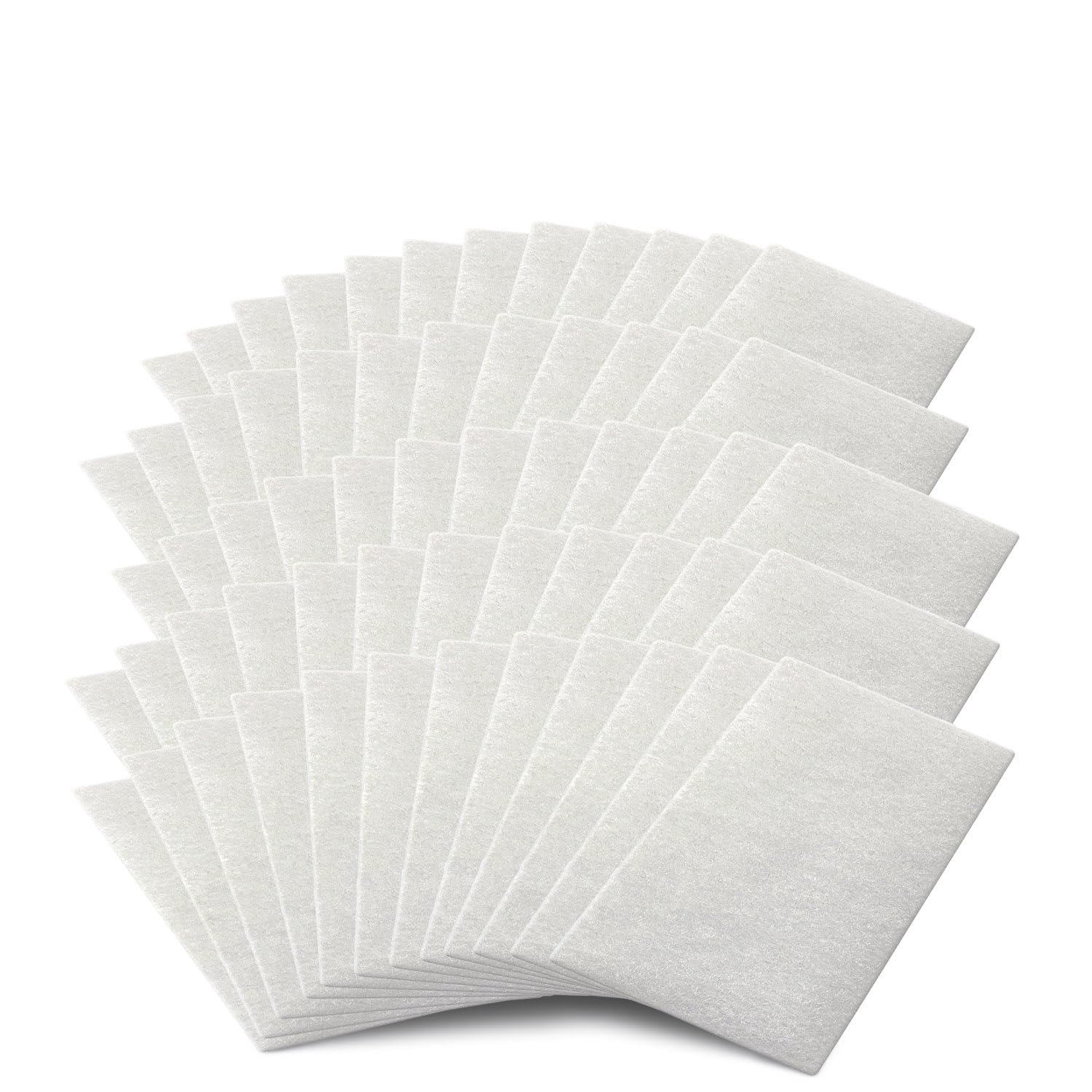
Sixty filters in the box bring the per-filter cost down for AirSense 11 owners, and the slide-in rear-slot design needs no modification. Media density is adequate for standard bedroom filtration, and a two-week change cadence stretches one box to a full year. Occasional size variance can require a firm press to seat, so this is a budget value play rather than the fit-and-finish leader in the AS11 category.
Pros
- Sixty filters at a budget price cover a full year on a two-week replacement schedule.
- Slide-in rear-slot fit works with the AirSense 11 without trimming or adapters.
Cons
- Media thickness can run thinner than advertised, so dusty-household users may need shorter change intervals.
The 60-pack makes sense for AS11 owners who value low per-filter cost over identical OEM feel.
How to Choose
The right CPAP filter comes down to machine generation first, then media density, because a filter that fits but filters too little still leaves your machine working harder.
Machine Compatibility
CPAP manufacturers changed the intake filter design between generations. ResMed moved the AirSense 11 to a rear slot and changed the filter footprint, so AirSense 10 filters physically don’t seat in the 11. Philips changed the DreamStation 2 filter housing too, and the DreamStation 1 refill won’t lock in.
There is no universal CPAP filter. The machine model printed on the side of your device is the only compatibility reference that matters; listing language like ‘universal’ usually means it fits one generation, not both.
Filter Count and Supply Duration
Replacement schedules assume a two-week change interval. A 20-pack covers about ten months; a 60-pack covers more than a year.
Count only matters if you actually change filters on schedule. If you buy a 60-pack of thin media and double up, the real cost per usable week is closer to a smaller pack of denser filters.
Media Type
Disposable filters are drop-in media you toss every one to two weeks. Reusable-frame kits use a plastic or foam frame that stays in the machine while you swap the foam and ultrafine layers inside it.
Reusable frames reduce plastic waste and lower per-refill cost, but they add assembly and a small risk of poor seating. If you want the lowest day-to-day effort, a preassembled disposable filter is the simpler choice.
Filter Density and Thickness
Filter density controls how much the media catches, but it also controls airflow resistance. Denser media catches more dust and allergens while making the blower work harder; thinner media flows more freely but lets smaller particles through.
The trade-off is that many aftermarket filters are visibly thinner than Philips or ResMed originals. Some users double up filters, which restores filtration but doubles cost and can add airflow resistance. If you have allergies or pets, choose ultrafine media and change it more often.
Installation Ease
Some filters slide directly into a rear slot, while reusable-frame kits require you to snap foam and ultrafine layers into a frame before inserting it. The process takes seconds, but it can be fiddly if the media isn’t cut precisely.
Check whether the listing includes preassembled units if you want zero assembly. A filter that fits loosely lets air bypass the media, defeating the purpose regardless of density. Confirm the frame is compatible with your machine model and the media locks into place.
FAQ
Can I use ResMed AirSense 10 filters in an AirSense 11?
No. The AirSense 11 uses a rear filter slot with a different footprint than the AirSense 10 side-slot filter. Order filters labeled for AirSense 11 or AirCurve 11; an AirSense 10 pack won’t seat and will let air bypass the media.
Why does my CPAP filter look so thin? Is it still working?
Many aftermarket filters use thinner media than Philips or ResMed originals, so a filter can look translucent and still catch larger dust. The risk is that fine particles and allergens pass through more easily. If you see dust on the machine side or notice more congestion, change it weekly or switch to a denser filter.
How often should I change my CPAP filter if I have pets or allergies?
The standard schedule is every two weeks, but pet dander and pollen load the filter faster. Change the filter weekly and use ultrafine media rather than standard foam if you wake up congested. A filter with visible dust before two weeks needs replacement sooner, regardless of the printed schedule.
Are generic CPAP filters as good as the Philips or ResMed brand filters?
Many generics filter adequately, but the main difference is media thickness and fit consistency. A thinner generic may require more frequent changes or doubling up, which erases the savings. If you want the closest OEM behavior, pick a brand with consistent fit feedback and buy enough supply to change on schedule.