
This post contains affiliate links. We may earn a small commission when you buy through our links — at no extra cost to you.
Most CPAP battery listings quote runtimes with the heated humidifier and heated tube turned off. Leave them on, and a three-night battery can become a four-hour one. That is the gap between a marketing claim and a 3 a.m. wake-up with a dead machine. The fix starts with treating that runtime claim as a best-case number, not a promise.
This guide starts from that trade-off. Picks are grouped by how you actually use them: TSA-compliant 100Wh packs for flights, larger stations for car camping and outages, and ultraportable units for AirMini owners. The real choice is portability versus runtime: under 100Wh keeps you flight-ready but leaves little multi-night buffer; above 100Wh buys nights but gives up carry-on access.


Best for Frequent Flyers, Airmini
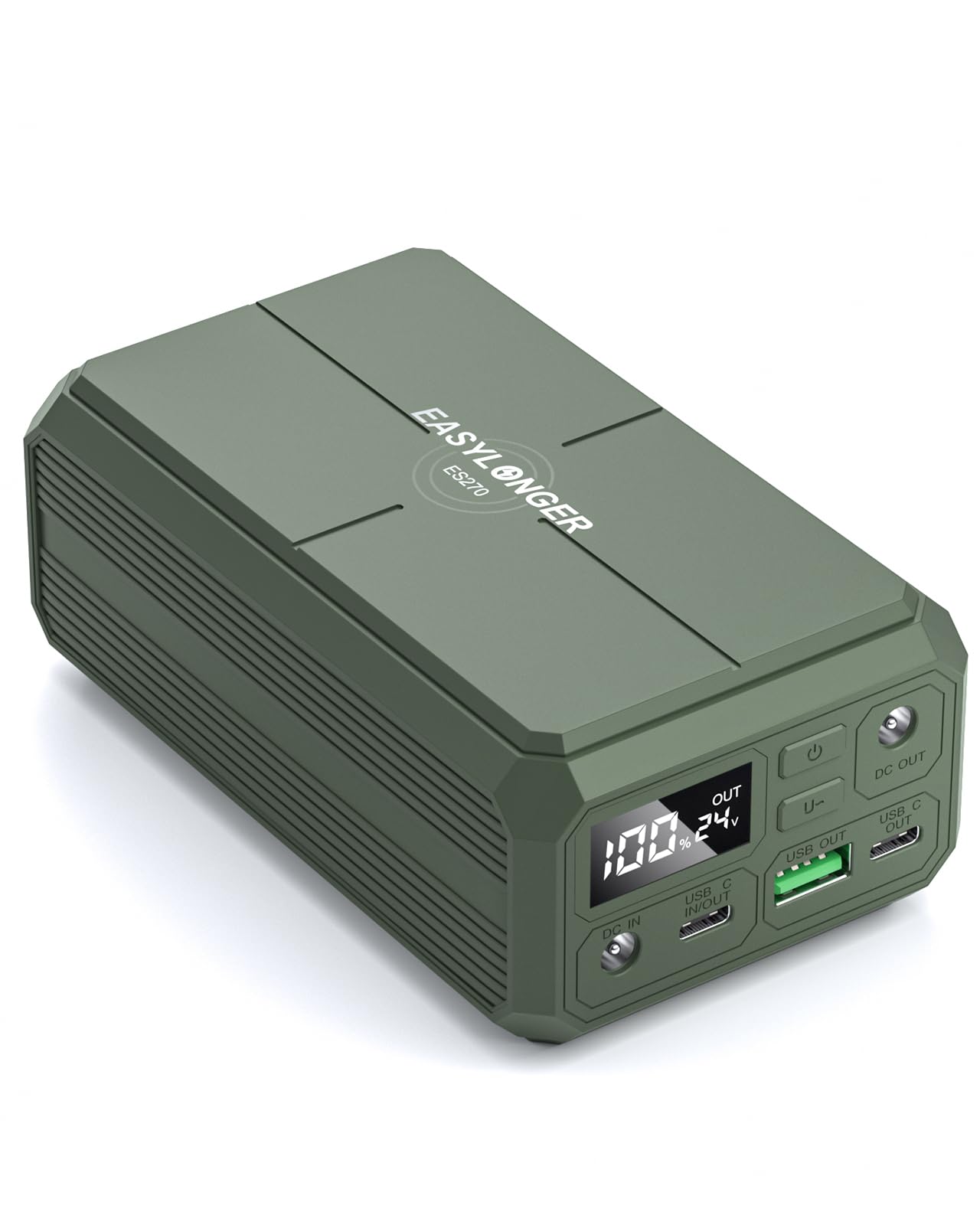
EASYLONGER ES270
Key Features
- Capacity: 99.9Wh
- Runtime: 8 hrs, humidity off
- Cables & Voltage: 4 labeled CPAP cables
- Pass-Through: Yes
- Weight & Charging: 1.3 lb, 65W charger
- Price: Budget
The EASYLONGER ES270 takes a travel-first approach: at 99.9Wh and 1.3 lb, it stays within carry-on battery limits and fits inside a CPAP case. Four labeled cables cover common ResMed and Philips machines, and the included 65W charger tops it up between uses. The labeling and charger make it feel like a purpose-built travel accessory rather than a generic power bank pressed into medical duty, and the price keeps it in budget territory.
On low-power machines like the AirMini, the ES270 clears a full night and leaves spare capacity. Pass-through charging means it can sit plugged in, staying topped up while it powers the CPAP, which makes it practical for hotel rooms or a short power outage. Buyers who fly with a CPAP can keep it connected at home between trips so it is ready to pack without a charging ritual.
This is for frequent flyers and overnight travelers who rely on an AirMini or can run a ResMed with humidity off. It suits the trip where a wall outlet is uncertain: a red-eye, a hotel without a convenient bedside plug, or a short outage. Keeping the pack under the 100Wh threshold is what lets it stay in the cabin rather than the cargo hold.
Full-size CPAP runtimes need a closer look: with heated humidity and a heated tube, the pack may deliver 3-4.5 hours rather than the full night. Switch those features off and the same machine fits the one-night travel use case.
Pros
- Carry-on-compliant at 99.9Wh and light enough to ride inside a CPAP case.
- AirMini and other low-power machines get through a full night with reserve.
- Labeled cables and included 65W charger mean no extra purchases for common ResMed or Philips machines.
- Pass-through charging and sturdy build make it a practical backup that can recharge while in use.
Cons
- Two nights away from wall power require a recharge between nights; capacity is sized for one-night travel.
The ES270 pairs carry-on freedom with a ready-to-use cable kit, making it the budget-conscious travel companion for CPAP users who want one-night coverage away from a wall outlet.
Best for Car Camping, Outages
BLUETTI X30
Key Features
- Capacity: 297Wh
- Runtime: 3-5 nights, humidity off
- Cables & Voltage: 3 DC CPAP outputs
- Pass-Through: Yes
- Weight & Charging: 3.9 lb
- Price: Mid-Range
The X30 is built around a 297Wh buffer, so a ResMed AirSense 10 or 11 can keep running through multiple nights away from wall power. Three dedicated DC CPAP outputs at 12/15/24V feed the machine directly, and pass-through charging powers the CPAP while the pack refills from the wall during the day. The included DC approach avoids the conversion loss you get with a general-purpose AC inverter.
Buy this for car camping, RV trips, or home-outage backup when a 100Wh travel pack does not offer enough headroom. ResMed AirSense owners get the best fit; Philips DreamStation owners should verify cable compatibility with manufacturer support before relying on it as a plug-and-play backup. Air travelers need a carry-on-compliant 100Wh pack, since the 297Wh capacity is above the cabin limit.
The five-cable kit covers common machines, and the 3.9-lb semi-hard case slides into a camper cabinet or trunk corner. That pass-through behavior matters during the day: the X30 refills while continuing to run the machine, so the battery is ready again for the next night.
Pros
- Multi-night runtime for ResMed AirSense owners in camping and outage use.
- Pass-through charging keeps the CPAP running while the battery tops up from wall power.
- Compact 3.9-lb body with a semi-hard case fits tight vehicle spaces for camping.
Cons
- The 3.9-lb package is vehicle or closet gear, not a backpack companion.
- Leaving the heated humidifier or heated tube on shortens the multi-night estimate to roughly one night.
For ResMed AirSense owners with a camper, RV, or home outage in mind, the X30 delivers a multi-night buffer with direct DC output and pass-through convenience.
Best for Car Camping, Van Life
EASYLONGER ES960
Key Features
- Capacity: 297.6Wh
- Runtime: 3+ nights, humidity off
- Cables & Voltage: CPAP cables included
- Pass-Through: Yes
- Weight & Charging: 6.6 lb
- Price: Premium
The ES960 packs 297.6Wh of LiFePO4 storage, enough to run a CPAP for three nights on a single charge. That capacity is about three times the 100Wh-class travel packs, making it a different tool rather than a bigger version of the same thing. The chemistry is what separates it from other multi-night stations: a 3000-cycle rating gives it a long service life for daily off-grid use.
Best for van-lifers and car campers who keep the CPAP in the vehicle and need a multi-night buffer. It won’t work for airline travel: at 6.6 lb and outside standard TSA carry-on limits, this is vehicle-grade equipment. The three-night rating also assumes the humidifier and heated tube are switched off.
The DC, USB, and cigarette outputs let one station power the CPAP plus a phone or fan, which matters on multi-day trips.
Pros
- Multiple nights of CPAP runtime from one charge when humidifier and heated tube are off.
- LiFePO4 chemistry rated for thousands of cycles holds up better than lithium-ion for daily off-grid use.
- DC, USB, and cigarette outputs let one station power the CPAP plus a phone or fan.
Cons
- At 6.6 lb, it is too heavy for carry-on travel and backpacking trips.
For vehicle-based campers or outages that last several nights, the ES960’s capacity and long-cycle chemistry cover what smaller packs cannot.
Best for Airmini Travelers
Medistrom Pilot-24 Lite
Key Features
- Capacity: 95Wh
- Runtime: 16 hrs, humidity off
- Cables & Voltage: 24V AirMini cable
- Pass-Through: Yes
- Weight & Charging: 1.3 lb
- Price: Premium
The Pilot-24 Lite packs a 1.3-lb, TSA-approved 95Wh battery into a 24V power source that fits inside the AirMini travel case. That makes it a carry-on-friendly way to keep an AirMini running off-grid without hunting for airline approval. Its 12V sibling in this comparison is built for DreamStation and System One, so this version is aimed squarely at ResMed’s compact AirMini lineup. Native 24V output means no DC converter and no extra cable bulk, and seamless pass-through backup when left plugged in extends the same battery to bedside power-loss protection.
This is the right pack for travelers who want a small CPAP-specific backup and are willing to keep expectations realistic. The 16-hour runtime claim assumes humidity and heated tube are off, and in some cases a unit may stop holding a charge after months of use. It is not a 12V pack, so DreamStation owners should look at the 12V counterpart in this comparison. Treat it as a lightweight single-night companion for short trips rather than a multi-night reserve.
Pros
- Fits inside the AirMini travel case and clears TSA carry-on limits at 1.3 lb.
- Native 24V output connects to AirMini without a separate DC converter.
- Pass-through charging gives seamless backup when left plugged in.
Cons
- Premium-priced per watt-hour relative to larger general-purpose power banks.
For AirMini owners who fly with a carry-on only, the Pilot-24 Lite is the lightest way to keep the machine powered without a second bag.
Best for Budget Travelers
Volessence 27K Power Bank
Key Features
- Capacity: 99.9Wh
- Runtime: AirMini 20+ hours; full-size 2.5h
- Cables & Voltage: 130W AC outlet
- Pass-Through: Yes
- Weight & Charging: 2.6 lb, USB/PD
- Price: Budget
The Volessence is a budget 99.9Wh power bank with a 130W AC outlet and USB/PD ports in a metal shell. That AC output is the point: it can charge a laptop, phone, and AirMini from one TSA-compliant pack, something the slimmer dedicated CPAP batteries don’t offer.
This fits AirMini owners who want an affordable multipurpose travel battery and anyone who needs an emergency buffer for short CPAP sessions. Full-size CPAP runtime over AC is limited — expect roughly 2-2.5 hours on an AirSense 11 with humidifier on, not a guaranteed full night. The AC format is less of a constraint on AirMini, which draws far less power.
Pass-through charging tops up the pack while a device stays plugged in, so the battery can serve as a small AC and USB dock when wall outlets are scarce. That makes it a practical one-plug travel companion for a CPAP plus everyday electronics.
Pros
- Budget-friendly 99.9Wh pack with a 130W AC outlet for laptops and CPAP machines in a carry-on-size frame.
- Metal shell and AC/USB/PD outputs cover phones, laptops, and CPAP devices from a single battery.
- Can run a CPAP over AC for short stretches or an AirMini through the night; useful as an emergency backup.
Cons
- At 2.6 lb, it’s heavier than the 1.3-lb dedicated CPAP packs; the AC inverter accounts for the bulk.
- No CPAP-specific DC cables are included, so owners must buy a third-party adapter for native DC use.
The Volessence makes sense as a budget AirMini travel battery and a power-blip backup for full-size CPAP owners, while also charging a laptop.
Best for Universal Travel Ac
Zopec Explore 5700

Key Features
- Runtime: 3 nights claimed
- Cables & Voltage: Universal AC, no adapters
- Weight & Charging: 2.5 lb
- Price: Luxury
The Zopec Explore 5700 is a universal no-adapter travel battery: its AC outlet runs any CPAP brand without matching DC cables, and the pack stays carry-on sized. A car charger is included for road trips. The premium price for a 100Wh-class battery reflects that convenience, but the three-night figure assumes minimal settings and heated humidity can shorten runtime. Those limits hold it below top-pick status, yet the adapter-free design remains the simplest route for mixed-brand travel.
Pros
- Universal AC outlet accepts any CPAP brand without brand-specific cables or adapters.
- Carry-on sizing plus the included car charger covers both air and road travel.
Cons
- AC output draws more power than a native DC connection, so runtime per watt-hour trails direct-cable packs.
Pick the Explore 5700 when your CPAP travel includes mixed brands and you would rather pack one AC battery than a bag of DC cables.
Best for Home Outage Backup
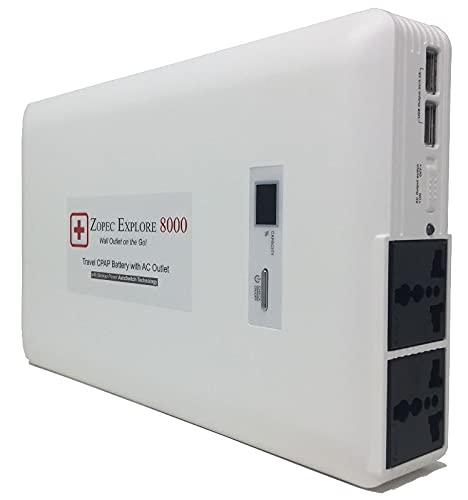
Zopec EXPLORE 8000
Key Features
- Capacity: 288Wh
- Runtime: 3-4 nights claimed
- Cables & Voltage: Universal AC, auto-switch
- Pass-Through: Yes
- Weight & Charging: 4.2 lb
- Price: Luxury
The EXPLORE 8000 is a home-first AC backup: plug any CPAP into its outlet and it takes over automatically when wall power drops. That universal AC simplicity means no special cables for different machine brands, and the 288Wh capacity covers several nights with the humidifier off. The tradeoff is a pack that is not TSA-approved, so it stays home on flights. The premium price also stings if battery durability falls short — some units may stop charging after limited use.
Pros
- Automatic switchover keeps therapy running when house power drops
- Universal AC output works with any CPAP brand without brand-specific DC cables
Cons
- Some units may stop charging after limited use, a steep outcome at this price
Choose the EXPLORE 8000 for home outage backup or car camping, where automatic switchover and universal AC matter more than carry-on freedom.
Best for 12V Dreamstation Owners
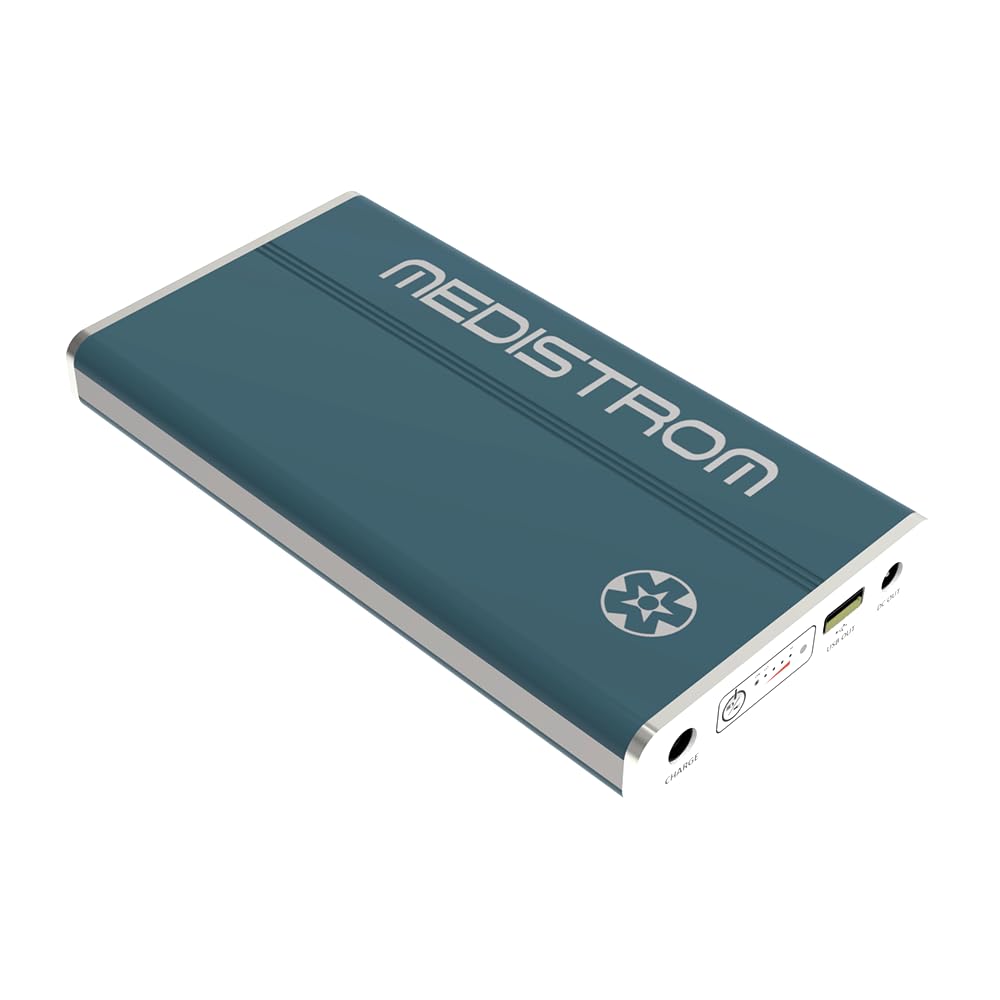
Medistrom Pilot-12 Lite
Key Features
- Capacity: 95Wh
- Runtime: 16 hrs, humidity off
- Cables & Voltage: 12V DreamStation cable
- Weight & Charging: 1.3 lb
- Price: Premium
At 1.3 lb, the Pilot-12 Lite is a TSA-friendly 12V battery that pairs directly with Philips DreamStation and System One S60. It handles a full night at moderate pressure with humidifier and heated tube off, and setup is cable-matching simple. The premium price for 95Wh and occasional unit-to-unit runtime variance are real tradeoffs, with some packs falling far short of the 16-hour claim. The narrow 12V compatibility and high per-watt cost keep it from leading the category, but DreamStation owners who fly get a genuinely compact carry-on backup.
Pros
- 1.3 lb and TSA-friendly, so it slips into a carry-on without airline approval.
- Native 12V output for DreamStation and System One means no extra converter at the bedside.
Cons
- ResMed AirMini owners need a native 24V battery; this pack outputs 12V only.
For a DreamStation owner with one-night travel needs, the Pilot-12 Lite is the rare 95Wh pack that fits the intended machine without extra adapters.
How to Choose
Choose watt-hour capacity first, because it sets both how many nights you get and whether you can fly with it.
Capacity and TSA Limits
Batteries are measured in watt-hours (Wh), and that number gates everything. At or below 100Wh, a battery can go in a US carry-on without airline approval. Above 100Wh and up to 160Wh, airlines may allow it with advance approval; above 160Wh, it stays home.
Runtime: Heated Therapy Off vs On
With heated humidifier and heated tube running, a CPAP can draw three to five times the power of the same machine with both off. That is why a 99.9Wh pack can cover an AirMini overnight but only a few hours on a full-size machine with humidity on.
For a reliable estimate, multiply the machine’s draw in watts by the hours you need and add 20-30% buffer. Then check the battery capacity in watt-hours against that number.
Cables and Voltage
DC cables let the battery feed the CPAP directly, bypassing the CPAP’s AC power brick and the conversion loss that comes with it. Native DC operation can add roughly 15-25% runtime compared with running through a 110V AC outlet.
Confirm the machine voltage before buying: the ResMed AirMini is 24V, DreamStation models are commonly 12V, and full-size AirSense units use 24V. A labeled cable kit removes most setup guesswork.
Pass-Through Charging
Pass-through means the battery can power the CPAP while the battery itself recharges. In practice, that turns the pack into an uninterruptible power supply: wall power runs the machine and charges the battery, then the battery takes over when the wall drops. Without pass-through, an outage means waiting for a charge before you can use the battery.
Weight and Charging Options
Capacity and chemistry determine weight. A 95-100Wh pack lands around 1.3-2.6 lb; a 276-297Wh station ranges from 3.3 to 6.6 lb. If you carry on, a 1.3 lb pack is worth a premium; if you car camp, the heavier station’s multiple charging paths matter more.
Charging options also matter — wall, car, solar, and USB-C PD all have different recharge speeds. Match the source you will have on a trip.
FAQ
Why does my CPAP battery only last 3-4 hours when the listing says all night?
The listing’s runtime is almost always measured with heated humidifier and heated tube off. With those on, a full-size CPAP can draw 40-80W instead of 10-20W, which cuts runtime by half or more. Treat ‘up to X nights’ as a no-humidity best case.
Can I take a 148Wh CPAP battery on a plane?
TSA allows batteries at or under 100Wh in carry-on without approval, and 101-160Wh only with airline approval; above 160Wh is not allowed in carry-on. A 148Wh pack can fly if the airline approves beforehand, but it is not an unrestricted carry-on item. If you want zero airline friction, stay at 99.9Wh.
Do CPAP batteries work with a heated humidifier and heated tube?
They work, but a heated humidifier and heated tube shorten runtime dramatically. For a full night on battery, turn humidity off or to a lower setting and disable the heated tube. Reserve heated therapy for wall power and treat battery nights as the exception.
Can a 100Wh CPAP battery run a ResMed AirSense 11 for a full night?
Yes, with humidity and heated tube off and a native 24V cable, a 99.9Wh battery generally covers 7-8 hours at moderate pressure. With humidity on, expect closer to 2.5-3 hours on some machines. For a comfortable margin, use a low-pressure setting and consider a 148-297Wh station if you need heated therapy.