
This post contains affiliate links. We may earn a small commission when you buy through our links — at no extra cost to you.
Most camping pillows push one of two extremes: foam builds that feel like home but eat pack space, or inflatables that vanish into a stuff sack but carry an air-leak risk. The real choice is deciding which trade-off fits your trip.
Leak complaints and off-gassing odors drive more disappointment than any other issue. But those problems are predictable — and avoidable — if you prioritize valve design, washable covers, and actual inflated dimensions instead of marketing buzzwords.
This guide sorts the category by what your sleep position and trip style require, then identifies which pillows deliver comfort without a leak gamble or an overnight deflation surprise.
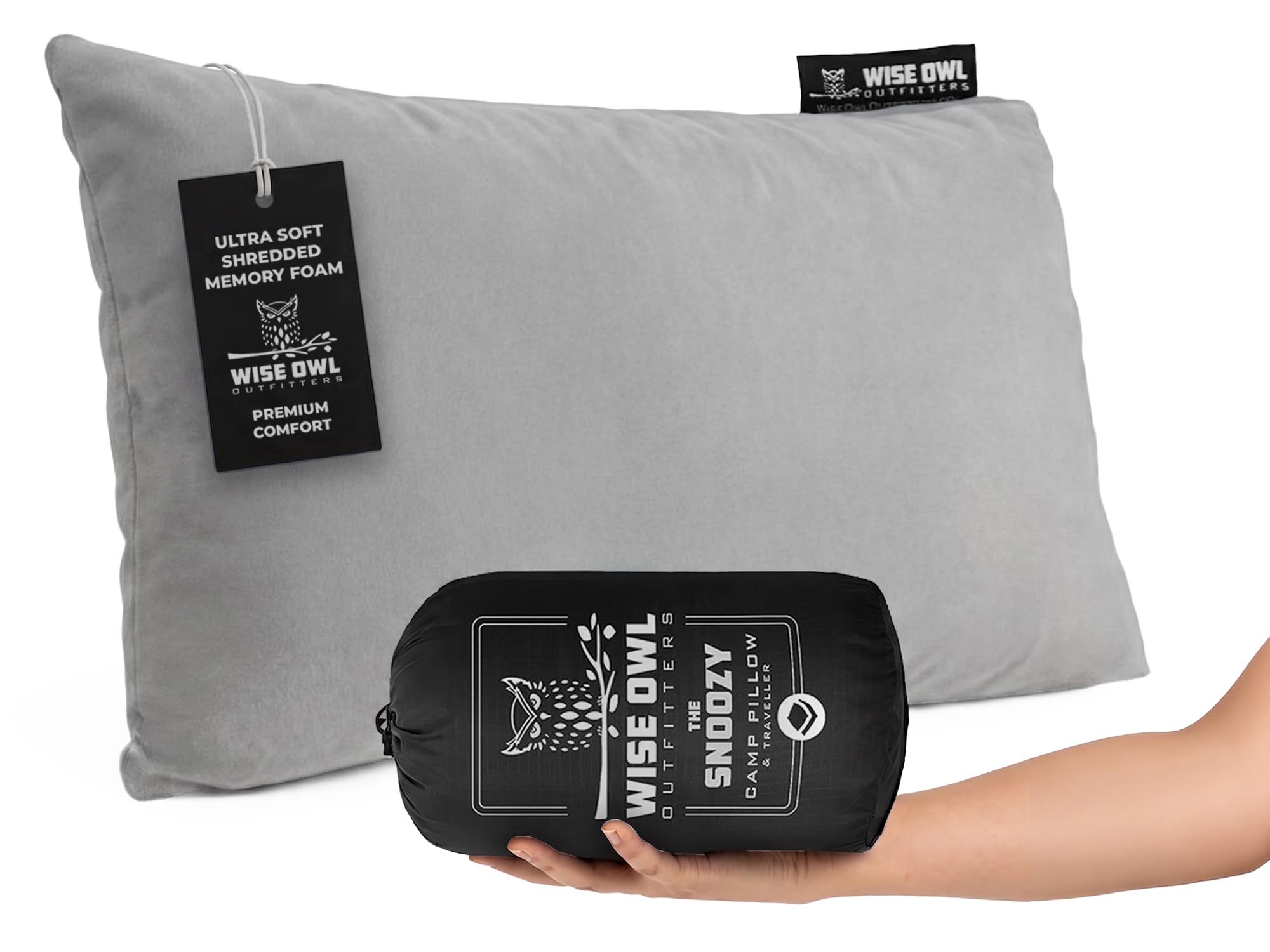


Best for Car Campers
Wise Owl Foam Camp Pillow
Key Features
- Fill: Memory foam
- Packed Size: Compressible sack
- Weight: 9 oz
- Price: Mid-Range
Memory-foam fill gives side and back sleepers a real-pillow feel without inflation or air-leak risk. The removable microsuede cover unzips for washing, and the 12 x 16-inch surface keeps its loft through the night. It packs in an included stuff sack, so it travels well in a duffel or tent bag. The foam responds to head movement instead of bouncing or sliding the way some air pillows do.
The stuff sack is snug, so repacking takes effort, and broad-shouldered side sleepers may find the surface smaller than expected. For car campers and road-trippers who want a washable pillow that feels like home, those boundaries are a fair exchange for zero air-leak risk. The lack of a valve also means no midnight deflation. Side sleepers get consistent support; back sleepers get a cushion that stays put.
The foam holds up through repeated trips, and the machine-washable cover keeps camp grime from becoming permanent. This is a low-maintenance setup for car camping and road trips. It earns its space in a tent bag without demanding the careful handling of an air bladder.
Pros
- Memory-foam support holds its shape through the night
- Stitching and materials hold up to repeated camp use
- Travel-friendly size fits road trips, flights, and tent camping
Cons
- At 9 ounces, it is heavier than ultralight air pillows
- Not as packable as inflatable options when every liter counts
Car campers and side/back sleepers who want foam comfort without valve anxiety will get the most from this pillow.
Best for Ultralight Backpackers
TREKOLOGY ALUFT 2.0
At 3.9 ounces and a 5×2-inch packed size, the ALUFT 2.0 is the smallest footprint in this roundup. The one-way valve inflates quickly, and the 16x12x4-inch surface gives side and back sleepers a workable platform once firmness is adjusted.
Backpackers who count grams get the full benefit here: the pillow disappears into a stuff sack. Some units develop air leaks after repeated use, so testing before a long trip is a sensible habit; the tradeoff makes sense when packed size is the priority.
Pros
- Weighs 3.9 ounces and compresses to a minimal packed size for backpacking.
- One-way inflation valve fills the pillow quickly and deflates fast at camp.
- Comfort is strong for an air pillow once firmness matches your sleep position.
Cons
- Durability varies across production batches, so lifespan is less predictable than with a foam pillow.
At a budget-friendly price, the ALUFT 2.0 fits ultralight kits where every gram matters; travelers who want a real pillow feel should pick the memory-foam option.
Best for Adjustable Comfort
Coop Original Travel Pillow
Key Features
- Fill: Shredded memory foam
- Packed Size: Compression sack
- Weight: 16 oz
- Price: Premium
The Coop Original Travel Pillow lets you add or remove shredded memory foam to match your preferred loft, which sets it apart from fixed-fill camp pillows. The removable Lulltra cover washes easily, and the included compression sack keeps it compact for flights and car camping. On a camp pad, the fill stays supportive enough for side sleepers who wake up with a sore neck after using inflatables. It suits car campers and frequent fliers who want a home-pillow feel and would rather reshape foam than trust an air valve in the dark. The washable cover also means you can toss it in the laundry after a dusty weekend.
Pros
- Home-pillow comfort that side sleepers can tune by shifting the shredded-foam fill to their liking.
- Compression sack and removable washable cover make this practical for flights, camping, and dusty trails.
- Soft enough for comfort, but supportive enough to keep your neck aligned on a camp pad.
Cons
- At 16 oz, it weighs more than inflatable backpacking pillows and takes up extra pack space.
For car campers and frequent fliers who want a real pillow at night, the Coop is the comfortable middle ground.
Best for Side Sleepers
Klymit Luxe Travel Pillow
Key Features
- Fill: Air + polyester
- Packed Size: 7 x 3 in
- Weight: 7 oz
- Price: Premium
The Klymit Luxe pairs a 22-inch inflated base with polyester padding and a soft machine-washable cover, giving it the feel of a household pillow. Inflation is straightforward, and the 7-ounce weight stays reasonable for the comfort it adds.
This suits side sleepers and travelers who want a larger surface and a plush hybrid feel. The premium price and slightly larger packed size than pure ultralight inflatables mean it won’t suit strict ultralight backpackers or tight budgets. It fits best in a car-camping or travel kit, not in a thru-hiker’s pack.
Pros
- Plush 22-inch surface with polyester padding feels closer to a home pillow than a bare inflatable.
- Machine-washable cover and 7-ounce weight keep cleanup and carry simple.
- Inflates quickly without a pump, so setup is simple at camp.
Cons
- On rough terrain, a puncture can sideline it until you patch it.
Pick this when you want a real pillow feel on a camping or travel bed and comfort matters more than minimal weight.
Best for Families
TETON Sports Camp Pillow
Key Features
- Fill: Cotton/foam blend
- Packed Size: Stuff sack
- Weight: 9.6 oz
- Price: Budget
The TETON Sports Camp Pillow pairs a soft cotton/foam fill with a self-lofting design that skips the inflate-deflate routine entirely. It fluffs up on its own, weighs about 9.6 ounces, and the machine-washable cover keeps camp bedding fresh after dusty weekends.
That makes it an easy fit for budget-conscious families, kids, teens, and car campers, plus backpackers who prefer foam over inflatable. The 18 x 12-inch surface is smaller than a standard bed pillow, so broad-shouldered side sleepers may want more surface; back sleepers and smaller frames can use it without issue.
Pros
- Soft cotton/foam fill self-lofts without any inflation pump or valve.
- Weighs about 9.6 ounces and packs into its own stuff sack for easy transport.
- Comfortable for car-camping nights and road-trip naps right out of the sack.
Cons
- The 18 x 12-inch surface is smaller than a standard bed pillow, so broad-shouldered side sleepers may want more area.
A budget-friendly foam pillow with a soft, self-lofting feel and no inflate-deflate ceremony. It suits families, car campers, and foam-preferring backpackers who want a low-maintenance camp pillow.
Best for Ultralight Comfort
Sea to Summit Aeros Premium
Key Features
- Fill: Air + foam top
- Packed Size: 2.8 x 4.3 in
- Weight: 2.8 oz
- Price: Premium
The Aeros Premium matches the packed size of a proper ultralight inflatable while replacing bare fabric with a memory-foam top and stretch-knit cover. At 2.8 ounces it still suits gram-counting hikers, and the multi-function valve makes inflation and pressure adjustment quick in the field.
This is the right pick for hikers who want more cushion under their ear than a single-layer inflatable provides but won’t carry a foam pillow. The air bladder can produce crinkle noise when you move your head, so it suits hikers who sleep outdoors more than very sensitive sleepers in a quiet room.
Pros
- Softer face than bare inflatables thanks to a stretch-knit cover and memory-foam top.
- Ultralight and compact enough to disappear into a stuff sack.
- Inflation and pressure adjustment are fast, with a valve that works well in the field.
Cons
- Not the lightest Aeros; the UL version shaves a bit more weight.
- Premium price is harder to justify for casual campers who won’t use the foam layer.
The Aeros Premium is the camping-pillow pick for hikers who want ultralight packability with a more forgiving pillow face than a bare inflatable.
Best for Eco-Conscious Campers
Therm-a-Rest Cinch Pillow
The Therm-a-Rest Cinch Pillow packs upcycled polyurethane foam into a compressible 18 x 14 inch shape, with a cinch cord that adjusts loft and firmness without extra gear. It keeps a foam feel that pure inflatables lack, while packing small enough for backpacking. That makes it a middle-ground option between ultralight inflatables and bulky car-camping pillows.
This Regular suits sustainable-minded campers and backpackers who prefer a compressible foam pillow over an inflatable. Foam fill can feel lumpy or uneven, and stitching quality varies between units, so the eco-friendly fill and cinch-adjustable loft should be the main reasons you choose it.
Pros
- Comfortable for a compressible foam pillow
- Travel-friendly for backpacking and camping
- Portable and easy to pack
Cons
- The 18 x 14 inch Regular can feel short for broad-shouldered side sleepers.
For foam-first backpackers who value upcycled fill and tunable loft, this packs a real pillow feel without an air valve.
Best for Budget Hikers
Hikenture Inflatable Pillow
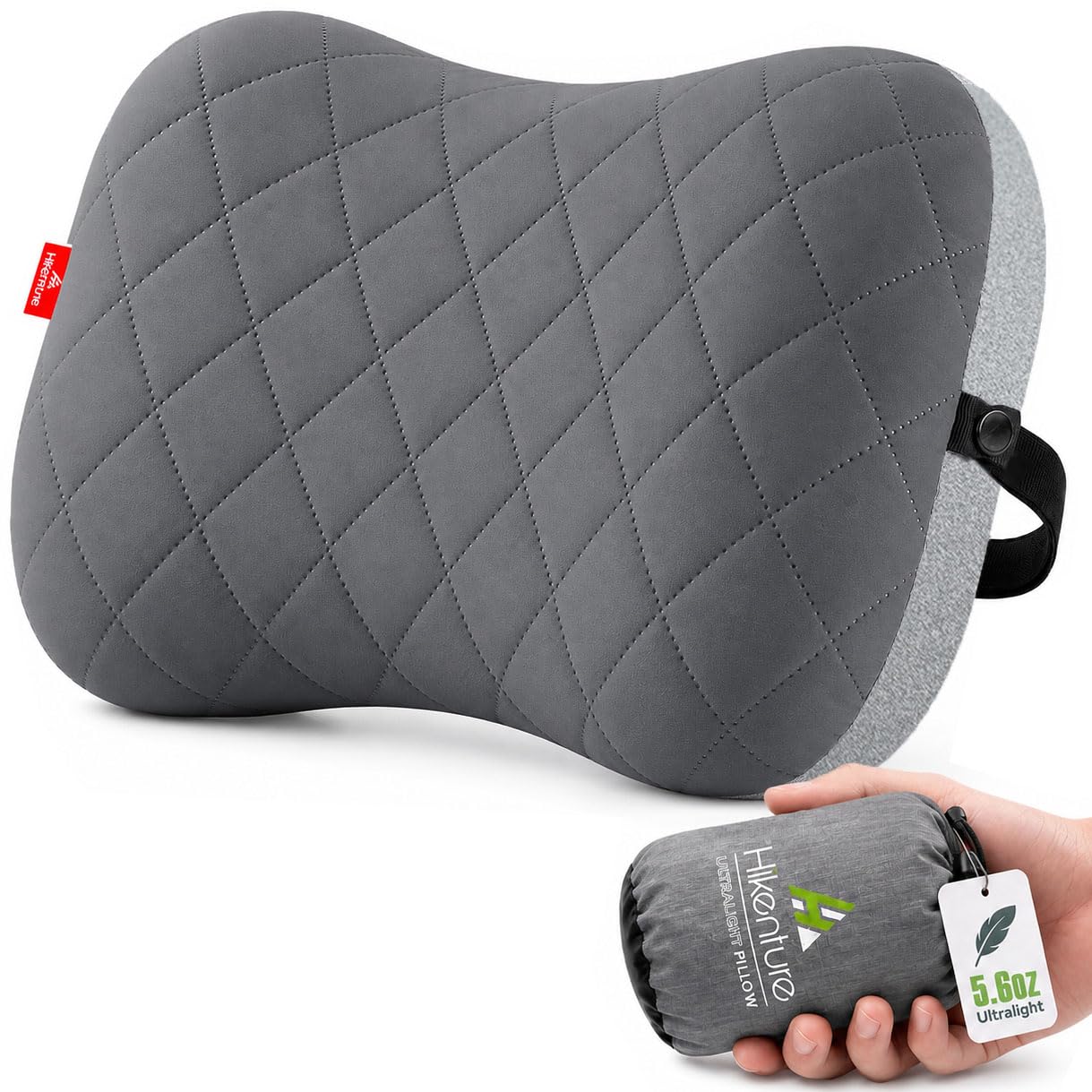
The Hikenture’s soft, washable cotton/polyester cover and one-click inflation make it a comfortable budget inflatable that supports side sleeping without packing large. It sits below the default ultralight inflatable in this roundup; valve durability can vary between units, making air retention worth checking before a multi-night trip.
Pros
- One-click inflation and deflation make setup and takedown quick at camp.
- Removable cotton/polyester cover is washable and feels soft against the face.
Cons
- At 5.6 ounces, it won’t be the lightest inflatable for gram-counting backpackers.
Best for campers and travelers who want a washable soft-face pillow.
Best for Warm Sleepers
Weekender Cooling Gel Pillow

Key Features
- Fill: Gel memory foam
- Packed Size: Travel size
- Weight: 1.1 lbs
- Price: Budget
Gel-infused memory foam gives this travel pillow a genuine support advantage over basic inflatables, and the machine-washable cover makes camp cleanup easy. Cooling performance varies, and the medium-firm feel isn’t for everyone, so it suits budget shoppers who want foam support without paying for guaranteed chill.
Pros
- Memory-foam support without inflation, plus a washable cover, at a budget price.
- Comfortable enough to improve sleep for campers used to thin inflatable pillows.
Cons
- Side sleepers who prefer a soft, lofty pillow may find the medium-firm foam too stiff.
For campers who want memory-foam support on a budget and don’t need the smallest packed size, this is a cost-effective pick.
Best for Budget Travelers
PEUJEW Shredded Foam Pillow

Key Features
- Fill: Shredded memory foam
- Packed Size: Travel bag
- Weight: 1.3 lbs
- Price: Budget
Soft shredded foam gives a plush, supportive sleep surface without inflation, and the removable washable cover cleans up easily. The included travel bag and 16×12-inch size fit naturally in a car-camping kit or carry-on for airplane naps. Some units arrive with a chemical odor that can need airing out, so this budget foam pick isn’t for sensitive noses.
Pros
- Soft, supportive shredded foam delivers a home-pillow feel without inflation.
- Compact 16×12-inch size and included travel bag make this an easy car-camping companion.
Cons
- For ultralight backpackers, the 1.3-pound foam build and 16×12-inch size are bulkier than inflatable alternatives.
This is the budget-friendly foam pick for car campers and airplane nappers who want a soft, no-inflation pillow.
Best for Adjustable Loft
QUTOOL Cooling Foam Pillow

Cross-cut memory foam with a zippered cover lets travelers remove fill to tune loft and firmness, and the washable cover adds practical value at this price. Chemical odor on arrival can require airing out, and the cooling tradeoff also prevents it from ranking with the stronger options in this roundup.
Pros
- Adjustable fill lets you remove foam to tune loft and firmness
- Comfortable shredded foam support at a budget-friendly price
Cons
- Cooling performance can be inconsistent, so hot sleepers may still wake warm on humid nights
Works best for budget campers who want a real-foam feel and will tailor the fill rather than pack light.
Best for Two-Sided Cooling
SUPA MODERN Cooling Pillow

Two-sided cover earns its place: a cooling nylon face for warm nights and a soft microfiber face for cold ones. The shredded foam fill adjusts through a zippered cover, so the loft can be tuned. The strong initial foam odor and thick default profile make it a secondary pick for scent-sensitive or low-profile sleepers.
Pros
- Two-sided cover offers a cool nylon side and a warm microfiber side for seasonal flexibility.
- Zippered shredded-foam fill allows you to adjust the loft to your preferred height.
Cons
- You’ll need to remove fill to get a lower profile and let the foam air out before regular use.
For car campers who want a two-sided warm/cool pillow without paying a premium, this fits once you budget a little setup time.
Best for Gram-Counters
Sea to Summit Aeros UL

Key Features
- Fill: Air
- Packed Size: 2 x 2.8 in
- Weight: 2.1 oz
- Price: Premium
The Aeros UL weighs 2.1 ounces and packs smaller than a deck of cards, making it the slimmest choice for gram-counting backpackers. Inflation is simple and the pillow feels comfortable for an ultralight. But the small footprint can slide on smooth pads, and side sleepers who want wide support will find it cramped — a tradeoff minimalists accept.
Pros
- Disappears in a pack pocket or bike bag at 2.1 ounces.
- Inflation is easy to adjust for the loft you want.
Cons
- Can slide off smooth sleeping pads during the night.
Choose this when packed size matters more than pillow width; side sleepers should prioritize foam or hybrid alternatives.
Best for Car Travel
Nappler Travel Foam Pillow

Key Features
- Fill: Shredded memory foam
- Packed Size: Carry case
- Weight: 8 oz
Shredded memory foam with a washable, sweat-resistant cover and carry case gives a home-bed feel for car trips and camping. Foam-first travelers who don’t need pocket-size packing get soft support without leak risk. No price is listed, and the size runs larger than a carry-on pillow, so it suits duffel travel, not pocket packing.
Pros
- Soft, supportive foam comfort for car trips and campers who avoid inflatables.
- Carry case and compact shape pack easily into duffels and camp bags.
Cons
- Packed size can run too large for airline carry-on use — this is a camp pillow, not a pocket pillow.
Best for car campers and foam-comfort travelers who pack a duffel, not for flyers expecting a pocket-size pillow.
Best for Car Camping
Klymit Drift Foam Pillow

Key Features
- Fill: Shredded memory foam
- Packed Size: Compression strap
- Weight: 28 oz
- Price: Premium
The Klymit Drift’s 23×16-inch shredded memory foam surface and reversible water-resistant cover give side sleepers a home-pillow-size sleep surface at camp. The 28-ounce weight and bulky stuffed size are the boundary: it suits car camping and glamping, but backpackers should stick with an inflatable or compressible option.
Pros
- Full-size memory foam surface feels close to a home pillow, with no inflation or leak risk.
- Compression strap keeps it contained for car-camping duffels and RV storage.
Cons
- At 28 ounces with a bulky pack size, it’s impractical for backpacking — keep it in the car.
For car-camping trips where a real pillow is worth the bulk, the Drift’s comfort makes the extra space a fair trade.
How to Choose
The first decision is not brand or price — it is whether you can accept the weight of foam or the leak risk of air.
Inflatable vs Compressible Foam
Inflatable pillows win on packed size and weight, but every air bladder is a potential leak point. Foam pillows remove that variable and feel closer to home, but they demand pack space and add ounces.
If you hike more than a mile to camp, the weight difference matters. If you sleep in a tent next to your car, the comfort difference matters more.
Packed Size and Weight
A 2-ounce inflatable disappears into a side pocket, while a 16-ounce foam pillow eats a quarter of your pack’s extra space. The trade-off is not just ounces — it is whether the pillow will actually make it onto the trip.
For backpackers, every ounce counts over a 10-mile day. For car campers, a heavier pillow is irrelevant once it is in the trunk.
Firmness Adjustability
Inflatable pillows let you control firmness by valve — add a breath, or let a little out. Shredded foam pillows let you remove fill through a zippered opening, which changes loft but not overall support.
Side sleepers usually need more loft to fill the gap between shoulder and neck. Back sleepers often prefer a thinner, softer profile.
Cover Material and Washability
A removable cover is the difference between a pillow that lasts years and one that traps sweat and campfire smoke. Bare inflatable bladders wipe clean but feel cold and crinkle against the face.
Look for covers made of polyester, microfiber, or stretch knit. Machine-washable covers are a practical advantage for car campers, not just a convenience.
Sleeping Dimensions
The inflated size tells you whether the pillow will stay under your head when you roll over. A 16×12-inch travel pillow suits a back sleeper, but a broad-shouldered side sleeper will wake up with their head on the pad.
For side sleepers, look for at least 18 inches of length and enough loft to keep the neck aligned. The surface area should match how much you move at night.
FAQ
Why does my inflatable camping pillow deflate during the night?
Two causes dominate: a faulty valve seal or a pinhole leak in the TPU bladder. Before blaming the pillow, wet the surface and look for bubbles while it is inflated. Many budget inflatables develop slow leaks after repeated folding, so check the warranty and valve design before buying.
How do I get the chemical smell out of a memory foam camping pillow?
Memory foam off-gassing is common with shredded foam fills. Unzip the cover and let the foam air out in a dry, ventilated room for 24 to 48 hours. If the smell persists, sprinkle baking soda over the foam, let it sit overnight, and vacuum it off before reassembling.
Is a foam camping pillow worth the extra weight compared to an inflatable?
Foam pillows are worth the weight if you sleep on your side, toss and turn, or have had trouble with inflatables losing air. They feel closer to a home pillow and have no leak risk. For ultralight backpackers, a 3-ounce inflatable is the right trade-off.
Why does my camping pillow slide off my sleeping pad?
Smooth inflatable pillows move on smooth pad surfaces because there is no friction anchor. A pad with a textured top or a pillow with a non-slip backing reduces this. You can also tuck the pillow under your sleeping bag hood or use a pad with an integrated pillow lock.