
This post contains affiliate links. We may earn a small commission when you buy through our links — at no extra cost to you.
Most anti-snoring device listings lead with ‘stronger lift’ and ‘all-night hold.’ In practice, what matters is more basic: whether the device matches the source of your snoring, whether it stays in place on your skin, and whether the next night’s use costs you more.
Nasal strips only help when a stuffy nose or nasal valve collapse is the problem. If your snoring comes from mouth-breathing or jaw position, a strip will do little regardless of spring tension. Internal dilators, magnetic bands, and chin straps each solve a different snoring pattern.
The practical choice usually comes down to the price per night and your tolerance for adhesive, internal pressure, or reusable hardware. The cheapest strip is not always the best value if it spends the night on your pillow. A small per-night premium is worth it when the device stays put.


Best for Nasal Congestion Snorers
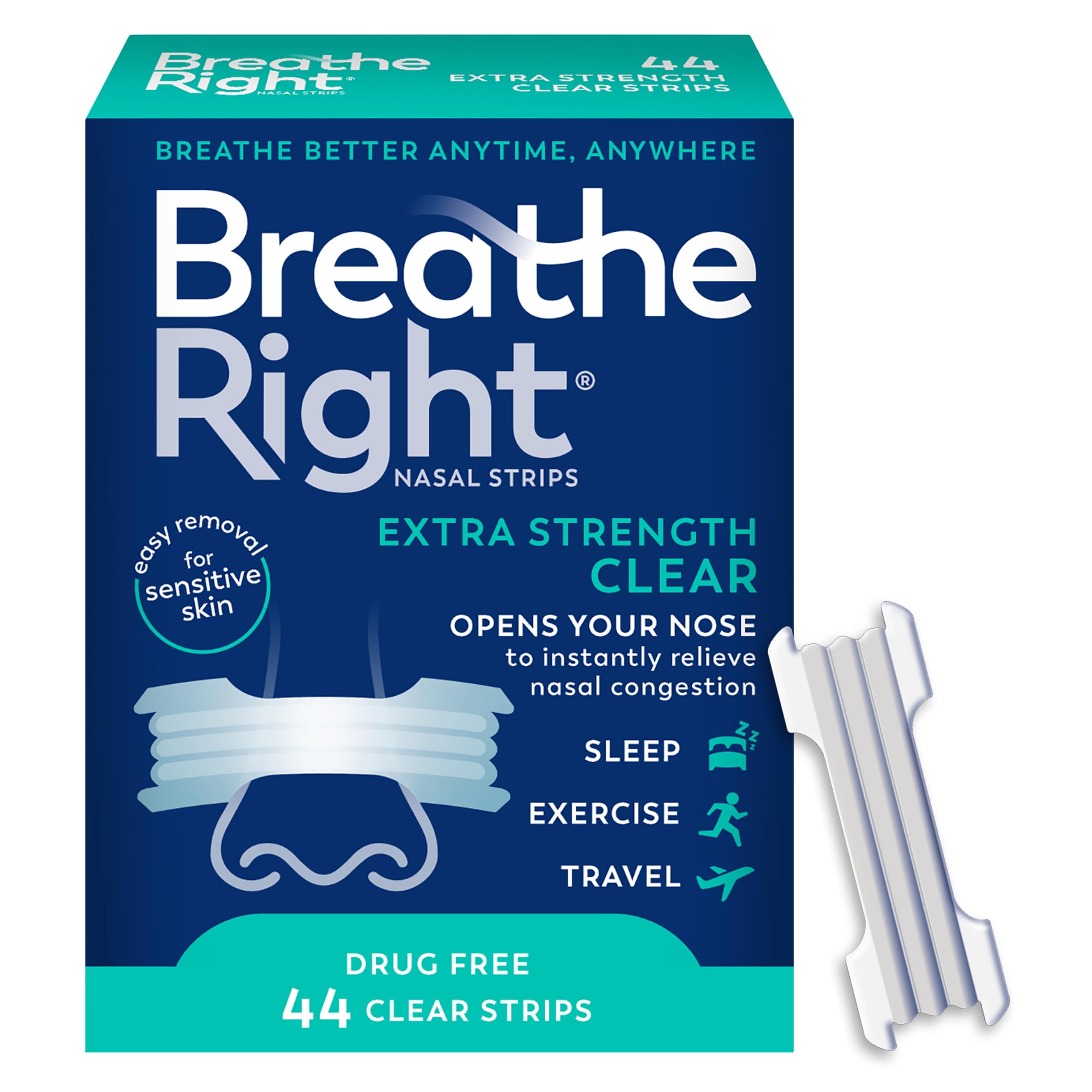
Breathe Right Extra Strength
Key Features
- Lift Mechanism: Adhesive external strip
- Reusability: Disposable, 44 strips
- Fit Options: One size
- Comfort: Hypoallergenic adhesive
- Hold Security: Needs dry clean skin
- Price: Budget
Extra-strength spring-like bands open the nasal valve and deliver instant, drug-free relief for congestion-related snoring. The strip is a purely mechanical aid, so there is no medication, no mouthpiece, and no fitting process beyond placing the strip. A 44-strip supply covers more than six weeks of nightly use, and it also works for sports or anytime use when the nose needs extra airflow.
Once centered over the bridge, the flexible bands hold the nose open and move with facial movements during sleep. The breathability gain is clear when congestion narrows the airway, and the strip adds little bulk, so side and back sleepers keep the same freedom of movement. Hypoallergenic materials keep the surface comfortable against skin that tolerates adhesive, and the strip stays in place through normal overnight movement.
The ideal user is a nasal-congestion snorer who can place the strip on a clean, dry nose. Mouth-breathers and jaw-position snorers need a different device, and people with very reactive or oil-prone skin will get more consistent results from an internal dilator. For that audience, this strip is an effective first-line anti-snoring fix.
Pros
- Cuts congestion-related snoring with a purely mechanical lift.
- Clears nasal passages for a freer breath through the night.
- Thin, hypoallergenic strip stays comfortable for skin that tolerates adhesive.
Cons
- Residue can linger and redness may appear on reactive skin.
- On oily or damp skin, the strip can loosen overnight unless placement is precise.
For congestion-related snoring, this strip is the first mechanical fix to try before moving on to internal dilators or jaw devices.
Best for Stronger External Lift
Intake Magnetic Starter Kit
Key Features
- Lift Mechanism: Magnetic external band
- Reusability: Reusable band, refill tabs
- Fit Options: 4 band sizes
- Hold Security: Tab grip varies
- Price: Premium
The Intake Magnetic Starter Kit uses a reusable band and disposable tabs to pull the nasal sidewalls open, producing a stronger external lift than standard strips. Four band sizes make the fit more adjustable than the single-size disposables in this set, which matters for narrow and wide noses.
It’s best for athletes and active sleepers who find disposable strips too weak or poorly fitting. Oily skin can weaken tab adhesion, and refill tabs are an ongoing cost, so this premium-priced system is more of a long-term investment than a cheap fix. People who want zero extra steps or low consumable costs should look elsewhere.
Pros
- Opens the nasal passages with a magnetic lift that holds more securely than standard disposable strips.
- Improves sleep quality by keeping the nasal valve open through active sleep.
- Build quality feels substantial for nightly use, with a premium finish.
Cons
- The two-part setup is fiddlier than a single strip, because the band and tabs have to align correctly.
The band does the lifting, so the pull stays in place through more movement than a tension-only strip.
Best for Adhesive-Free Internal Support
SleepRight Breathe Aids
Key Features
- Lift Mechanism: Internal nasal flare
- Reusability: Reusable, 20+ days
- Fit Options: One size
- Comfort: Internal hard plastic
- Hold Security: Slippage varies by nose
- Price: Mid-Range
Reusable internal flares open the nasal passages from inside, so the nose gets structural support without any external adhesive. That makes this a fit for nasal-valve or deviated-septum snoring when skin irritation from strips is the main obstacle, and for CPAP users who want extra airflow without more skin contact. The tradeoff is tangible: the hard-plastic flares sit inside the nostrils, which can feel intrusive or turn sore until you adjust, and insertion needs practice to find the right seating angle. For very sensitive nasal passages, the internal feel is likely the boundary.
Pros
- Opens nasal passages for clearer airflow during sleep.
- No adhesive means no strip glue or residue on skin.
- Sleep quality improves for people who tolerate the internal fit.
Cons
- The flares can slip out at night when nose shape or sleep position shifts the fit.
For adhesive-averse snorers with nasal-valve collapse, this reusable internal aid is the right starting point.
Best for Budget Disposable Strips
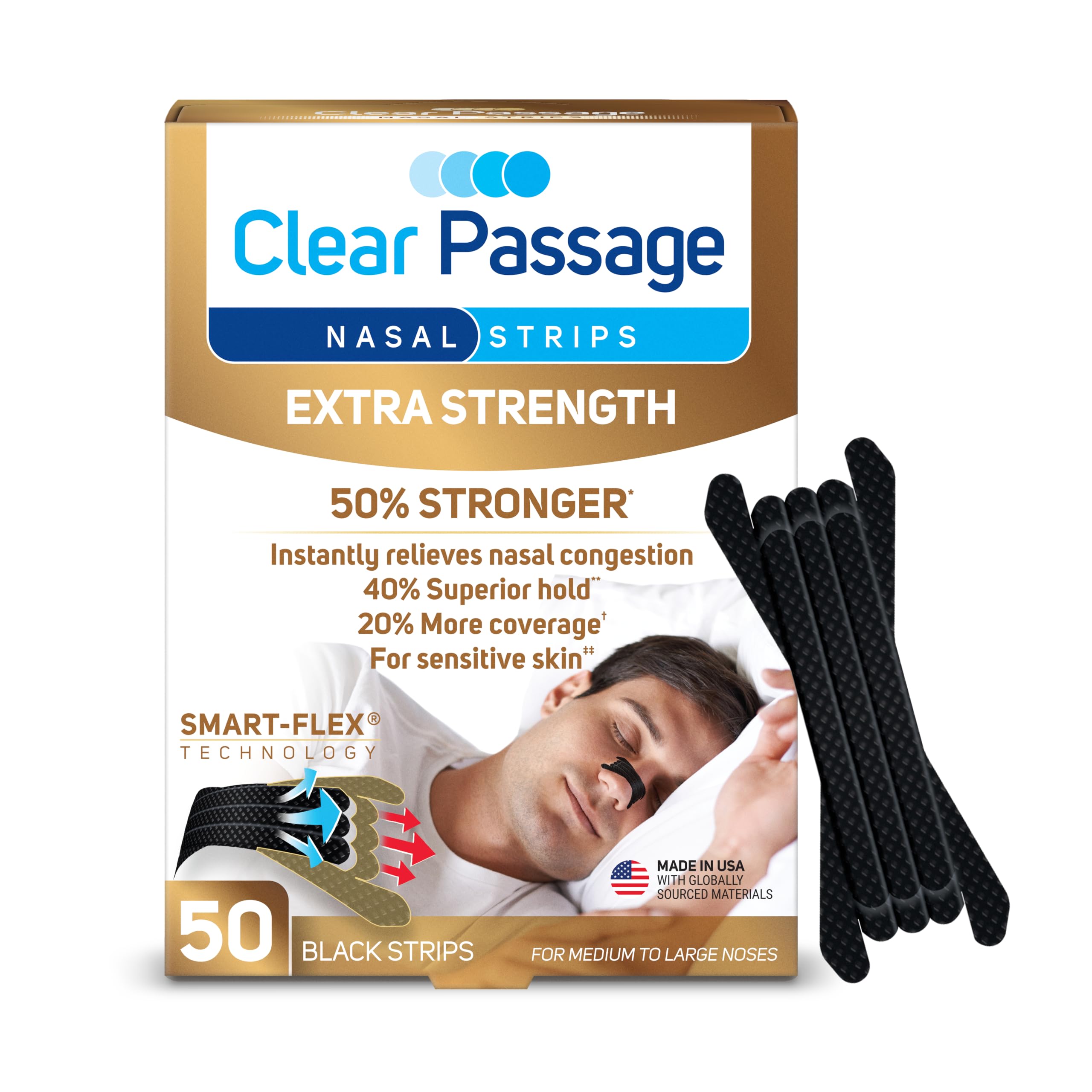
Clear Passage Nasal Strips
Key Features
- Lift Mechanism: Adhesive external strip
- Reusability: Disposable, 50 strips
- Fit Options: One size
- Hold Security: Needs dry clean skin
- Price: Budget
A 50-count box of extra-strength strips with SMART-FLEX tension delivers a strong lift that opens nasal passages and eases congestion-related snoring. The per-night price is lower than the category-leading strip, so heavy nightly users can stock up without paying a premium. It works without drugs, sprays, or a bulky frame.
This is for budget-conscious sleepers who want a large disposable supply. Adhesion depends on clean, dry skin, and the extra-strength spring tension can feel too aggressive for sensitive noses. The slim 2.5 by 0.9 inch profile keeps the strip unobtrusive during sleep.
Pros
- Opens nasal passages and eases congestion-related snoring with a strong lift.
- Supports better sleep quality for nightly users of the 50-count supply.
- Provides noticeable breathing relief through extra-strength spring tension.
Cons
- On oily or damp skin, adhesion weakens and the strip may peel overnight.
- Sensitive noses may find the extra-strength spring tension aggressive, and marks can appear.
Strong value for an extra-strength 50-count strip at a low per-night cost.
Best for Dilator First-Timers
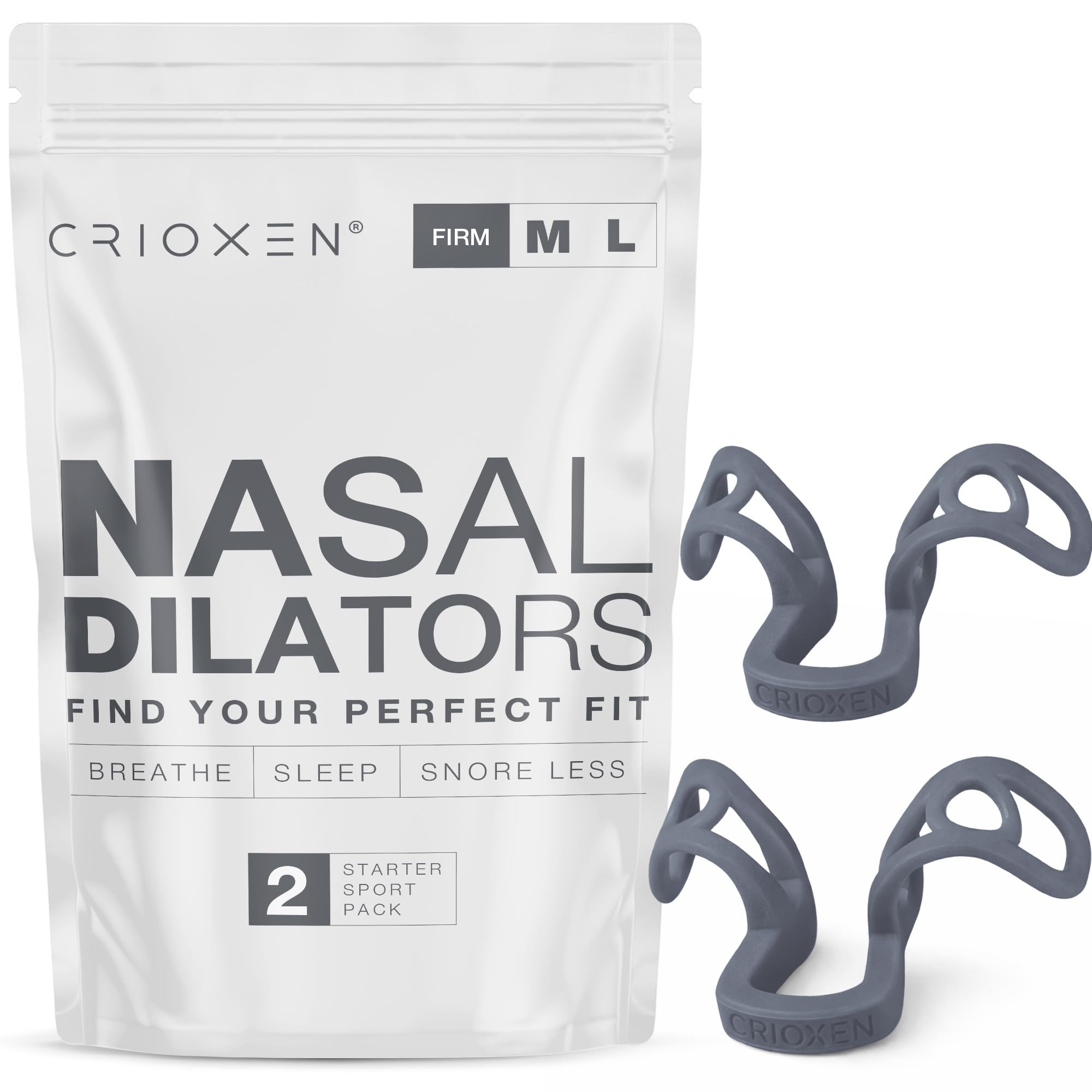
Crioxen Nasal Dilators
Key Features
- Lift Mechanism: Internal nasal flare
- Reusability: Reusable, 2 pack
- Fit Options: Firm M-L size
- Comfort: Soft internal flares
- Hold Security: Hold varies by anatomy
- Price: Budget
The Crioxen pack is a reusable 2-pack of internal nostril flares at an entry-level price. The flares open the nasal passage from the inside, improving airflow for back and side sleepers whose snoring tracks to nasal restriction. The build reads well for the cost, and the adhesive-free format is a gentler alternative for people who can’t tolerate strips.
Best for first-time internal dilator users on a budget, particularly back and side sleepers. The flares can feel flimsy, tension may soften with extended use, and hold varies by sleep position. If you want a firmer internal device, the premium internal option in this lineup is better suited.
Pros
- Opens nasal airflow for congestion-related snoring.
- Relieves nasal restriction without adhesive strips.
- Feels reasonably made for a budget-priced 2-pack.
Cons
- If your snoring needs maximum opening force, the firm M/L flares won’t be enough.
A low-cost way to test reusable internal dilation for anti-snoring without committing to a premium internal device.
Menthol Nasal Dilators
Menthol Nasal Dilators
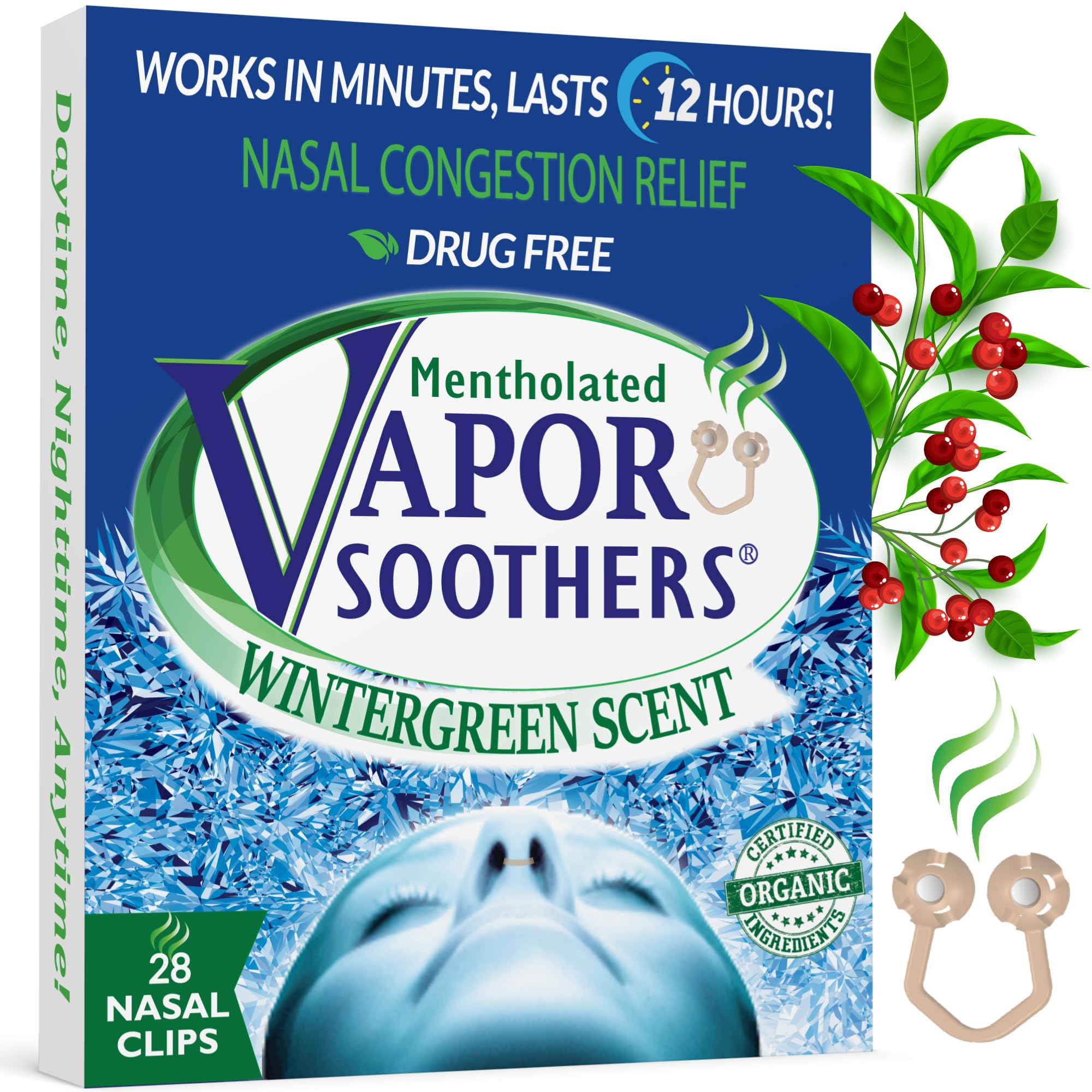
Internal clips open the nasal passages from the inside while the menthol and peppermint coating releases cooling vapors through the night. The scent-forward design is an advantage for congestion-heavy snorers, but it narrows the audience: anyone sensitive to menthol or peppermint should skip it. That makes it a niche alternative to the standard internal dilator rather than the default pick.
Pros
- Opens the nasal passages from the inside with menthol and peppermint cooling that relieves congestion during sleep or daytime.
- Sits entirely inside the nostrils, so nothing visible rests on the face and no adhesive touches the skin.
Cons
- A 28-count supply covers roughly a month of nightly use, so the budget price recurs with regular use.
For congestion-heavy snorers whose nose tolerates peppermint, this combines a hidden nostril lift with active menthol cooling.
How to Choose
An anti snoring device only works when it targets the actual source of the snoring, so the mechanism matters more than the price tag.
Lift Mechanism
Adhesive strips and magnetic bands lift the nasal sidewalls from the outside, which helps when congestion or nasal valve collapse narrows the airway. Internal dilators push the nostrils open from the inside, which can be more secure for people with narrow nostrils. Chin straps hold the jaw forward and keep the mouth closed, the right tool only for mouth-breathing snorers.
The real trade-off is precision. A strip that opens the nose cannot fix jaw-position snoring, and a chin strap cannot fix a blocked nose. Match the mechanism to the symptom, or no amount of spring strength will help.
Reusability and Ongoing Cost
Disposable strips have the lowest upfront cost but create a per-night expense. Reusable internal dilators shift the cost to a single purchase, while magnetic systems add refill tabs that renew the running bill.
Work out the cost per month before choosing. A premium magnetic kit feels economical at checkout, but refill tabs can make its long-term cost higher than a box of strips.
Fit and Sizing Options
Some devices come in a single size and rely on the user’s anatomy to make up the difference. Magnetic bands and some internal dilators offer multiple sizes, which reduces gaps and improves hold.
The trade-off is between universal simplicity and tailored fit. A one-size strip is easier to buy, but a band with four sizes distributes lift more evenly across different nose shapes.
Comfort and Tolerance
Adhesive strips put pressure on the outside of the nose and can leave residue or red marks on sensitive skin. Internal dilators avoid that problem but introduce a foreign-body sensation inside the nose, and some hard-plastic designs feel intrusive.
The boundary is personal: if adhesive irritates your skin, choose an internal or suction device. If you cannot tolerate a sensation inside your nose, an external strip or magnetic band is the better fit.
Hold Security During Sleep
Oily skin is the most common reason adhesive strips peel off mid-sleep. Internal dilators can slide out on certain nose shapes or sleeping positions, and magnetic tabs can detach when the sleeper is active.
Look for a device that stays in place in the position you actually sleep in. Clean, dry skin improves strip hold, while a firm fit through the night keeps reusable devices from becoming morning clutter.
FAQ
Why do nasal strips keep falling off in the middle of the night?
Strips peel when skin is oily, damp, or not clean. Wipe the nose and dry the area right before application. Press the strip firmly from the middle outward and avoid touching it once set. If it still lifts, try a magnetic or internal dilator instead of another adhesive.
Do nasal dilators work better than nasal strips for snoring?
Nasal dilators work better for people who cannot tolerate adhesive or whose nose shape resists external strips. They widen the nostrils from the inside, while strips pull from the outside. The deciding factor is your anatomy: if strips slide off or feel too weak, an internal dilator is the stronger option.
How long do reusable nasal dilators last before they lose their spring?
Reusable internal dilators generally hold their spring for a few months of regular use, though cheaper units can lose tension sooner. Watch for a softer fit or a tendency to slide out; that is when the device needs replacing. Budget 2-packs are a low-risk way to test whether the format works for you.
Can a chin strap stop snoring if the snoring comes from my nose?
No, if the snoring comes from nasal blockage. A chin strap only holds the jaw forward and keeps the mouth closed, so it does nothing to open the nasal passage. Use it for mouth-breathing or jaw-position snoring, and use a nasal strip or dilator for congestion-related snoring.