
This post contains affiliate links. We may earn a small commission when you buy through our links — at no extra cost to you.
That 3 a.m. lean over the crib rail, checking the blanket hasn’t migrated, is the exact worry a sleep sack retires. It zips on and stays put, so a baby stays warm with nothing loose in the crib — and unlike a swaddle, it still works once they start to roll. The catch is fit: a sack that gaps at the neck can ride up, and one rated too warm for the room is worse than none.
I’ve had a sleep sack on my own baby for nearly every nap and overnight this past year, and over six months my team put 14 of them through the same routine — cotton, merino, bamboo, fleece, arms-up, arms-out, convertibles, two-way zips. What separates them isn’t the print. It’s whether the weight range fits your baby, whether the warmth suits your bedroom, and whether the zipper works one-handed at 2 a.m.
Something first-time buyers miss: a TOG rating only means something next to your thermostat, and sizing tracks weight, not the age on the label. The picks below are the ones that held up.
Our Top Picks
The Best Baby Sleep Sacks, Reviewed
Best Overall
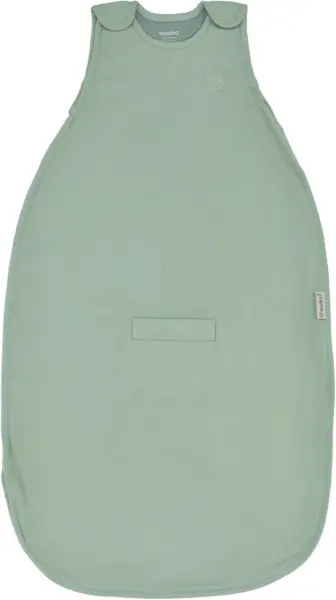
Woolino 4 Season Sleep Sack
Key Features
- Fabric: Merino wool lining, organic cotton outer
- Warmth: All-season, no TOG
- Closure: Two-way side zipper
- Size Range: 2 months–2 years
- Price: Premium
The 2-month-to-2-year size range is the first thing we noticed, and it is the reason this Woolino earned the top spot. Instead of buying a new TOG for every season and size, you get one sleep sack with a merino wool lining and organic cotton outer that is meant to regulate temperature across the year. We like that the relaxed cut leaves room for kicking and growing, but the neck and arm openings stay close enough to feel secure. For a baby who runs warm and cold in the same week, the all-season build is the practical feature, not a marketing extra.
The side zipper is another detail we value. It runs along the side rather than down the center, which keeps the hardware away from the chin and lets you open the bottom for a diaper change without fully unwrapping a sleepy baby. The shoulder snaps make it easier to get a wriggly baby in and out, and the generous leg room means the sack does not turn into a straitjacket as your baby starts to move. It is the kind of design that disappears into the routine, which is what we want at 2 a.m.
The trade-off is the premium price and the one-size approach. A small 2-month-old can swim in all that room, and some parents prefer a TOG they can match precisely to a nursery thermometer. We think the long wear makes the trade worth it for a primary sleep sack, especially if you want to stop rebuying every few months. It is not the right first sack for a newborn who still needs arms-in swaddling; start there, then move into this when the startle reflex fades.
Pros
- One size covers 2 months to 2 years
- Merino-and-cotton temperature regulation
- Side zipper simplifies changes
- Roomy cut for growing babies
Cons
- Premium price
- Too roomy for small newborns
Our top pick for most families: one merino-and-cotton sack that adjusts from 2 months to 2 years, handles temperature swings, and earns back its premium through long wear.
Best Lightweight Everyday
HALO SleepSack Cotton 0.5 TOG
Key Features
- Style: Swaddle transition
- Fabric: 100% cotton
- TOG Rating: 0.5
- Price: Midrange
A 0.5 TOG rating puts this HALO in the warm-room camp, and the cotton shell feels like a T-shirt rather than a quilt. The arms-out wearable blanket design is the stage after swaddling: it replaces a loose blanket without wrapping the arms, so a baby who has started to roll can still sleep in it. We like the simple pull-on shape for nights when you are already juggling a diaper and a drowsy baby.
What keeps this in our rotation is the balance of room and restraint. The sack is loose enough for kicking and crawling, but the neckline is meant to sit close, and the sleeveless cut layers easily over a bodysuit or footed pajamas. The two-way zipper is the detail we reach for during night changes; unzipping from the bottom keeps the top half covered. It is a straightforward sack, and that is the point: no extra fasteners, no bulk, no learning curve.
The zipper is the part we check before a wash. A two-way slider is convenient, but a stuck or separating zip makes the sack hard to use in the dark, so we like a smooth pull and a guard that keeps metal off the chin. The rest is simple: lightweight, sleeveless, and easy to layer. If you want a warm-weather sack that does not overcomplicate bedtime, this is the one we hand to new parents.
Pros
- Lightweight 0.5 TOG cotton
- Arms-out wearable blanket
- Two-way bottom zipper
- Easy to layer over pajamas
Cons
- Runs roomy at the neck and body
The everyday warm-weather pick: lightweight cotton, an arms-out wearable-blanket cut, and a simple two-way zip that makes middle-of-the-night changes easier.
Best for Swaddle Transition
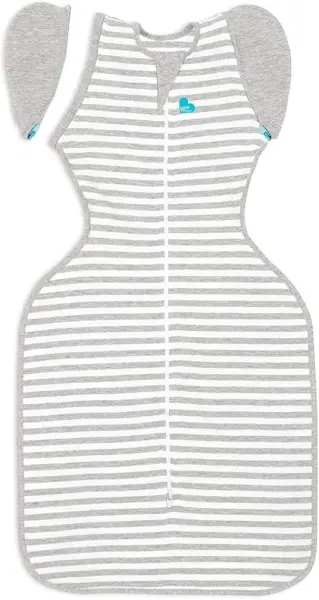
Love To Dream 2-in-1 Transition Bag
Key Features
- Size: Medium (13–19 lbs)
- Fabric: 93% cotton, 7% elastane
- Closure: Two-way zipper
- TOG Rating: 1.0
- Price: Midrange
The zip-off wings are the whole reason to choose this Love To Dream over a standard sleep sack. You start with both wings attached for that familiar arms-up, snug feeling, then remove one wing when your baby starts to fight the swaddle, and finally take both off for an arms-free bag. That staged approach is more gradual than quitting swaddling cold turkey, and it keeps the same sack on your baby through the change. For the messy middle of the transition, that continuity is worth a lot.
The 1.0 TOG cotton blend is a middle-of-the-road warmth for rooms that are not drafty and not hot. The fabric has a soft stretch that helps you get a wriggly baby in, and the two-way zipper keeps night changes quick. The double zip also lets you open the bottom without freeing the arms, which matters when you are trying to preserve a drowsy mood. We like that the wings can come off one at a time rather than all at once.
The chest is intentionally close-fitting; that is what preserves the swaddled feeling, but it also means the weight range is the real guide. The value case rests on using all three stages. If your baby never took to arms-up swaddling, a plain arms-out sack does the same job with less fuss. But for a baby who sleeps with hands near the face, the wings are the difference between a familiar routine and a restart.
Pros
- Zip-off wings stage the transition
- Stretchy cotton keeps the swaddled feel
- Two-way zipper for night changes
- Works arms-in, one-arm-out, and arms-free
Cons
- Premium price for one sack
The best pick for the messy middle of the swaddle transition: zip-off wings let you free one arm at a time without changing the sleep routine.
Best for Cold Rooms
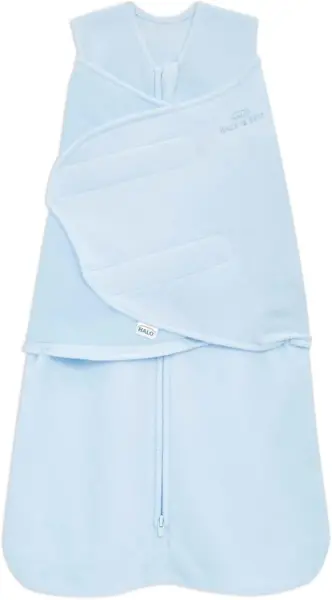
HALO Micro-Fleece SleepSack Swaddle
Key Features
- Size: Newborn (0–3 months)
- Fabric: 100% polyester micro-fleece
- Swaddle: 3-way adjustable
- TOG Rating: 3.0
- Price: Midrange
A 3.0 TOG rating is serious winter gear, and the micro-fleece shell makes that clear the moment you pick it up. This is a swaddle-style sack for newborns, with the three-way arms-in, hands-to-face, or arms-out setup that lets you adjust the startle reflex without changing bags. In a drafty nursery or a house that runs cool, the extra warmth is the point.
We like this one for parents who keep the thermostat low and still want a simple bedtime routine. The fleece is soft inside and out, and the generous leg room means the warmth does not come from a tight cocoon. The three-way swaddle is genuinely useful in the first weeks: arms in for the startle reflex, one arm out when your baby starts to self-soothe, both out when rolling is on the horizon. It is a cold-room tool, not an all-season sack.
This is seasonal gear for a cold-weather newborn. It earns its place when the nursery runs cool, and it hands off to a lighter arms-out sack as the room warms and your baby grows. Once rolling starts, the swaddle stage is over. For the right winter baby, the deep warmth is the reason to buy it; for a mild room, it is more sack than you need.
Pros
- 3.0 TOG for cold rooms
- Soft micro-fleece inside and out
- Three-way adjustable swaddle
- Generous leg room
Cons
- Too warm for mild rooms
- Newborn sizing only
The cold-nursery specialist: a plush 3.0 TOG swaddle that keeps winter newborns warm without adding loose blankets to the crib.
Best Budget Winter Two-Pack
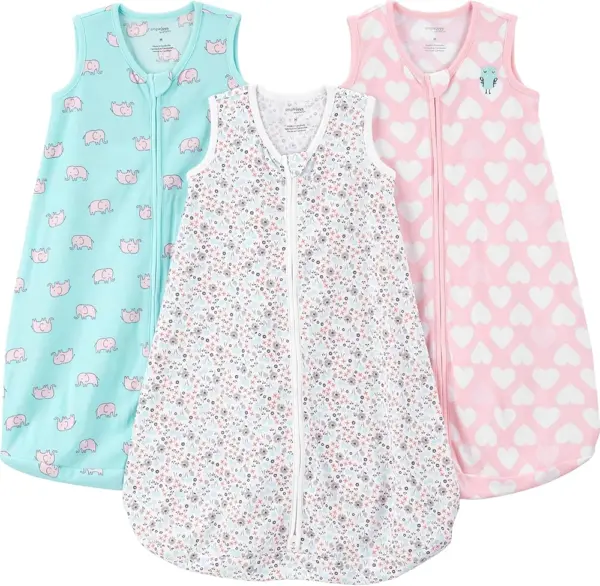
Simple Joys Microfleece Sleepbag 2-Pack
Key Features
- Fabric: Microfleece
- Sleeves: Long sleeve
- Pack Count: 2
- Price: Budget
Two sleep bags in one pack is the obvious appeal here, but the long sleeves are what make this pair useful in a cold room. The microfleece is soft and light rather than heavy, and the bag cut leaves room for kicking while the sleeves take the chill off arms that would otherwise be bare. For a winter baby who has moved out of a swaddle, that combination is practical.
The sleeves are the differentiator. They add warmth without a full sleepsuit, and the bag still has room at the legs, so it does not feel like a tight pajama. The zip runs down the front and is easy enough to work in low light. We like that the fleece is smooth against the skin and does not add a lot of bulk. It is a simple, warm layer for a drafty nursery.
What sold us on this pair is the laundry-day math. A two-pack means one can be in the wash while the other is on the baby, and the fleece holds up to frequent washing without turning stiff. It is not the softest or most temperature-flexible sack here, but it is the one we keep for backup nights and cold snaps. For the price of a single premium sack, you get a spare that actually gets used.
Pros
- Two sacks per pack
- Long sleeves for cold rooms
- Soft, light microfleece
- Holds up to frequent washing
Cons
- Narrow sleeves can be hard to pull on
The budget winter two-pack we reach for when one sack is always in the wash: soft microfleece, long sleeves, and a roomy bag cut at a value price.
Best Budget Summer Multi-Pack
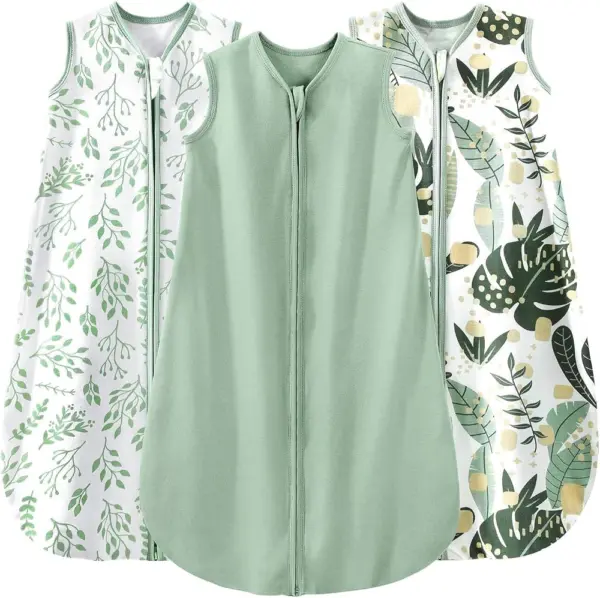
Yoofoss Sleep Sack 3-Pack
Key Features
- Fabric: 100% organic cotton
- Closure: Two-way zipper
- Pack Count: 3
- TOG Rating: 0.5
- Price: Budget
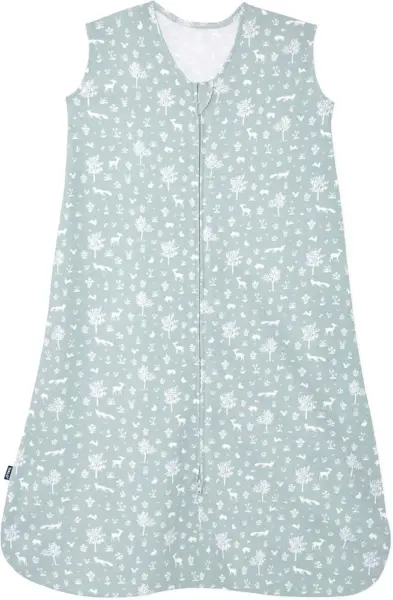
Three 0.5 TOG sleep sacks in one pack is the kind of purchase that makes sense after the first blowout, not before. The cotton is light and breathable, with a two-way zipper and a roomy cut that leaves plenty of leg room for kicking. For warm rooms, summer naps, or a baby who runs hot, this is a low-stakes way to keep a clean sack within reach.
The organic cotton has a soft, T-shirt-like hand, and the interior zipper guard and top cover keep the hardware off the skin. The two-way zip means you can open the bottom for a diaper change without exposing the chest, which is the detail we use most at night. The fabric is thin enough to layer over a bodysuit without turning into a sweat suit, and it washes without a lot of fuss.
Where this pack earns its place is rotation. Three sacks let you keep one on the baby, one in the wash, and one in the diaper bag without paying premium prices for each. The two-way zipper and light cotton are consistent across all three, so you are not managing different designs. That consistency is what makes a multi-pack useful rather than just cheap.
It is not the pick for a cold nursery or a baby who still needs arms-in swaddling. The 0.5 TOG cotton is for warmth, not deep winter. But as a summer workhorse and backup pack, it is the value choice we keep coming back to. If you want one sack to do everything, look higher in this list; if you want three clean options for warm nights, this is the pack.
Pros
- Three sacks in one pack
- Lightweight 0.5 TOG organic cotton
- Two-way zipper with chin guard
- Roomy cut for kicking
Cons
- Sizing runs large at the neck and body
The budget summer rotation: three lightweight organic-cotton sacks that handle warm nights, laundry days, and the inevitable middle-of-the-night change.
Best for Softness Seekers
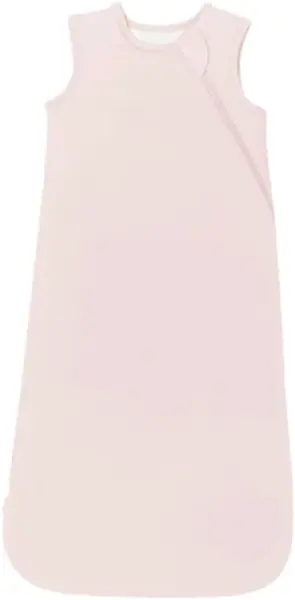
KYTE BABY Sleep Bag 1.0 TOG
Key Features
- Fabric: Rayon from bamboo
- Closure: Dual zipper
- TOG Rating: 1.0
- Price: Premium
Bamboo rayon is the reason to look at this KYTE bag. The fabric has a cool, silky hand and a bit of drape that feels different from cotton or fleece, and the 1.0 TOG weight puts it in the moderate-room category. For a baby who runs warm or a parent who notices fabric texture, it is a genuinely pleasant sack to handle.
The cut is trimmer than the roomy sacks here, and that is the point. It layers neatly over a bodysuit or light pajamas without adding bulk, and the fitted neck keeps the fabric from bunching under the chin. We like the dual zipper for diaper changes and the way the soft fabric moves with a baby instead of standing away from the body. It feels more like a second skin than a blanket.
The drawbacks are the ones that come with the fabric. Bamboo rayon is soft, but it can stain, and the trim fit is less forgiving than a roomy cotton sack. The zipper and seams are the places to inspect before each wash, because the silky hand can make a weak spot easy to miss. This is not the sack you buy for rough-and-tumble backup duty.
Still, for the parent who wants the softest thing against a baby’s skin, this is the sack we reach for. It is not the most temperature-flexible choice here, but the feel is the feature, and it delivers that in a way the cotton sacks do not. This is a sack for the parent who notices fabric and wants a trim, cool layer, not for the one who needs a roomy winter workhorse.
Pros
- Silky bamboo-rayon hand
- Trim fit layers without bulk
- Dual zipper for night changes
- Cool 1.0 TOG for moderate rooms
Cons
- Seams and zipper need watching
- Premium price for one sack
The softness splurge: a bamboo-rayon sack that feels cool and silky against the skin, with a trim fit that suits babies who dislike bulk.
Best for Arms-Up Newborns
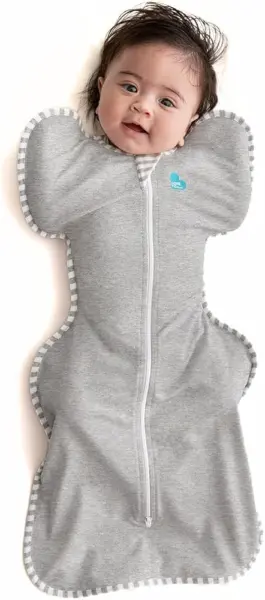
Love To Dream Swaddle Up
Key Features
- Size: Small (8–13 lbs)
- Fabric: 93% cotton, 7% elastane
- Closure: Two-way zipper
- TOG Rating: 1.0
- Price: Midrange
The arms-up shape is the entire argument for this Love To Dream swaddle. Instead of pinning a newborn’s arms to the sides, it keeps the hands near the face, which is where many babies self-soothe. The two-way zipper runs from top to bottom, so you can swaddle in seconds without Velcro or a pile of blankets. For a baby who fights arms-down wrapping, that is a different start to the night.
The 1.0 TOG cotton blend is for moderate rooms, and the stretch in the fabric gives enough give to get a wriggly baby in. The snug midsection preserves the contained feeling, while the arms-up pose leaves the hands free to reach the face. We like that there is no Velcro to snag or wake a sleeping baby, and the zip is quiet enough for a night change. It is a simple design, but the shape is doing real work.
This is a swaddle, not a transition bag. It does not have zip-off wings or an arms-out setting, so it is for the newborn stage and the first weeks of self-soothing. Once your baby shows signs of rolling, it is time to move to an arms-out sack or a transition style. We think of it as a first-sleep tool, not a long-term bag.
For a newborn who hates arms-down swaddling, it is the one we reach for. The fabric is soft, the zip is quick, and the arms-up shape solves a specific problem rather than adding features. It is not the best value for a baby who sleeps fine in a standard swaddle, but for the right baby it is a routine changer. The weight range is the guide, and the arms-up shape is the reason to choose it.
Pros
- Arms-up shape for self-soothing
- Two-way zip, no Velcro
- Stretchy cotton for a snug fit
- Quick to put on a wriggly newborn
Cons
- Snug midsection can run tight
The newborn arms-up swaddle: a zip-up sack for babies who fight arms-down wrapping and settle better with their hands near their face.
How We Tested the Best Baby Sleep Sacks
We started by gathering what parents actually reach for — bestseller lists, review threads, and the sleep-sack guidance handed out at newborn classes — then narrowed by the things a listing photo hides: which TOG ratings a given sack comes in, whether sizes run by weight or by age, whether the zipper opens from the bottom as well as the top, and whether the shoulders unsnap so you can get a sleeping baby in without waking them. That left 14 sacks, from 0.5 TOG cotton up to a 3.0 TOG fleece, plus merino, bamboo, and two designs that convert from a swaddle to a sack. A small panel of parents tried them on babies from newborn through 2 years, and I ran the rest on my own baby across six months.
Every sack lived the way these things actually live: overnight, at naps, and through diaper changes at 2 a.m. in a dim room with one hand and a half-asleep baby. We kept a night-waking log, felt the back of the neck for sweat when the nursery ran warm and again on cold mornings, and noted whether a sack needed extra layers underneath to keep a baby comfortable.
Fit got the most attention, because it’s where sleep sacks fail quietly. We tracked each baby’s weight against the label’s range and retired a sack the week it stopped fitting, checked how much slack sat at the neckline while a baby slept and again once they started rolling, and watched whether the fabric bunched around the face.
Zippers got their own notebook. We timed night changes, watched where the pull rested against a baby’s chin, and counted how many sacks opened bottom-up versus top-down. Fabrics went through the wash every other day for a month, where we checked for pilling, shrinking, and pulling seams, and we weighed how many months of usable fit each size range actually delivered against what it cost.
How to Choose a Baby Sleep Sack
The right sleep sack is a fit-and-temperature decision first, and a print decision last.
Match the TOG to the room, not the calendar
A 0.5 TOG sack is for warm rooms and summer; 1.0 to 1.5 is the moderate middle; 3.0 is for cold nurseries. The number is only useful with a thermometer and the right base layer. A cotton bodysuit under a 0.5 sack can be right in a warm room, while a footed sleeper under a 3.0 sack can overheat a mild one.
We like a sleep sack that makes the choice obvious: Woolino’s all-season merino build skips the TOG math, while HALO’s 0.5 and 3.0 sacks let you match the number to the room. If you are unsure, start lighter and add a layer underneath rather than buying the warmest sack and dressing your baby down.
Fit the neck and weight range before you size up
A sleep sack is not a coat you buy big for next winter. The neck opening should sit close enough that it cannot ride up over the chin, and the armholes should let you get a wriggly baby in without gaping. Weight is more reliable than age, especially with brands that run roomy.
Check the maker’s weight range, then look at the neck and shoulders on your baby. If you are between sizes, take the smaller one for a newborn and the larger only once the neck still fits. Yoofoss’s three-pack is roomy, so start with the weight chart rather than the month label.
Know where you are in the swaddle transition
Arms-in swaddling is for the startle reflex; once your baby starts rolling, arms-in is over. A transition sack with zip-off wings or a three-way swaddle lets you go from both arms in to one arm out to both arms free without changing the routine.
Love To Dream’s 2-in-1 does that with removable wings; HALO’s three-way swaddle does it with adjustable fasteners. If your baby never liked arms-in, skip the swaddle stage and go straight to an arms-out sack. The goal is a familiar sleep cue, not a longer checklist.
Prioritize a closure you can work at 3 a.m.
The zipper is the part you touch most, often in the dark. A two-way zip lets you open the bottom for a diaper change without uncovering the chest, and a zipper guard keeps metal off the chin. Test the zip before the first overnight and check it after washing; a slider that catches or separates is a secure-fit problem, not just an annoyance.
We favor a smooth two-way zipper over extra snaps or Velcro, which can be loud and wear out. If a sack has a bottom opening, make sure the fabric does not bunch at the chin when it is zipped. That small detail is the difference between a quick change and a fully awake baby.
Weigh laundry rotation against one long-wearing sack
A multi-pack is not automatically the better value. Three lightweight sacks can cover warm nights and laundry days, but one well-made sack that fits from 2 months to 2 years may cost less per season and simplify the routine. The right answer depends on how often you wash and whether your baby runs hot or cold.
We keep a two- or three-pack for backup and one premium sack for the primary sleep space; that combination handles real life better than a drawer full of the same thing. A sleep sack is a wearable blanket, so it gets washed often. Buy for the rotation you will actually keep up with.
Frequently Asked Questions
What should my baby wear under a sleep sack?
Start with the TOG and the room. In a warm room, a short-sleeve bodysuit under a 0.5 TOG sack is often enough; in a cooler room, add a footed sleeper under a 1.0 to 1.5 TOG sack. Feel the back of the baby’s neck, not the hands, and remove a layer if it is damp or hot. A sleep sack replaces the loose blanket, not the base layer.
Can my baby wear a sleep sack in a car seat?
No. A sleep sack is for sleep, not for the car seat. The extra fabric can keep the harness from fitting snugly against the body, and a loose fit is a safety problem. Dress your baby in normal clothes for the ride, then put the sleep sack on when you arrive. The same rule applies to strollers and swings: use the sack for sleep, not for strapping in.
How often should I wash a sleep sack?
Treat it like pajamas: wash after every few nights, and sooner after spit-up, diaper leaks, or a sick night. A two- or three-pack keeps a clean sack ready while one is in the laundry. Follow the care tag, close the zipper before washing, and check the zipper and seams while the sack is wet; those are the parts that fail first.
Final Verdict
Woolino is the sleep sack we recommend first for most families who want one purchase to cover the first two years. It handles temperature swings, has a secure side-zip fit, and the size range does the work of several sacks. If your nursery runs warm or you want a lower-cost everyday option, the HALO SleepSack Cotton 0.5 TOG is the lighter, simpler choice.
For the swaddle transition, the Love To Dream 2-in-1‘s zip-off wings are worth the premium. And if your baby is a cold-weather newborn, the HALO Micro-Fleece 3.0 TOG is the one to reach for. Choose by the room and the stage, and you can stop second-guessing the sleepwear drawer.